Best Whole-House And Attic Fans
Best Whole-House And Attic Fans, ranked from aggregated owner ratings and reviews, not first-hand testing. Real pros, cons, and who each pick is best for.

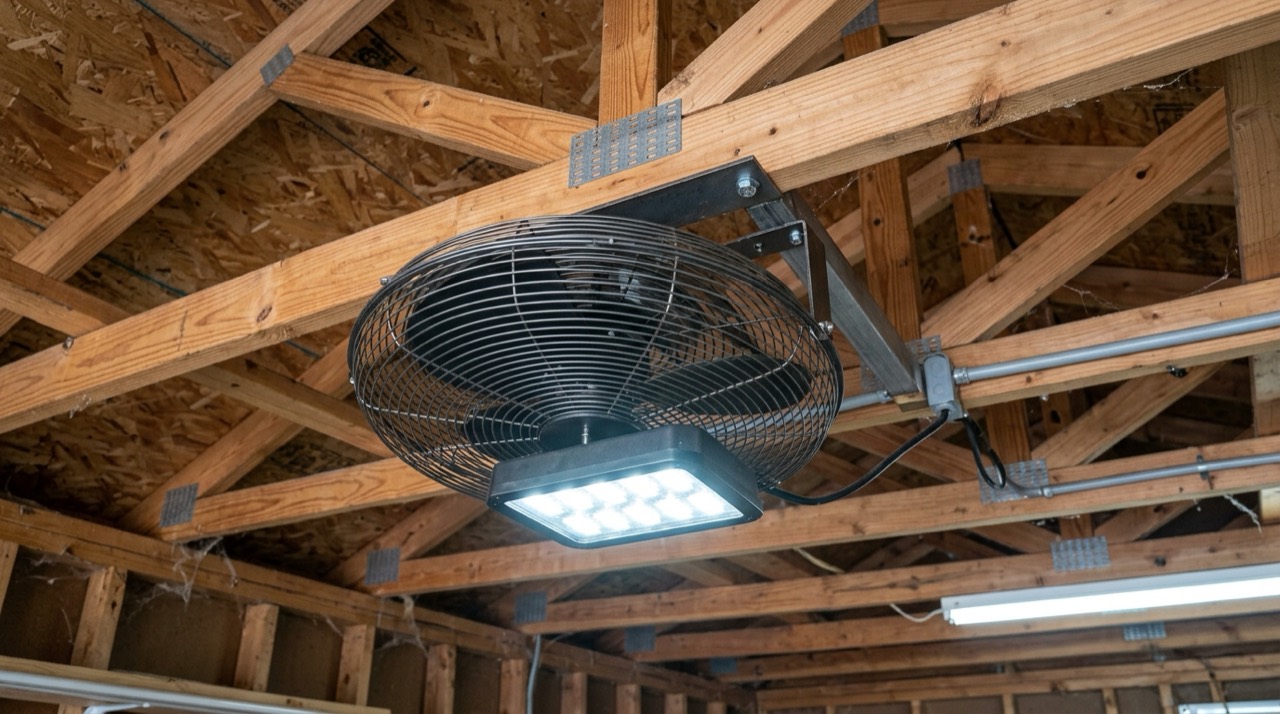
Our Top 3 Picks
Quick Comparison
| Product | Best for | Buy | |
|---|---|---|---|
| QC ES-4700 | Best Overall | See Amazon | View |
| Trident Pro 3.0 | Best for Large Homes | See Amazon | View |
| 12 Inch Power Attic Ventilator | Best Value | See Amazon | View |
| ILG8SF12V-22 Solar Attic Fan | Best Smart/Solar Pick | See Amazon | View |
| PR2E Power Attic Ventilator | Best Premium | See Amazon | View |
| CX1500 Gable Mount Attic Fan | Best for Gable Vents | See Amazon | View |
How to Choose a Whole-House or Attic Fan
Start With the Right Category
Decide what you're actually trying to fix. If bedrooms and living areas feel hot at night and you want a strong cross-breeze without running the AC, you need a whole-house fan. If the attic itself is the problem — baking shingles, radiating heat into the ceiling, or you've noticed the attic is noticeably hotter than outside air — you need an attic fan. Some homes benefit from both, but they solve different problems and one doesn't substitute for the other.
Size It to CFM, Not to Price
For a whole-house fan, calculate your home's cubic footage (square footage x ceiling height) and divide by 2-3 minutes to get a target CFM. Buying undersized is the single most common mistake — it still runs, but it never delivers the fast, noticeable cooling that makes people happy with the purchase. For an attic fan, size to roughly 0.7 CFM per square foot of attic floor, and confirm your attic actually has enough soffit intake venting to feed the fan; a powerful exhaust fan starved of intake air will pull from the wrong places, including your living space.
Two-Speed or Variable Speed
A single-speed whole-house fan is loud and all-or-nothing. Two-speed and variable-speed models let you run a gentle overnight setting for light air movement and reserve full power for rapidly flushing hot daytime air out of the house before evening. This flexibility is worth paying for.
Noise Level (Sone Rating)
Whole-house fans live in ceilings a few feet from bedrooms, so noise matters more than with a standard ceiling fan. Look for sone ratings and, where available, owner feedback on real-world noise — a fan that's too loud to run at night defeats the purpose. Insulated, damper-equipped housings and remote/ducted inline designs tend to run quieter than direct ceiling-mounted units.
Insulated Doors and Dampers
A whole-house fan is a large hole in your ceiling insulation when it's not running. Look for models with an insulated, automatically sealing damper door — this matters a lot in winter, when an unsealed fan opening can be a significant source of heat loss straight into the attic.
Power Source: Electric vs. Solar Attic Fans
Solar-powered attic fans avoid the negative-pressure risk of hardwired units pulling from the living space, since they only run when the sun is actively heating the roof — which is also exactly when you need them most. They also skip the electrician step entirely for the fan itself (though mounting still involves cutting a roof or gable opening). Electric power attic ventilators run on demand via thermostat regardless of sun exposure, which can matter in humid climates where attic moisture control matters even on overcast days.
Mount Type: Roof, Gable, or Soffit
Roof-mounted attic fans sit on the roof deck and vent straight up; gable-mounted units fit into an existing gable end vent opening and are often simpler to retrofit without a new roof penetration. Match the fan to what your attic already has, or budget for the additional carpentry and flashing work a new roof penetration requires.
Controls: Timer vs. Thermostat
A thermostatically controlled attic fan only runs when the attic actually needs it, which saves electricity and reduces the negative-pressure window. Whole-house fans are more commonly run on a timer or simple switch, since you're the one deciding when outdoor conditions are right.
Who Should Skip These
Skip a whole-house fan if you live somewhere humid nights are the norm (Gulf Coast, much of the Southeast) — you'll just pull in warm, sticky air with nowhere for it to go but back into your air conditioning load the next day. Skip a powered attic fan if your attic is already tightly air-sealed and well-insulated with good passive ridge/soffit ventilation; in that case a power vent is more likely to depressurize the attic and pull conditioned air upward than to meaningfully lower temperatures. In both cases, a home energy auditor or a blower-door test can tell you more reliably than guesswork whether either fan will actually pay off.
Full Ranking, Reviewed

Best for Whole-house cooling in mid-size homes
- Rated around 4,700 CFM for whole-house air exchange
- Insulated, self-sealing damper box to limit winter heat loss
- Direct-drive motor designed for quieter overnight operation
- Compatible with wall switch, timer, or smart controller add-ons
- Strong airflow for homes in the 1,400-2,200 sq ft range
- Noticeably quieter than older direct ceiling-mount fans
- Straightforward retrofit into an existing hallway ceiling joist bay
- Needs a licensed electrician for the dedicated circuit on most installs
Verdict: A well-sized, well-built whole-house fan for the average home that wants fast evening cooling without cranking the air conditioner.
Best for Larger homes needing higher CFM
- Higher-capacity CFM tier built for larger cubic footage
- Two-speed operation for a gentle overnight setting and a fast daytime flush
- Ducted, remote-mount design keeps the motor further from living spaces
- Better fit for homes over 2,500 sq ft than a single small-CFM unit
- Ducted design tends to run quieter than direct ceiling mounts
- Two speeds add flexibility across seasons
- Higher upfront cost and more involved installation than a basic model
Verdict: Worth the step up for larger floor plans where a smaller whole-house fan would be undersized and underwhelming.

Best for Straightforward, thermostat-controlled attic cooling
- Roof or gable mount options
- Built-in adjustable thermostat to run only when the attic gets hot
- Roughly 1,000+ CFM class output for typical mid-size attics
- Simple, proven design with widely available replacement parts
- Thermostat control limits runtime and electricity use
- Reasonable price point relative to attic square footage covered
- Needs enough soffit intake venting already in place to avoid depressurizing the attic
Verdict: A dependable, no-frills power attic ventilator for attics that already have decent passive intake ventilation.
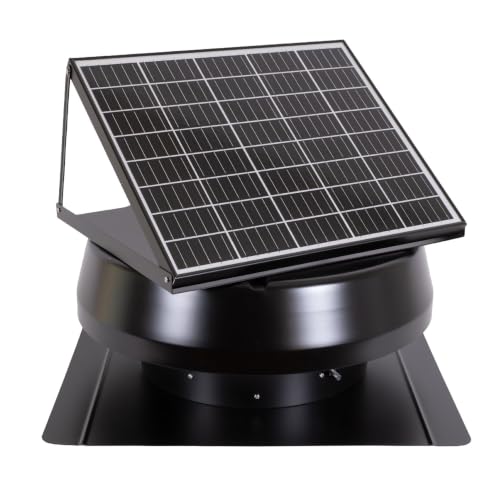
Best for Homes avoiding new hardwired circuits
- Solar panel powered, with battery/AC hybrid option on some kits
- Runs automatically during peak sun and peak attic heat
- Adjustable tilt mount for solar panel positioning
- No dedicated house circuit needed for the fan itself
- Naturally avoids running during cool, low-sun hours when it's least needed
- Lower long-term electricity cost than a fully electric unit
- Output depends on sunlight, so cloudy-day performance is reduced
Verdict: A smart pick for homeowners who want attic cooling without adding another hardwired circuit to the panel.

Best for Larger attics needing higher CFM
- Higher CFM rating suited to larger attic floor areas
- Permanently lubricated motor rated for extended service life
- Built-in thermostat with adjustable temperature setpoint
- Handles bigger attics that would overwhelm a basic 12 inch fan
- Durable motor construction backed by a longer manufacturer warranty
- Higher price and higher electrical draw than smaller attic fans
Verdict: The higher-capacity option for larger or steeper attics where a standard-size power vent falls short.

Best for Retrofitting an existing gable vent opening
- Designed to mount directly into an existing gable vent frame
- Adjustable thermostat control
- Roughly 1,500 CFM class output
- Avoids a new roof penetration when a gable vent opening already exists
- Straightforward retrofit for homes with gable-end attic vents
- Not an option for homes without an existing or feasible gable vent location
Verdict: The practical choice when your attic already vents through a gable end and you'd rather not cut into the roof deck.
Frequently Asked Questions
Do I need both a whole-house fan and an attic fan?
Not usually. They solve different problems, but most homes only need one. If your goal is cooling the living space during cool evenings, get a whole-house fan. If the attic itself runs hot and you're worried about shingle life or heat radiating into ceilings, get an attic fan. Running both at once can even work against each other, since the whole-house fan is trying to push air into the attic while the attic fan is trying to pull it back out.
What size whole-house fan do I need for my home?
Multiply your home's square footage by your ceiling height to get cubic footage, then divide by 2 to 3 minutes for your target CFM. A typical 2,000 sq ft home with 8-foot ceilings needs roughly 5,300-8,000 CFM depending on how fast you want the air exchanged. When in between sizes, most manufacturers recommend rounding up rather than down.
Will a power attic fan increase my electric bill?
The fan itself draws relatively little power, but if the attic doesn't have enough soffit intake venting to feed it, a power attic ventilator can depressurize the attic and draw conditioned air up out of the living space, forcing your air conditioner to work harder. Confirming adequate passive intake venting first, or choosing a solar-powered unit, reduces this risk.
Can I install a whole-house or attic fan myself?
The mounting and framing work is a reasonable DIY project for an experienced homeowner. The electrical connection is where caution matters: always shut off power at the breaker first, and if you're running a new dedicated circuit or you're not fully comfortable with the wiring, hire a licensed electrician. Many jurisdictions also require a permit for the roof or ceiling penetration.