


What Track Lighting Actually Does Well
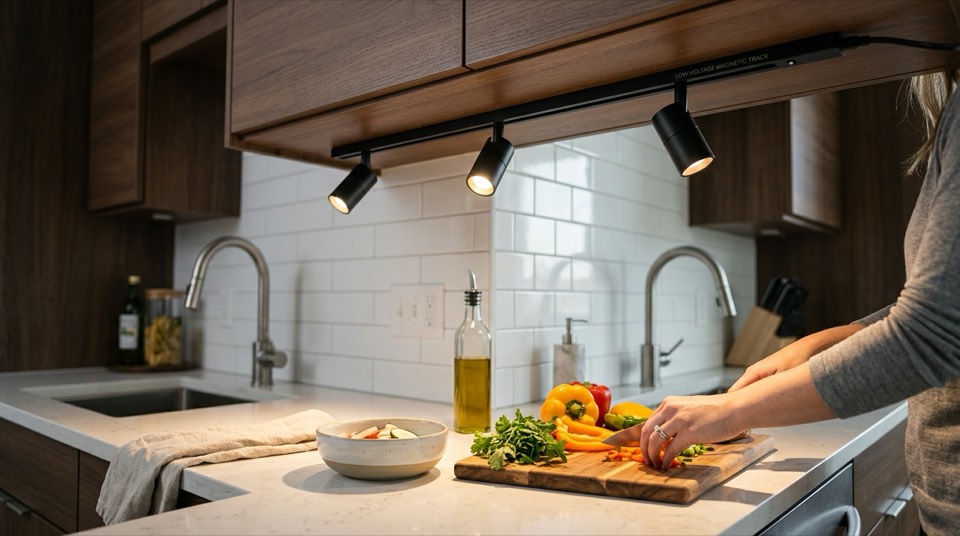
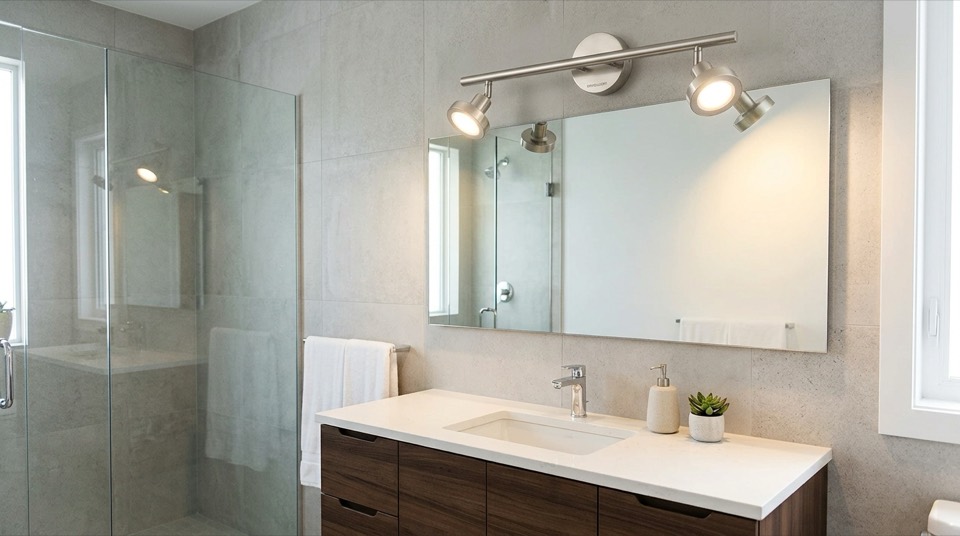
Track lighting solves a problem recessed cans and a single ceiling fixture can't: it lets you aim several separate beams of light at different targets from one continuous power source. A single run of track can wash a gallery wall, spotlight a kitchen island, and throw ambient light across a seating area, all from one circuit and one switch. That flexibility is why track has stuck around in kitchens, home offices, basements, and anywhere art or task areas need adjustable, redirectable light.
The Three Common Track Profiles
Track systems aren't universal. Most fixed-rail track sold in the U.S. follows one of three electrical and mechanical profiles, and heads from one profile generally won't lock into another:
- H-track (Halo-style): the most common profile in big-box hardware stores; wide compatibility across brands.
- J-track (Juno-style): a slightly different connector pattern; common in commercial and some residential lines.
- L-track (Lightolier-style): narrower rail, often used in older or higher-end installations.
Beyond fixed rail, monorail and flexible-rail systems (a category WAC Lighting popularized) bend into curves and don't need a straight run, which suits kitchens with irregular ceiling lines or feature walls. They typically use low-voltage heads and require a compatible transformer, which adds cost but allows smaller, lower-heat fixture heads.
Line-Voltage vs. Low-Voltage
Line-voltage track wires directly to your home's 120V circuit — simpler to install and more forgiving on run length. Low-voltage track needs a step-down transformer (built into the canopy on most residential kits) that feeds 12V or 24V to the heads. Low-voltage heads can be smaller and are common on monorail systems, but the transformer's wattage rating limits how many heads you can run and how far the last head can sit from the power feed.
Picking Track Heads
Head shape changes what the light does, not just how it looks:
- Gimbal heads aim in almost any direction and are the default choice for general accent lighting.
- Cylinder heads narrow the beam for a more dramatic spotlight look, often used over artwork.
- Pinhole heads hide the light source almost entirely, useful when you want the effect of light without seeing the fixture.
- Floodlight heads spread a wider beam for general room fill, closer to what a ceiling fan light or flush mount provides.
Sizing and Spacing
A rough rule from lighting designers: space adjustable heads roughly 2-3 feet apart for even wall-wash coverage, and mount track 12-18 inches out from the wall you're lighting to avoid harsh scalloping. For general room lighting, the U.S. Department of Energy's lumen guidance for ambient light in living spaces (roughly 10-20 lumens per square foot, adjusted for room use) is a reasonable starting point — add up the lumen output of your planned heads and compare against room square footage before buying a kit.
Most LED track heads list a wattage-equivalent (compared to old incandescent bulbs) alongside actual lumens and Kelvin color temperature. For kitchens and task areas, 3000K-4000K reads as clean white light; for living rooms, 2700K-3000K stays closer to warm, relaxed lighting similar to what most ceiling fan light kits use.
Track Lighting vs. Recessed Lighting
Recessed lighting disappears into the ceiling and suits fixed, general illumination. Track lighting sits proud of the ceiling and is redirectable, which makes it the better choice when your lighting needs might change — a gallery wall that gets rehung, a kitchen island that moves, or a home office that gets reconfigured. The tradeoff is visibility: track is a visible design element, not a hidden one, so finish (matte black, brushed nickel, white) matters more to the room's look.
Dimming and Controls
Most modern LED track kits are dimmable, but check the packaging for compatible dimmer types — ELV (electronic low-voltage) dimmers suit low-voltage transformer-fed systems, while TRIAC dimmers suit most line-voltage LED kits. Pairing the wrong dimmer type with LED track heads is a common cause of flickering or a limited dimming range. Smart-home options exist too: Lutron Caseta and similar smart dimmer switches work with many line-voltage track systems without needing a smart bulb in every head.
A Safety Note Before You Buy
Track lighting is wired into your home's electrical system, and how you install it depends heavily on whether you're replacing an existing fixture at an existing junction box or adding a new circuit. Always shut off power at the breaker before working near ceiling wiring, and bring in a licensed electrician for anything beyond swapping a fixture at an existing box — especially new circuits, boxes rated for a different fixture weight, or older homes with outdated wiring. See our installation FAQ below for the general steps and where a professional should take over.