


Bladeless Fans vs. Air Circulators vs. Regular Fans
"Fan" covers three genuinely different tools, and mixing them up is the most common
reason people end up disappointed with a purchase. A bladeless fan, an air circulator,
and a standard box or pedestal fan all move air, but they do it in different ways, for
different rooms and different reasons.
How each type actually works
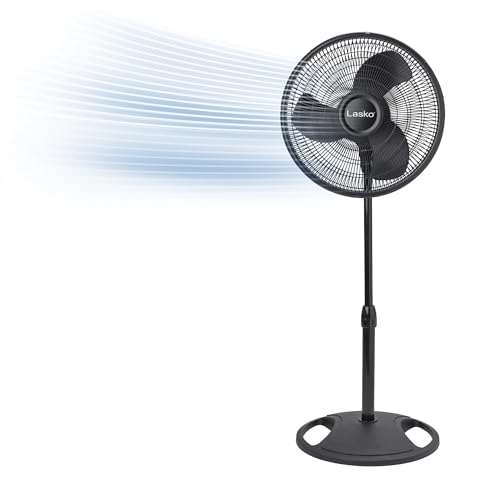
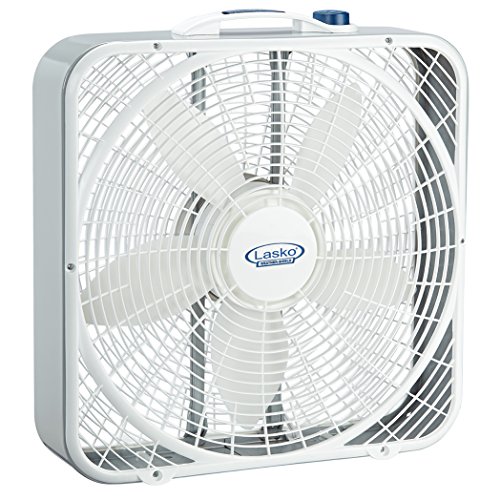
A standard fan (box, pedestal, or tower) uses exposed or lightly-guarded blades to
push a column of air directly forward. It's the cheapest way to move air and the easiest
to understand, but airflow drops off quickly with distance and the grille still has gaps.
A bladeless fan, like Dyson's Air Multiplier models, hides its motor and a small
impeller in the base. That impeller pulls air in and forces it through a narrow slot
around a loop-shaped amplifier, which pulls in 15 to 18 times more surrounding air to
produce a smooth, continuous stream. There's no fast-spinning blade anywhere a hand can
reach, and there's nothing behind a grille to dust or unscrew for cleaning. The tradeoff
is raw volume: bladeless fans move less total air than an equivalent-size circulator or
box fan, so they're built for close-range personal cooling, not for moving air across a
whole room.
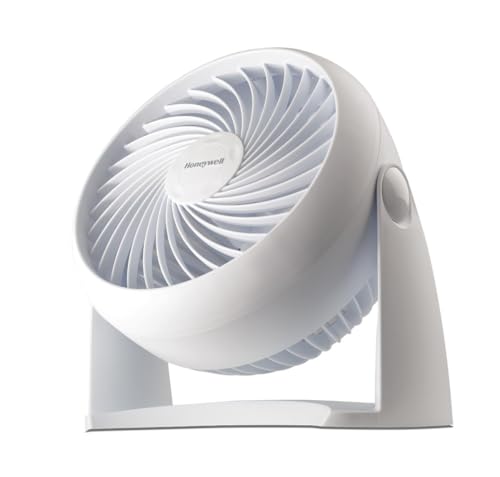
An air circulator looks like a small, deep box fan but is engineered around a
different goal: not to blow air at you, but to push a concentrated jet of air across
the room that pulls the entire volume of air in that space into motion, wall to wall.
Deep-pitch blades and a narrower housing (Vornado's vortex design is the best-known
example) throw air 30, 50, even 70-plus feet in an open room, mixing hot air near the
ceiling with cooler air near the floor. That's why circulators are the tool of choice
for evening out a hot upstairs bedroom, a stuffy garage, or a room with a wood stove or
window AC unit that only cools one corner.
CFM and throw distance, in plain terms
CFM (cubic feet per minute) measures total air volume moved, but it's measured
differently across categories, so don't compare a bladeless fan's spec sheet directly to
a circulator's. In practice:
- Bladeless fans: lower measured CFM, but a smooth, even, non-buffeting stream felt
- Air circulators: built for throw, not just volume. A mid-size circulator rated to
- Regular box/pedestal fans: moderate CFM but a wide, unfocused stream that fades
For a bedroom or home office, prioritize even, quiet airflow over raw throw. For a
garage, basement, attic, or any room fighting uneven temperatures, prioritize a
circulator's throw distance over how it feels standing directly in front of it.
Noise levels
Bladeless fans and modern DC-motor circulators are usually the quietest options on their
lowest settings — some rate in the 30s of decibels, close to a quiet library — but noise
climbs fast at higher speeds because there's less blade surface area to move the same
air, so the motor has to work harder. High-velocity circulators and wind-machine-style
fans (built for garages, job sites, and drying wet floors or carpet) are the loudest
category by design; expect them to be genuinely loud, not background-noise loud, on
their top setting. If noise matters more than raw airflow — a nursery, a bedroom, a home
office on video calls — check the manufacturer's low-speed decibel rating, not just the
top-speed CFM number.
Child and pet safety
This is where bladeless fans have a real, measurable advantage: there's no spinning
blade behind the grille at all, so there's no way for small fingers, a curious cat's paw,
or a dog's tail to reach a moving part. That matters most in households with toddlers or
pets that like to investigate anything humming.
If you do buy a bladed fan for a room used by kids or pets, look for a front grille with
narrow spacing — under about 3/8 inch — since older or bargain box fans sometimes ship
with wider grille gaps that a small finger can pass through. A stable, weighted base
that won't tip if bumped or climbed matters just as much as the grille. Standing pedestal
fans and lightweight tower fans are both easier to knock over than a squat air circulator
or bladeless fan's low, heavy base, so factor tip resistance into any nursery or
playroom purchase, not just blade exposure.
Choosing between the three
- Pick a bladeless fan for a bedroom, nursery, desk, or anywhere close, quiet,
- Pick an air circulator for a garage, basement, attic, or any room with uneven
- Pick a regular fan when budget is the deciding factor and you mainly need direct,