Shop, Garage & Work Lighting: Complete Guide
Comprehensive technical analysis of sizing, materials, installation requirements, and manufacturer standards for shop, garage & work lighting.

Recommended Products
See the full ranking →

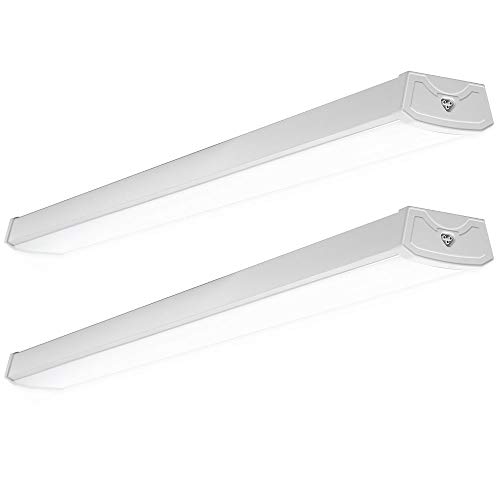
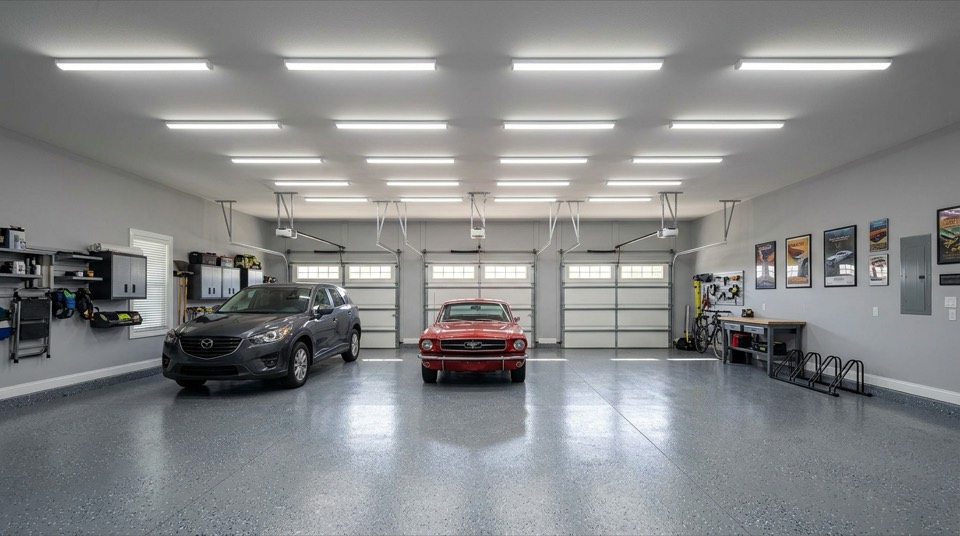
Most garages ship with a single bare bulb or a builder-grade fixture that was never designed for anything beyond parking a car in the dark. Once that space becomes a workshop, a gym, or just somewhere you actually want to see what you're doing at a workbench, the stock fixture stops being enough. The fix almost always comes down to two things: adding a lot more total light, and picking a color temperature that makes fine detail easy to see.
Watts measure how much electricity a fixture draws, not how much light it produces — comparing fixtures by wattage alone is a leftover habit from incandescent bulbs. Compare by lumens instead. A single old-style incandescent garage bulb might put out 800 lumens; a modern 4-foot LED shop light commonly produces 4,000 to 5,000 lumens from one fixture, at a fraction of the running cost.
For a one- or two-car garage used as a workspace, most people end up happiest somewhere in the 5,000–10,000+ total lumen range, split across two or more fixtures rather than one. Spreading light across multiple fixtures reduces harsh shadows across a workbench or engine bay in a way a single bright point source can't match, no matter how many lumens it claims.
Color temperature, measured in Kelvin, changes how light feels and how well it reveals detail:
- 2700K–3000K — warm white, the look of a traditional incandescent bulb. Comfortable in living spaces, but it flattens contrast and can make it harder to spot fine scratches, color mismatches, or wiring colors.
- 3500K–4100K — neutral white, a common middle ground for kitchens and utility rooms.
- 5000K–6500K — daylight/cool white, the standard choice for garages, workshops, and task lighting generally.
Linear LED shop lights (typically 4 feet long) are the default choice for garages with 8–10 foot ceilings. They mount flush to the ceiling or hang from chains, and most modern versions are linkable — you plug one into the next with a short cord, so a two- or three-fixture run needs only a single outlet or junction box. Look for an integrated design (the whole fixture is one sealed unit) rather than an old-style fixture that takes separate fluorescent tubes, since integrated LED units don't have tubes to replace or ballasts to fail.
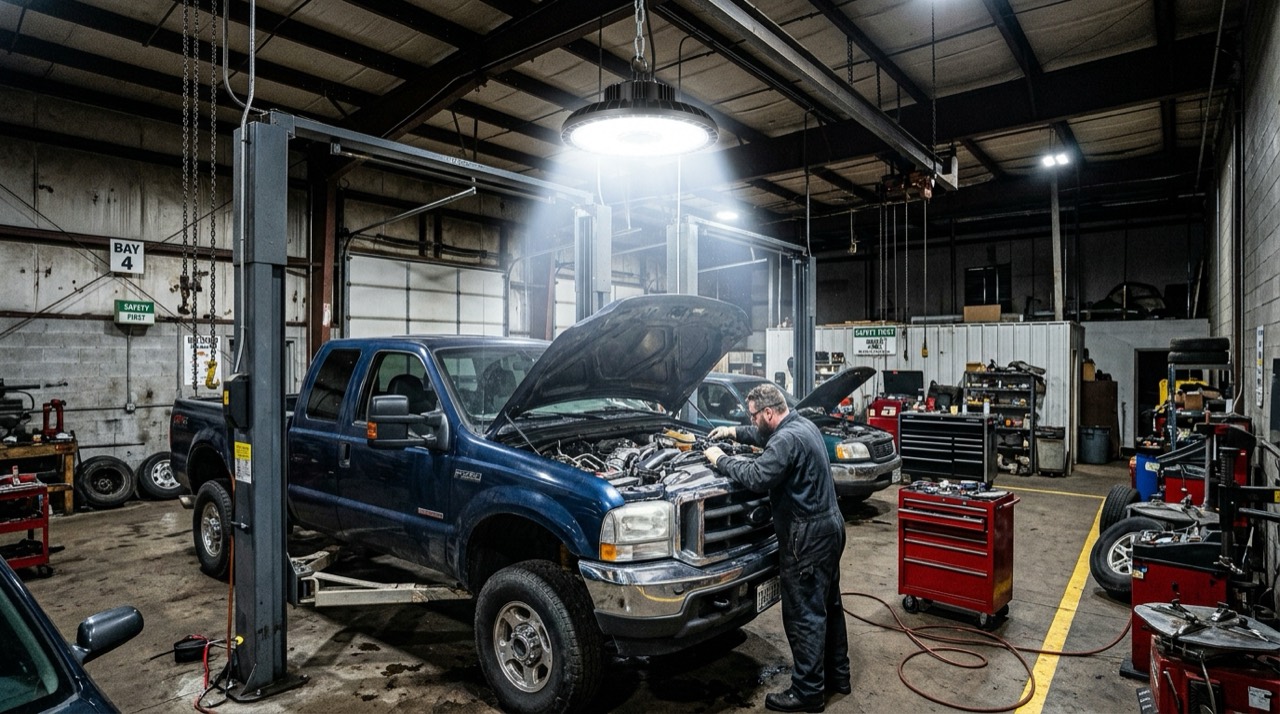
LED high-bay (UFO) fixtures are the right call for taller spaces — detached shops, pole barns, or garages with 12-foot-plus ceilings — where a linear fixture's light would spread too thin by the time it reaches the floor. High bays concentrate a large lumen output into a compact, round fixture designed to be mounted well above head height.
Portable and clamp work lights fill in the gaps a ceiling fixture can't reach: under a car on a lift, inside a cabinet, or wherever a project temporarily needs directed light. They're a supplement, not a substitute for adequate overhead lighting.
Motion-sensor and battery-backup fixtures are worth considering for a garage you walk through with your hands full, or one that doubles as an entry point, since they turn on automatically rather than requiring a light switch to be found first.
A garage that isn't fully conditioned — no insulation, exposed to humidity, or with a door that's often left open — is a damp location in electrical terms, even if it's technically indoors. Standard indoor-rated fixtures can be fine in a finished, sealed garage, but a detached shop, an unheated barn, or a garage with persistent moisture calls for a fixture rated for damp or wet locations (look for a listed IP rating or an explicit "damp location" or "wet location" listing from a lab like UL). Using an indoor-only fixture in a consistently damp space shortens its life and, in worse cases, creates a shock hazard.
Linkable shop lights make it tempting to daisy-chain far more fixtures onto one run than the circuit was designed for. Before adding several new fixtures to an existing garage circuit, check the total wattage draw against the breaker's rating — LED fixtures draw far less than old fluorescents, but a garage circuit that's already shared with a freezer, power tools, or an EV charger can still get overloaded.
Adding a new hardwired fixture, running new circuits, or wiring a switch involves working inside your home's electrical system. Always turn off power at the breaker first, and confirm the circuit is dead with a non-contact voltage tester before touching any wires. Plug-in shop lights that use an existing outlet are a reasonable DIY project for most homeowners. But if you're adding a new circuit, moving a junction box, hardwiring a fixture where one didn't exist before, or you're simply not confident identifying the wires you're working with, hire a licensed electrician — and check whether your local code requires a permit for the work. This matters even more in a garage, where damp conditions and metal tools raise the stakes of a mistake.
A practical starting point for most one- or two-car garages: two or three linkable 4-foot LED shop lights in the 4000K–5000K range, mounted or hung to spread light evenly across the workspace, plus a plug-in or clamp light for close-up detail work. Taller detached shops are usually better served by one or two high-bay fixtures instead. From there, add motion sensors or battery backup only where the extra convenience is worth the added cost.
Go Deeper
Detailed companion guides for shop, garage & work lighting.
How Many Lumens You Need to Light a Garage or Shop
How many lumens to light a garage: use about 50 lumens per square foot for general use and 75 to 100 for detailed workshop tasks, with examples.
How to Install Linkable LED Shop Lights in a Garage
How to install linkable LED shop lights in a garage: plan rows, mount to joists, and daisy-chain from one outlet with the included connector cables.