

Tower Fans: The Complete Buying and Setup Guide
A tower fan is a tall, slim column fan that draws air in through the back or sides and pushes it
out in a wide, flat sheet through a narrow vertical grille. Because the footprint is small and the
airflow is spread across the whole height of the unit rather than concentrated in one blade-sized
circle, tower fans have become the default choice for bedrooms, home offices, and apartments where
floor space is tight and a pedestal fan's wobble and reach are more than you need.
How much air a tower fan actually moves (CFM)
CFM (cubic feet per minute) is the number that tells you how much air a fan can move, and it is the
single best predictor of how well a fan will cool a room versus just stirring the air near your
face. Compact bladeless-style and slimline tower fans often move somewhere in the 200-400 CFM range
on their highest setting, while larger tower fans with bigger internal blades or dual-blade designs
can push past 500-700 CFM. Manufacturers rarely print CFM on the box, so check the spec sheet or
manual before buying if room size matters to you. As a rough guide, a small bedroom (100-150 sq ft)
is comfortable with a fan in the 200-300 CFM class, while an open living area benefits from
400 CFM or more, or two fans working together.
Noise levels: reading the dB spec
Tower fans are marketed heavily on quietness, and the decibel (dB) rating is how that's measured.
Because the decibel scale is logarithmic, a jump from 40 dB to 50 dB is roughly a doubling of
perceived loudness, not a 10-unit nudge. For context, a quiet bedroom at night is around 30 dB,
a soft conversation is about 60 dB, and most tower fans sit somewhere in between depending on
speed setting:
- Under 40 dB on low/sleep mode: a good target for bedrooms, especially models with a dedicated
- 40-50 dB on medium: normal for everyday use in a living room or office.
- 50-60+ dB on the highest speed: expect most tower fans to get noticeably louder at max output,
Manufacturer dB figures are usually measured at a set distance (often one meter) under lab
conditions, so real-world noise in your room may read a bit higher. If light sleeping is the
priority, look for fans that publish a specific low-speed dB figure rather than a single vague
number.
Oscillation range and footprint
Most tower fans oscillate somewhere between 60 and 120 degrees, and a growing number of models
offer wider sweep options — some go past 90 degrees, and a few advertise coverage closer to a full
room. Wider oscillation is genuinely useful in a living room where several people sit at different
angles to the fan; in a bedroom, a narrower, more direct sweep (or oscillation switched off
entirely, aimed at the bed) is often more comfortable.
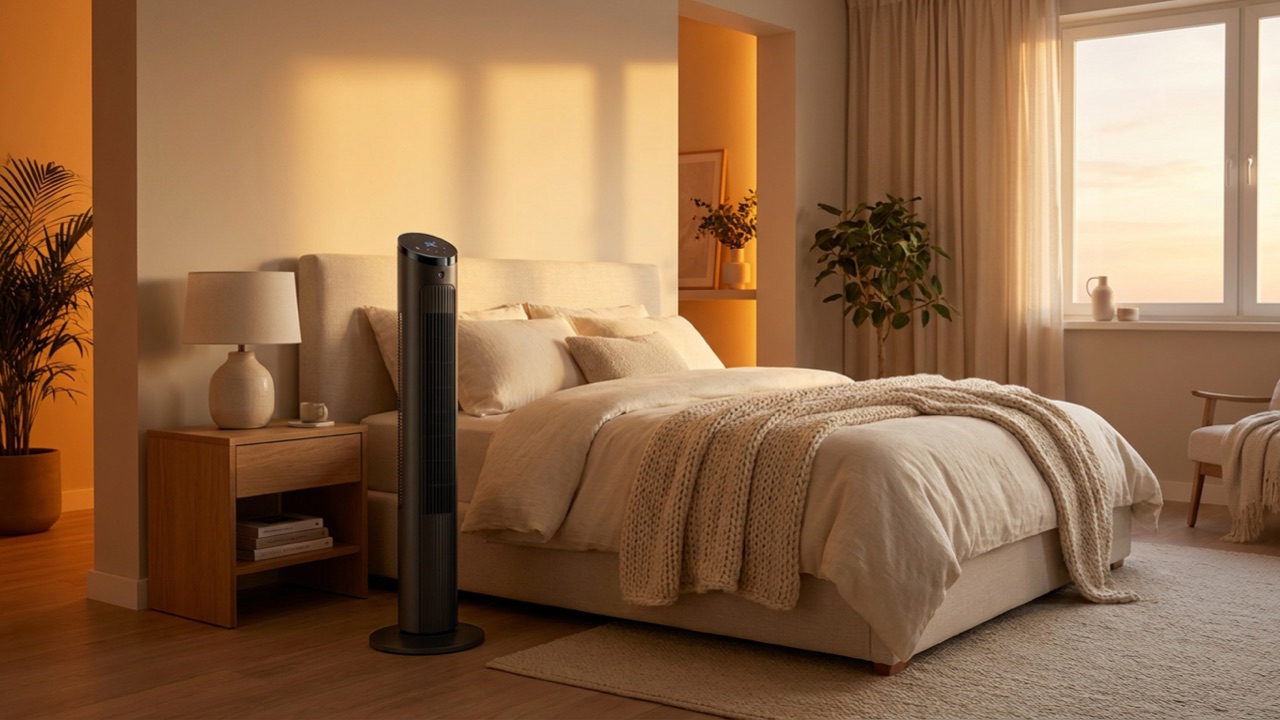
Footprint is the other reason people choose tower over pedestal: a typical tower fan base is
roughly 8-12 inches in diameter, compared with a pedestal fan's wider tripod stance, so a tower fits
into a corner, beside a nightstand, or in a narrow gap between furniture without becoming a trip
hazard. Height usually runs 30-42 inches, tall enough to move air at seated or standing head height
in most rooms.
Smart features and remotes
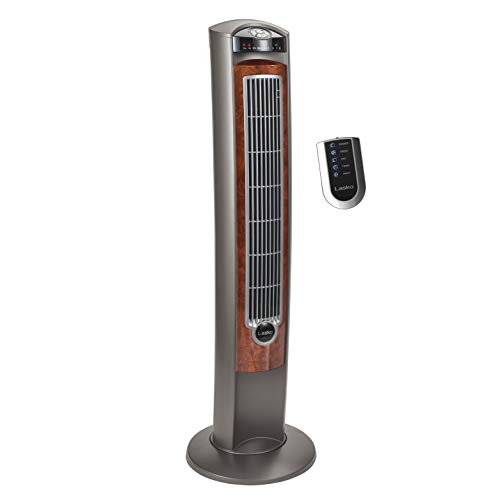
Nearly every mid-range and premium tower fan now ships with a remote control, and many add an
onboard LED display with a timer (commonly 1-12 hours in hourly increments, sometimes finer). Step
up further and you'll find Wi-Fi-enabled models that work with Amazon Alexa or Google Assistant,
letting you schedule the fan, adjust speed from an app, or fold it into a broader smart-home
routine (running it automatically when a smart thermostat or humidity sensor crosses a threshold,
for example). If you want app control, confirm the fan uses a standard smart-home protocol before
buying, since some budget "smart" fans use a proprietary app with limited routine support.
Air filtration: what tower fans do and don't do
A basic tower fan moves air; it does not clean it. Some tower fan and air-circulator hybrids add a
simple mesh pre-filter to keep dust and pet hair out of the internal blades, which helps the motor
stay clean but is not the same as HEPA filtration. If you want measurable air-quality improvement —
capturing fine particles, pollen, or smoke — you need a dedicated air purifier with a true HEPA
filter, sized to your room's square footage, run alongside your fan rather than instead of it.
Don't rely on fan marketing language like "purifying" or "fresh air" as a substitute for a
certified filtration spec.
Choosing between tower and pedestal
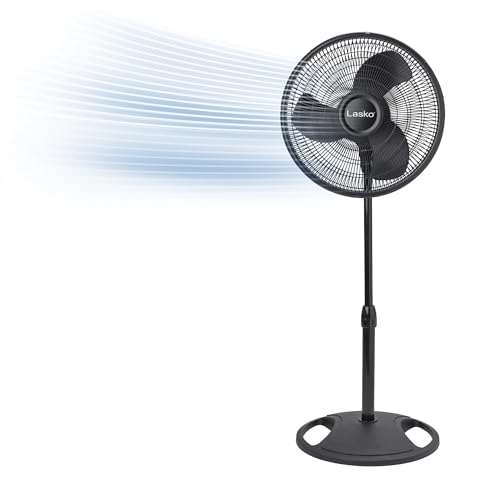
Tower fans win on footprint, oscillation coverage, and typically quieter operation at low-to-medium
speeds. Pedestal fans usually win on raw CFM per dollar and repairability, since their open blade
design is simple to clean and service. If your room is small, your floor space is tight, or noise
at night matters most, a tower fan is usually the better fit; if you're cooling a large open room
and want maximum airflow for the lowest price, a pedestal fan is worth a look too.