

Choosing Outdoor String Lights That Last All Year
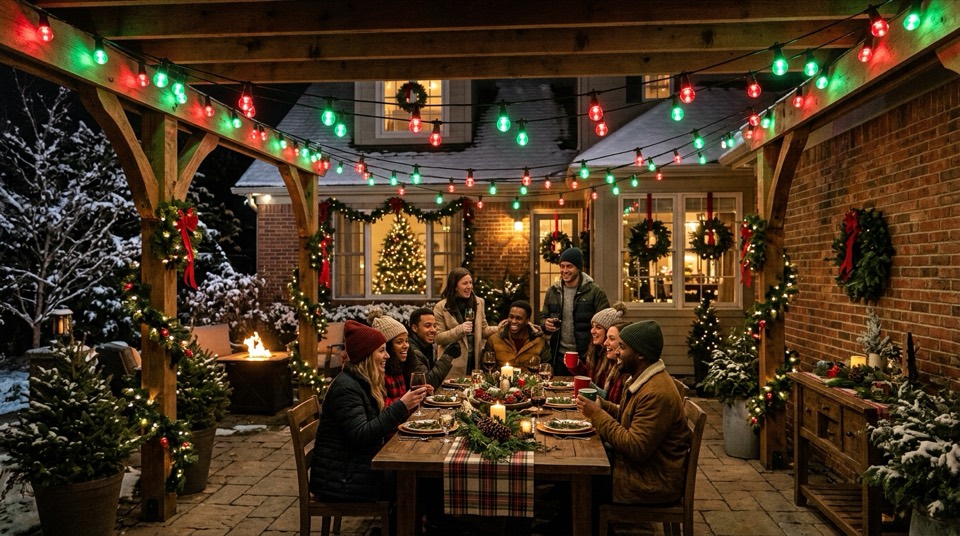
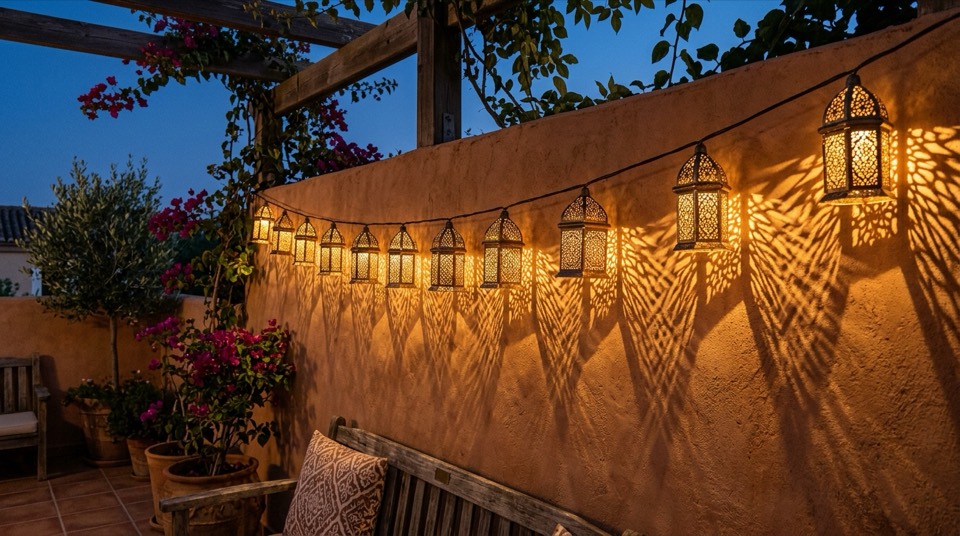
Patio string lights have moved well past a seasonal decoration. Cafes, backyards, decks, and pergolas now run them as year-round ambient lighting, which means the lights need to survive rain, summer heat, and winter cold without fading or failing. The right choice comes down to four things: bulb type, weatherproofing, power source, and how you plan the layout.
Bulb Types: G40, Edison (S14), and Shatterproof Options
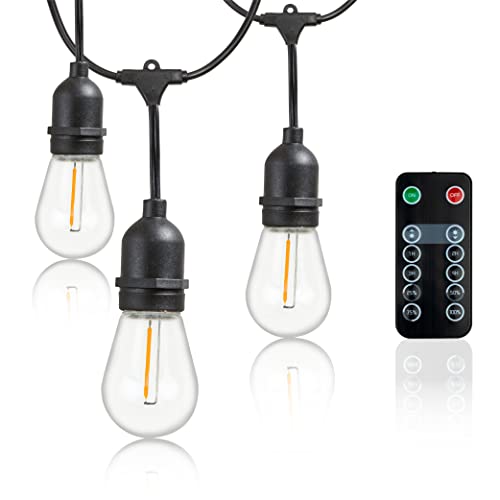
Most patio string lights use one of two bulb shapes. G40 bulbs are the small, globe-shaped bulbs most people picture on a cafe patio — compact, evenly spaced, and good for a soft, all-over glow over a dining area or pergola. Edison-style bulbs (often labeled S14) are larger, teardrop-shaped bulbs with a visible vintage filament look; they read as more decorative and work well spaced farther apart over a larger yard or entertaining space.
Within either shape, look for shatterproof or unbreakable construction. These bulbs use an impact-resistant acrylic or coated-glass shell instead of plain glass, so a dropped ladder, a wind-blown branch, or a kid's baseball doesn't leave shards on the patio. Shatterproof bulbs also tend to hold up better to temperature swings, which matters if the lights stay up through a full winter. Nearly all outdoor-rated sets today use energy-efficient LED bulbs rather than incandescent, which cuts running cost and heat output substantially — useful since the lights are typically strung close to seating.
Weatherproofing and IP Ratings Explained
The IP (Ingress Protection) rating on the packaging tells you how well the light resists dust and water — it is not marketing fluff, it is a tested standard. The number after "IP" has two digits: the first covers dust/solid protection, the second covers water. For string lights left outside year-round, look for at least IP44 (splash-resistant from any direction), with IP65 being a stronger choice if the patio is exposed to driving rain or you live somewhere with heavy storms. Sets rated for "outdoor use" without a stated IP number should be treated cautiously — check the manufacturer's spec sheet rather than the box copy alone.
Weatherproofing isn't only about the bulbs. Check that the socket bases are sealed (rubber gaskets around each socket keep water from tracking into the wire), and that the male/female end connectors have some kind of weather cap or rubber sleeve. A string can have a great IP rating on the bulbs and still fail at a connector that was never sealed.
Solar vs. Plug-In: Which Should You Choose
Solar string lights charge a small panel-and-battery pack during the day and run on LEDs at night, with no cord to route and no outlet needed. They're the simplest option for a spot without nearby power — a fence line, a freestanding pergola, or a rental where you can't run a permanent outdoor circuit. The tradeoff is real: solar sets are dimmer than plug-in LED equivalents, run time drops in winter or under tree cover, and battery packs typically need replacing after a couple of seasons.
Plug-in string lights are brighter, more consistent, and better suited to spaces used for dining or entertaining after dark, since output doesn't depend on how much sun the panel got that day. They do need an outdoor-rated (GFCI-protected) outlet or a properly rated outdoor extension cord. If you're deciding between the two, the general rule is: solar for accent lighting in hard-to-wire spots, plug-in for anywhere you actually need to see.
Planning Your Layout: Hanging and Spacing
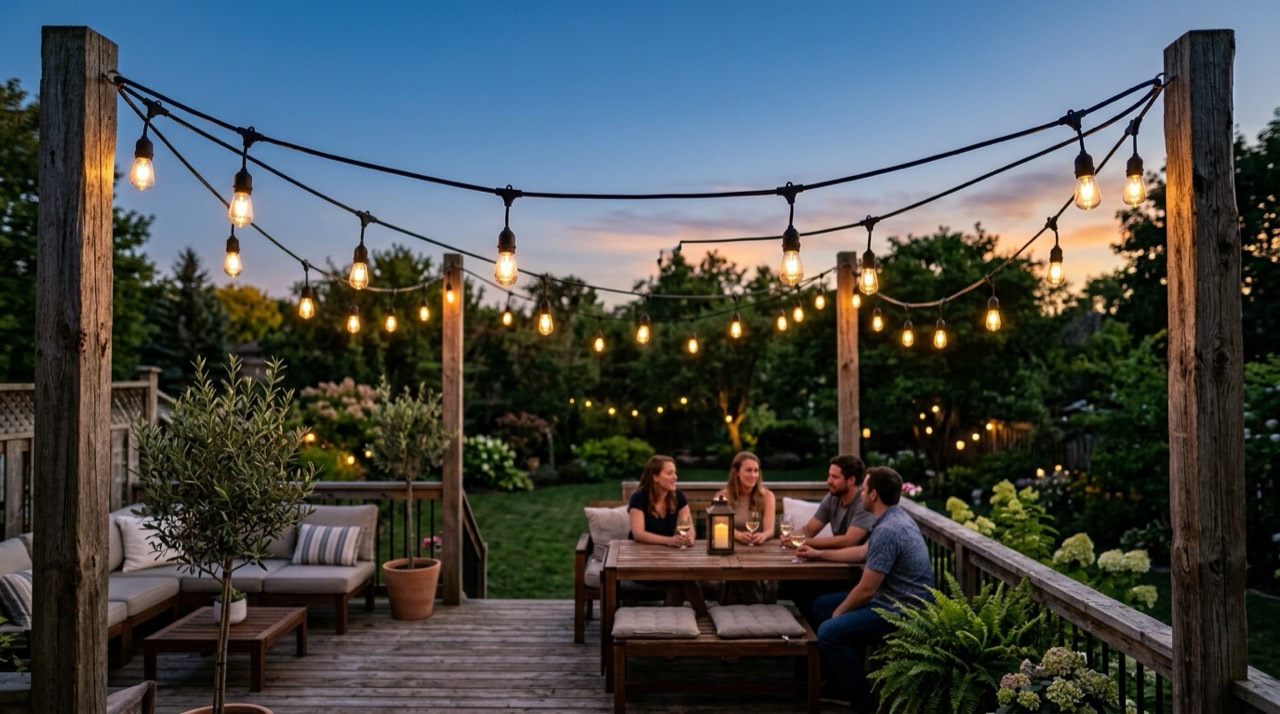
Before buying, measure the run — most manufacturer specs list both total length and bulb spacing (commonly 12 inches for G40 sets, sometimes wider for Edison-style strings), so you can calculate how many bulbs you'll actually get overhead rather than guessing from the box length. A common approach for a rectangular patio is a crisscross or zigzag pattern between anchor points rather than perfectly straight parallel lines; it gives more even light coverage and looks less like a single strand than a canopy.
For sag and wind resistance, plan on roughly a 10% sag allowance between anchor points, and use suspension kits (turnbuckles or guide wire) on longer spans over about 30 feet so the weight of the bulbs and cord doesn't rely on the light string's own wire for support.
Powering Your Lights Safely
Always plug outdoor string lights into a GFCI-protected outdoor outlet, and keep any connections off the ground and covered from direct rain where possible. If your patio doesn't have an outdoor outlet where you want to hang lights, that's a job for a licensed electrician — adding a new outdoor circuit involves permitting and code requirements (per the National Electrical Code, outdoor receptacles need GFCI protection and weatherproof covers) that go beyond a DIY plug-and-hang project. Never modify a light string's wiring or splice cords to extend a run; use manufacturer-approved extension sets instead.
The bottom line: match the bulb style to the look you want, don't skip the IP rating, pick solar only where running power genuinely isn't practical, and plan your spacing before you buy so the finished result covers the space evenly.