

Box Fans vs. Window Fans: What Each One Is Actually For
A box fan and a window fan solve two different problems, even though they're often shelved
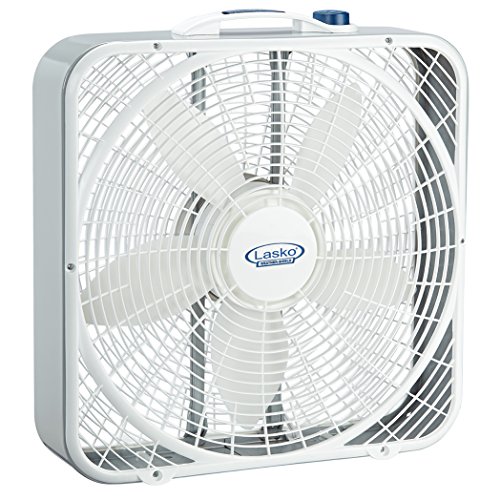
next to each other at the hardware store. A box fan is a general-purpose air mover — square,
usually 20 inches on a side, meant to sit on the floor, in a doorway, or on a stand and push
air across a room. A window fan is built to sit inside a window frame, sealed against the
sash on either side, so it can move air between indoors and outdoors instead of just
recirculating what's already in the room. Understanding that distinction is the key to
getting real cooling out of either one, rather than just noise and moving warm air around.
Intake vs. Exhaust: The Core Concept
Every window fan (and any box fan used in a window) can work two ways:
- Intake mode pulls cooler outside air into the room. Use this on the shaded, cooler side
- Exhaust mode pushes warm indoor air out. Use this on the side of the house that's
The classic whole-house trick is a two-fan cross-ventilation setup: one fan blowing in on
the cool side, one blowing out on the warm side, with doors open between them so air actually
has a path to travel. A single fan in a single window without a cross-breeze will cool that
one room somewhat but won't move much air through the rest of the house.
Reversible Motors
Most dedicated window fans include a reversible motor with an intake/exhaust switch,
often per-blade on twin models (see below), so you can set each fan independently rather than
physically flipping the whole unit around. This matters because window fans are also weighted
and shaped to seal into a track — flipping the housing itself is often awkward or impossible
once it's mounted. A reversible switch is the feature that actually lets you match the fan to
the time of day: exhaust in the evening as the house is still hot inside but cooling outside,
then intake overnight and into early morning while outdoor air is coolest, then back to
exhaust or off once the sun is back on that side of the house.
Plain box fans, by contrast, are almost never reversible electronically — you get airflow
direction by physically turning the fan around or by choosing which side faces the wall or
window. (See the FAQ on "which way should a box fan face" for the specific logic there.)
Getting a Proper Window Fit
Window fans are designed to expand and seal within a standard double-hung window opening,
typically fitting widths from roughly 24 to 37 inches, with accordion-style side panels that
extend to close the gaps and block bugs, dust, and a lot of the airflow leakage that would
otherwise defeat the purpose. A poor fit — panels not fully extended, gaps left at the top or
sides — lets air short-circuit around the fan instead of through it, and lets in rain and
insects. Before buying, measure the window opening width with the sash raised to the height
you intend to run the fan at, and check the panel range printed on the box against that
measurement, not just the fan's own width.
Twin and Triple Window Fans
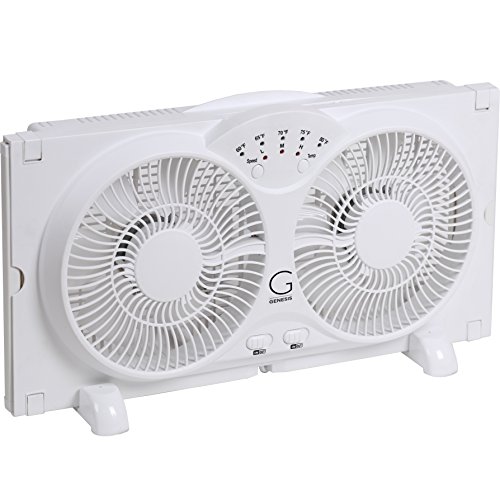
Single-fan window units exist, but twin-blade (two fans side by side in one housing) and
occasionally triple-blade window fans are the more common and more useful format for a
standard window. The main advantage isn't just more airflow — it's independent control: one
blade can be set to intake while the other is set to exhaust in the same window opening,
creating a mini cross-breeze through a single window without needing two separate window
openings on opposite sides of the house. That's genuinely useful in apartments or rooms with
only one usable window. Twin units also tend to run quieter per unit of airflow than a single
larger blade pushed hard, since the load is split across two smaller motors.
Weather Resistance
Because a window fan sits partly exposed to the elements — especially in an open, ventilated
position overnight — look for a housing with some weather resistance: a sealed motor
housing, UL or ETL listing for the intended use, and ideally a "weather-shield" or
splash-resistant design if the fan will regularly face light rain blown in at an angle. No
window fan on the market is rated for direct, driving rain — always close the window (or
remove the fan) ahead of a storm, and never run one in standing water or a flooded sill.
Check the manufacturer's guidance on rain exposure specifically, since ratings vary
significantly between economy and mid-tier models.
Putting It Together
For most one-window rooms, a twin reversible window fan set to exhaust in the evening and
intake overnight covers the bulk of what a window fan is good for. For whole-house venting,
pair an exhaust window fan on the warm side with an intake window fan (or an open, unfanned
window) on the cool side. Reserve a plain box fan for spot cooling a person, circulating air
from a window fan deeper into a room, or drying out a damp space — not for trying to replace
proper window-to-window ventilation on its own.