

Motion-Sensor & Security Lighting: The Complete Guide
Motion-sensor lights turn on automatically when they detect movement, then switch off after a set delay. Used on porches, garages, driveways, and side yards, they deter prowlers, help you see your keys in the dark, and cut down on wasted energy compared with a light left burning all night. Choosing the right one comes down to four decisions: sensor type, detection range and angle, power source, and whether you also want dusk-to-dawn (ambient-light) operation layered in.
PIR vs Dual-Tech Sensors
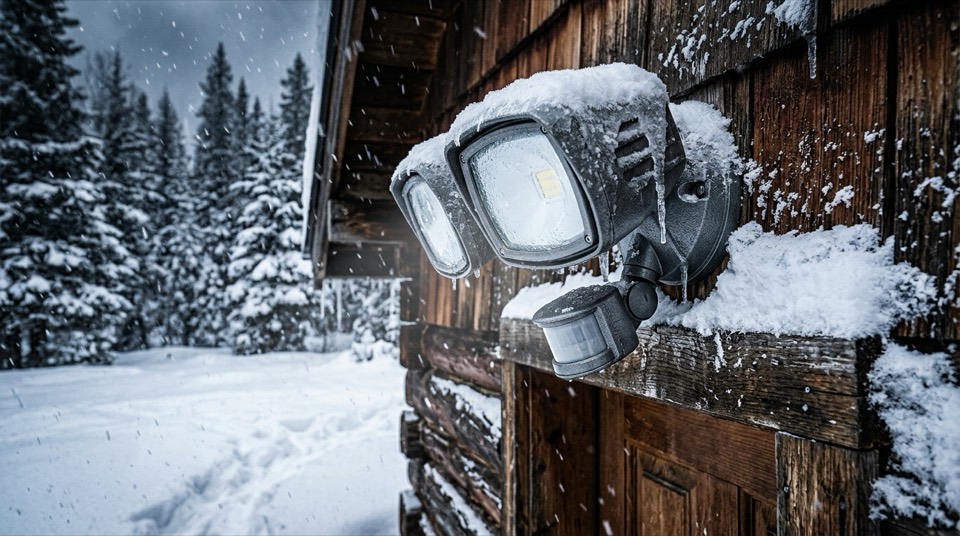
Most residential motion lights use a passive infrared (PIR) sensor. PIR sensors detect the infrared heat signature given off by a warm body (a person, a car engine, sometimes a large dog) as it moves across the sensor's field of view. PIR is inexpensive, fast to react, and works well in most backyard and porch applications. Its main weakness is false triggers from windblown branches, passing cars' headlights, or rapid temperature swings, and reduced sensitivity through glass or in very hot weather when the ambient temperature gets close to body temperature.
Dual-tech (or "dual detection") sensors combine PIR with a second technology — typically microwave or ultrasonic — and only trigger the light when both technologies agree that something moved. This dramatically cuts false alarms, which matters for security-grade fixtures covering a driveway or a commercial entrance. Microwave-assisted dual-tech units can also see around some obstructions and through thinner materials, since microwave detection relies on reflected radio waves rather than heat. The trade-off is cost and, in some models, slightly slower response since the unit is cross-checking two signals.
For a typical house, a good PIR fixture from a reputable brand is plenty. Reserve dual-tech for higher false-alarm environments: busy streets, areas with a lot of tree movement, or where the light aims across a public sidewalk.
Detection Range and Angle
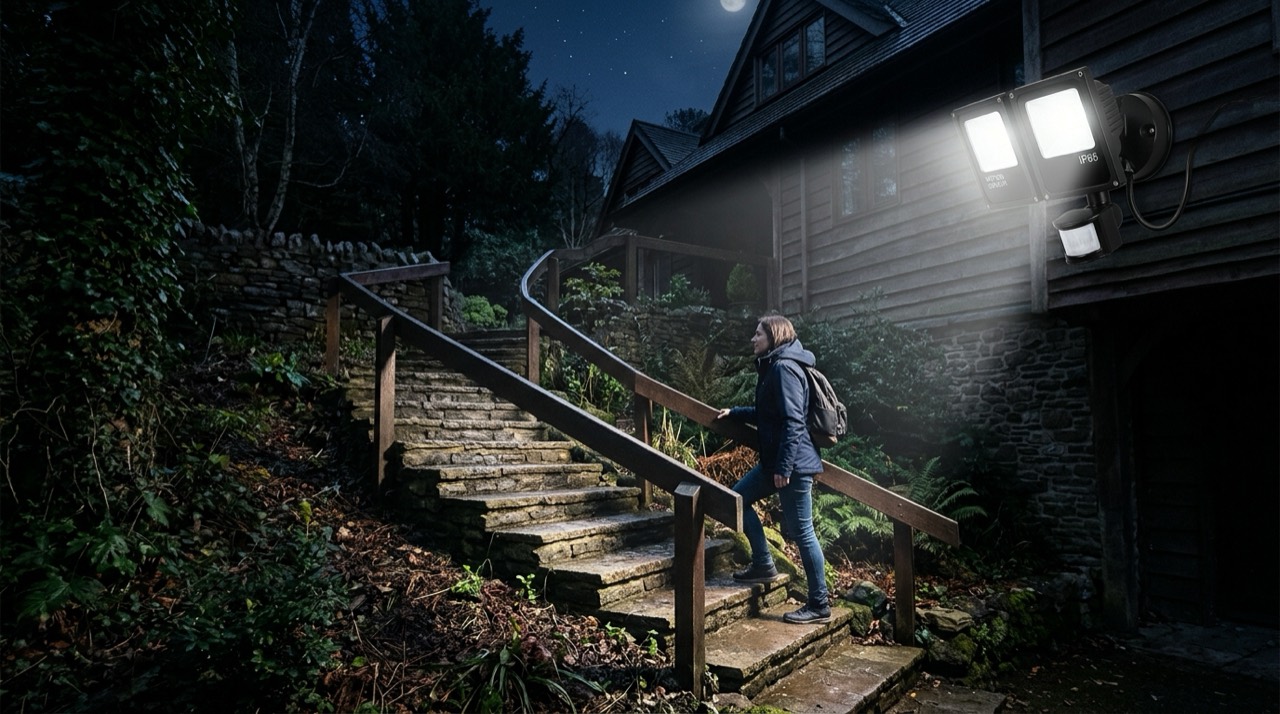
Two specs matter more than any marketing language: detection range (how far away, in feet, the sensor can pick up motion) and detection angle (how wide a cone or arc it covers, in degrees). Residential PIR sensors commonly cover 20–70 feet at a 120–180 degree arc, with sensitivity dropping off toward the edges of that arc. A single fixture mounted 8–10 feet high, aimed down a driveway, will generally out-perform the same unit mounted flat against a wall facing open sky, because PIR sensors are most sensitive to motion crossing side-to-side through their field of view, not motion walking straight toward the lens.
When comparing spec sheets, treat the maximum range number as a best-case, direct-approach figure. Real-world performance is usually 60–80% of the rated distance once you account for mounting height, angle, and ambient temperature. If you need to cover a long driveway or a wide yard, look at multi-head floodlight fixtures with independently adjustable lamp heads, or plan for two fixtures with overlapping coverage rather than stretching one unit to its rated limit.
Solar vs Hardwired vs Battery
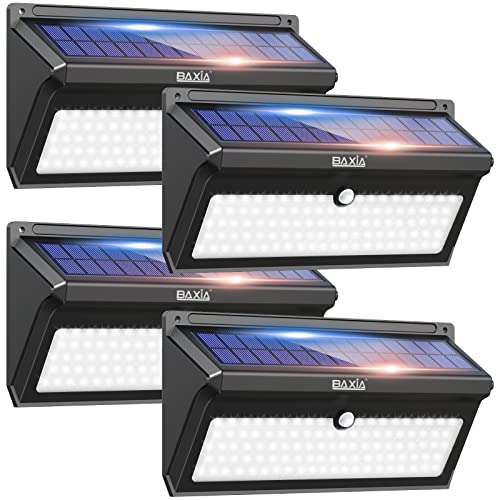
Solar-powered motion lights are the easiest to install — no wiring, no electrician, just a bracket and screws — and are a good fit for sheds, fence lines, and detached structures far from an outlet. Their limitations are real: output is lower than hardwired equivalents, they need direct sun exposure to recharge, and performance drops in winter or in shaded, tree-covered yards. Battery-powered units (non-solar, replaceable or rechargeable batteries) solve the sun-exposure problem but need periodic battery swaps or recharging, which is easy to forget until the light stops working.
Hardwired fixtures wired into your home's electrical circuit deliver the highest and most consistent brightness, run on demand with no battery to check, and are the standard choice for main entry points, garages, and anywhere security performance matters most. The trade-off is installation: hardwired floodlights typically replace an existing porch or garage light fixture, or connect to a new switched circuit.
Dusk-to-Dawn Operation
Many motion-sensor fixtures include a photocell (light sensor) that disables the motion trigger during daylight and re-enables it at dusk, so the light doesn't fire uselessly at noon. Some fixtures go a step further and offer a true dusk-to-dawn mode, where the fixture provides a low, steady ambient glow all night and then boosts to full brightness when motion is detected — giving you both a "we're home" porch glow and a security response in one fixture. When shopping, check whether "dusk-to-dawn" describes this dual-brightness behavior or simply an always-on photocell light with no motion function at all, since both are marketed under similar language.
Choosing the Right Setup
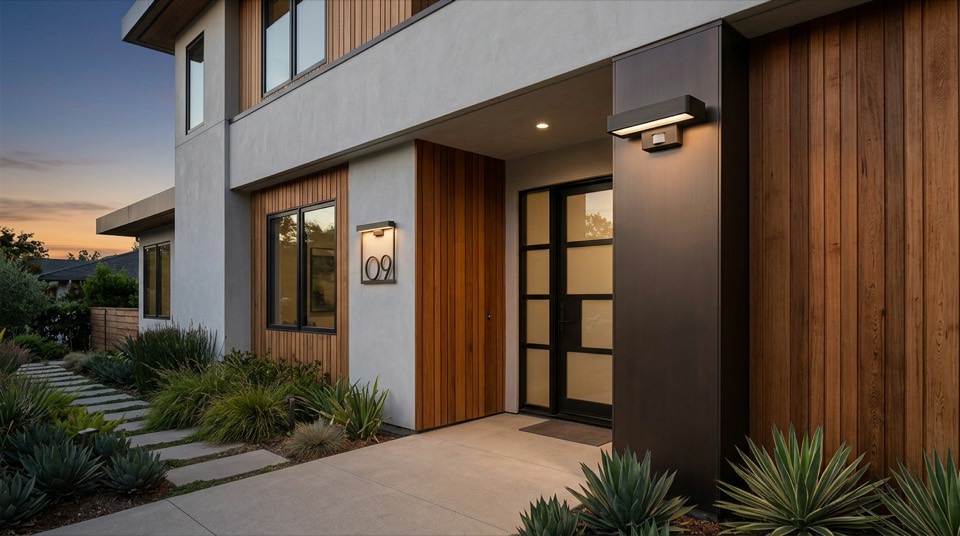
Match the fixture to the location. A well-lit street-facing porch benefits from a hardwired dusk-to-dawn/motion combo fixture. A back fence line or a detached shed favors solar. A driveway or side yard prone to false triggers from traffic or foliage is the strongest case for dual-tech. For whole-property coverage, many homeowners mix technologies: hardwired floodlights on the house, solar accents along paths and fences, layered with smart lighting and cameras for full coverage.