

Choosing the Right Lamp for Every Room
A ceiling fixture lights a room evenly, but it almost never lights it well. The rooms that feel the most comfortable to sit in usually rely on a mix of ceiling light and portable lamps layered at different heights - a floor lamp in the corner, a table lamp on the console, a desk lamp angled over a keyboard. Getting that mix right starts with understanding what each lamp type is actually for.
Floor Lamps: Fill the Empty Corners
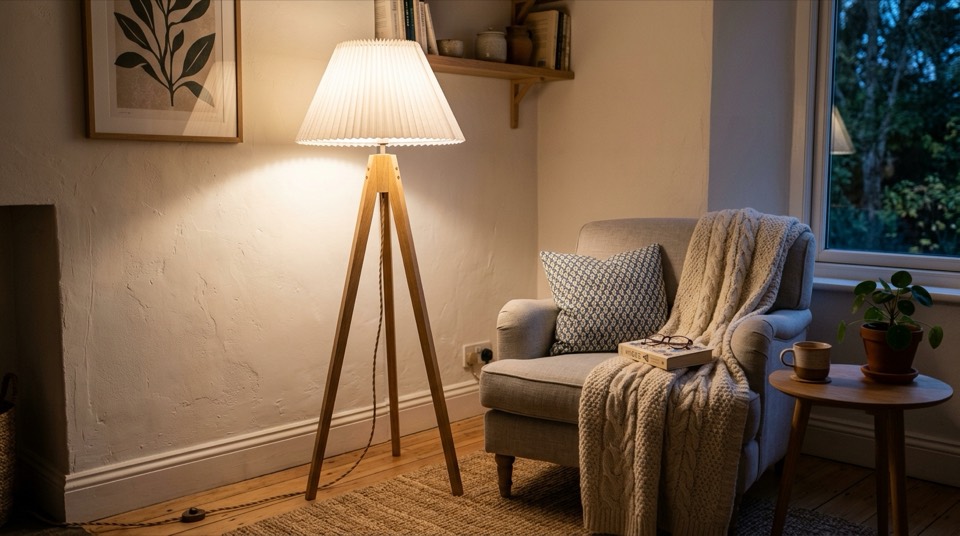
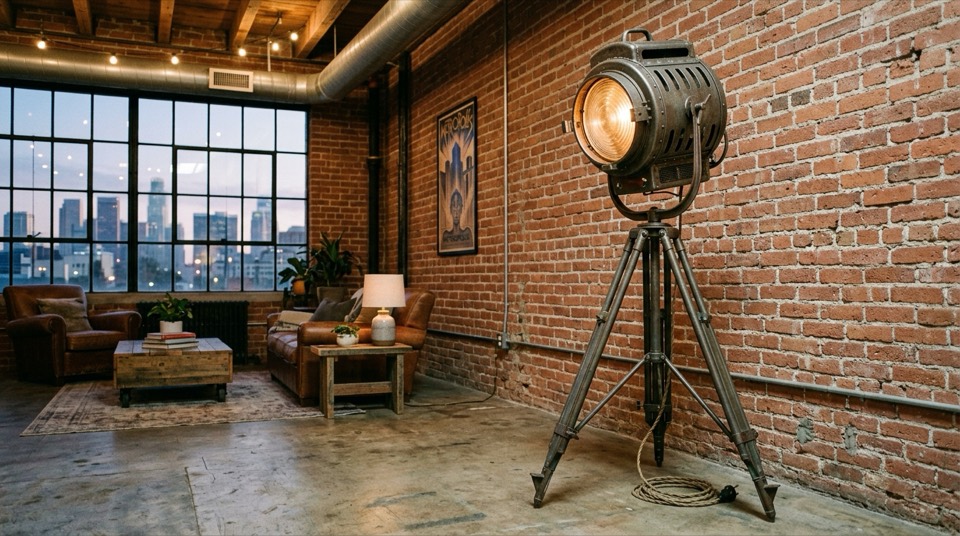
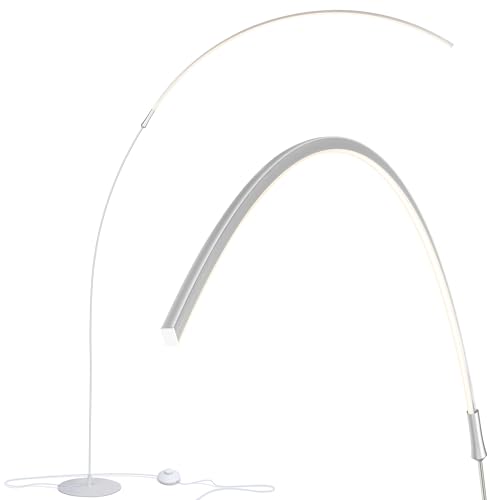
Floor lamps do the heavy lifting in a seating area. A torchiere-style floor lamp bounces light off the ceiling for soft, ambient fill, which is why it pairs so well with a reading chair or a sofa that sits away from a window. An arc floor lamp does the opposite job - it reaches out over a sofa or accent chair to put usable light directly where a table lamp can't, without needing a side table at all. Tree-style floor lamps with multiple heads split the difference, giving you several small pools of light instead of one big wash.
Most floor lamps for living rooms run 58 to 65 inches tall, which puts the shade roughly at or just above seated eye level - tall enough to avoid glare, short enough to still feel proportional next to an 30-36 inch sofa arm. Oversized rooms with 9-10 foot ceilings can go taller; a lamp under 55 inches in a large room tends to look stranded.
Table Lamps: Balance and Task Light Together
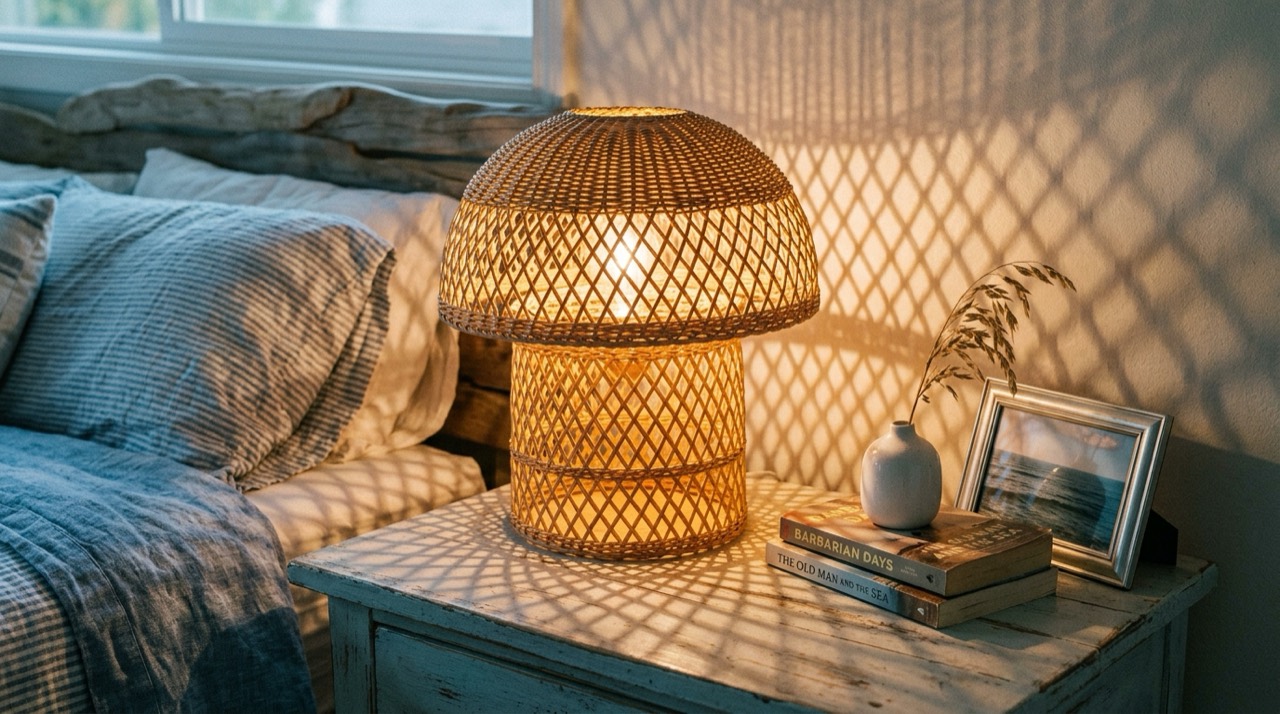
Table lamps do double duty as both light sources and design objects, which is why pairs are so common on console tables and nightstands. The classic sizing rule is that the lamp, base to top of shade, should measure roughly one-third the height of whatever wall space it's filling, and the bottom of the shade should sit at or just below eye level when you're seated nearby - typically 58 to 64 inches from the floor once it's on the table. On a nightstand, the bottom of the shade should land close to eye level when lying in bed, so a shorter lamp (24-28 inches total) usually reads better than a tall one.
Shade width matters as much as height: a shade should generally be about as wide as the lamp base is tall, and roughly two-thirds the height of the whole lamp. A shade that's too narrow throws a tight, harsh circle of light; too wide and the lamp looks top-heavy.
Desk Lamps: Task Light That Doesn't Cause Eye Strain
A desk lamp has one job - put even, glare-free light on a work surface - and that makes it the most technical category of the three. Look for an adjustable arm or gooseneck so the light source can be aimed away from your eyes and the eyes of anyone across the desk. Right-handed users generally do better with the lamp positioned to the left of the work area (and vice versa) so the hand doesn't cast a shadow over the page or keyboard.
Many current desk lamps use LED panels with adjustable color temperature, letting you shift from a cooler, more alert 5000-6000K for detailed work to a warmer 2700-3000K for evening use. That flexibility is worth paying for if the desk pulls double duty as a workspace and a reading spot.
Matching Brightness and Color Temperature to the Task
Lumens - not watts - are the number that actually describes brightness, and it's worth checking the packaging rather than assuming. As a rough guide from lighting manufacturers and the U.S. Department of Energy's lighting guidance: ambient corner lighting from a floor lamp works well around 800-1,100 lumens, a living room table lamp for general use sits around 450-800 lumens, and a dedicated reading or desk lamp benefits from 800-1,200 lumens focused more directly on the task.
Color temperature, measured in Kelvin, shapes the mood as much as the lumen count. Warm white (2700-3000K) is the standard for living rooms and bedrooms because it reads as relaxed and residential. Cooler light (3500-4100K) suits desks and craft or hobby spaces where color accuracy and alertness matter more than coziness. ENERGY STAR-certified LED bulbs are worth prioritizing across all three lamp types - they typically use 75-90% less energy than the incandescent bulbs they replace and last many times longer, which adds up on lamps that tend to stay on for hours at a time.
Smart Bulbs vs. Smart Lamps
Rather than replacing a favorite lamp to get smart features, it's usually simpler to add a smart bulb - brands like Philips Hue and Govee make screw-in LED bulbs that support dimming, scheduling and voice control through any lamp's existing socket. That's a cheaper upgrade path than buying a lamp with built-in smart electronics, and it means the smart features move with you if the lamp itself ever gets replaced.
Basic Safety Notes
Floor, table and desk lamps are plug-in fixtures, not hardwired ones, so most of the safety considerations are about everyday use rather than electrical work. Check that any lamp carries UL or ETL certification, avoid running its cord under a rug where damage can go unnoticed, and don't exceed the maximum bulb wattage printed inside the socket - that's most often listed for older incandescent-rated fixtures and matters less with LED bulbs, but it's still worth checking. If a lamp base ever feels warm to the touch, the cord shows fraying, or a plug fits loosely in the outlet, stop using it and replace the lamp or cord rather than working around the problem. Anything beyond that - adding a new wall outlet for a lamp, wiring a built-in floor outlet, or any other project that involves opening up a wall or a breaker panel - should go to a licensed electrician rather than a DIY fix.