Vintage & Edison Bulbs: Complete Guide
Comprehensive technical analysis of sizing, materials, installation requirements, and manufacturer standards for vintage & edison bulbs.

Recommended Products
See the full ranking →


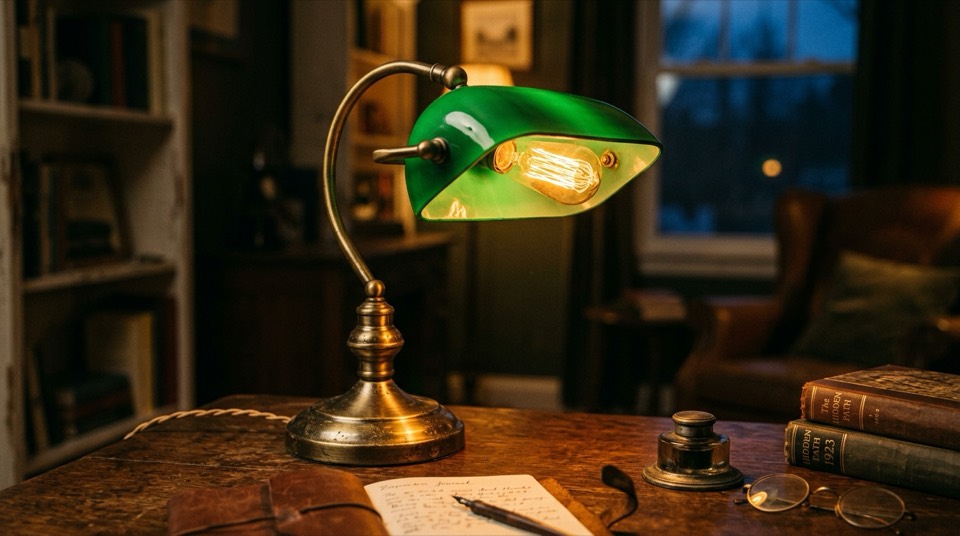
Vintage and Edison-style bulbs copy the look of the earliest carbon-filament bulbs from the late 1800s: a clear or lightly tinted glass envelope that shows off a visible filament, instead of hiding the light source behind frosted glass or a diffuser. Almost every bulb sold this way today is LED, not the old high-heat, short-life incandescent design — manufacturers replicate the warm glow and filament shape with LED filament strips (thin diodes on a glass or sapphire substrate) instead of an actual heated wire. That gives you the decorative look with a fraction of the energy use and a much longer rated lifespan, typically 15,000 to 25,000 hours compared to roughly 1,000 hours for an old-style incandescent.
The letter-and-number code on the package describes the bulb's shape and its diameter in eighths of an inch.
- ST64 (and the similar ST58/ST19) — "ST" stands for "sign" or "straight-tapered." These have a rounded top that tapers down to a narrower neck, echoing old marquee and sign bulbs. ST64 is about 2.5 inches wide, one of the most common vintage shapes for pendant lights, exposed-bulb fixtures, and open sconces where the bulb itself is the visual feature.
- A19 — the standard pear-shaped household bulb silhouette, the same shape as a typical incandescent or modern LED bulb. A19 vintage bulbs put a visible filament inside the familiar shape, so they work in enclosed lamps and fixtures where a dramatic ST or globe shape would look out of place.
- Globe (G25/G40) — fully round bulbs, sized by diameter in eighths of an inch (G25 is about 3.125 inches, G40 about 5 inches). Globes are the standard choice for bathroom vanity strips, makeup mirrors, and statement pendants where an even, ball-shaped glow matters more than a tapered silhouette.
Vintage and Edison bulbs are almost always sold in the warm end of the color temperature scale, measured in Kelvin:
- 2000K-2200K — often labeled "amber" or "antique" — a noticeably orange, candle-like glow associated with the earliest carbon-filament bulbs. This is the warmest, most dramatic vintage look, best suited to accent and mood lighting rather than a room's main light source.
- 2400K-2700K — labeled "soft white" or "vintage warm" — closer to a traditional incandescent bulb, still warm but with enough white in the mix to read comfortably as general room lighting.
Most vintage LED bulbs are sold as dimmable, but "dimmable" on the package only guarantees compatibility with certain dimmer types. LED filament bulbs generally pair best with dimmers designed for LED loads; older rotary or slide dimmers built for incandescent bulbs can cause flickering, buzzing, or a limited dimming range (many LED-compatible dimmers bottom out around 5-10% brightness rather than dimming to a true off-like glow). If you're installing a new dimmer switch specifically to run vintage bulbs, check the dimmer manufacturer's compatible-bulb list — Lutron and Leviton both publish these — rather than assuming any dimmer marked "LED compatible" will pair cleanly with a filament-style bulb.
Non-dimmable vintage bulbs exist too, usually at a lower price point, and will not respond to a dimmer at all — some flicker, buzz, or run at a fixed brightness regardless of the switch position. Check the package specifically for a "dimmable" listing before buying if the fixture is on a dimmer circuit.
Most vintage bulbs use a standard E26 medium screw base (the same base as a typical American household bulb), though smaller E12 candelabra bases are common on chandelier-style vintage bulbs. Check your fixture's existing bulb or socket before ordering.
Because these bulbs are LED, the printed wattage is low — commonly 4 to 7 watts — with a separate "equivalent" figure (usually 40W or 60W equivalent) describing the old-incandescent brightness it replaces. Lumen output for a 40W-equivalent vintage bulb typically runs 300-450 lumens; a 60W equivalent runs closer to 500-800 lumens. Vintage bulbs are usually dimmer, lumen-for-lumen, than a plain frosted LED at the same equivalent wattage, since some light is intentionally styled to glow from the visible filament rather than maximized for output.
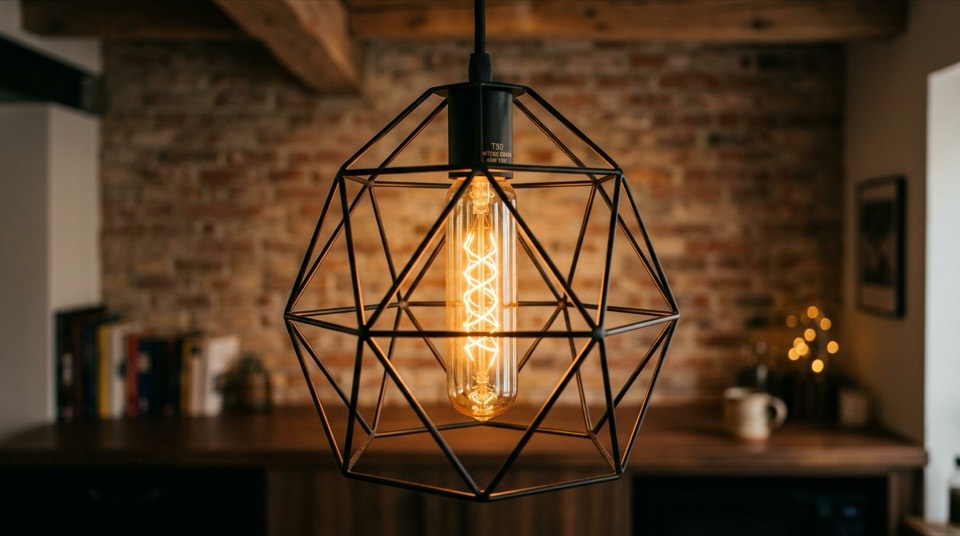
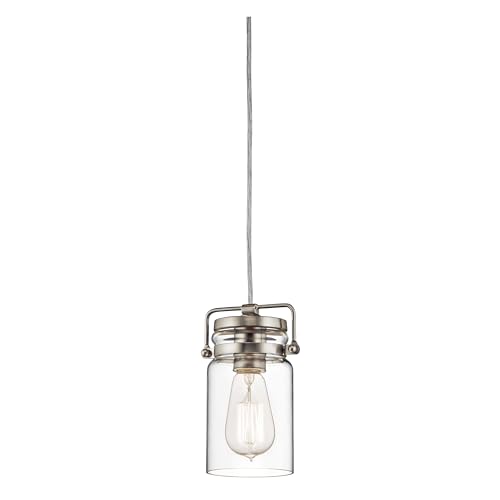
Open, exposed-bulb fixtures — pendants, sconces, and cage-style fixtures — are the natural home for vintage bulbs, since the fixture is designed to show the filament off. In fully enclosed fixtures or globes, an A19 shape works better than a dramatic ST64, since the enclosure hides most of the silhouette anyway. For damp locations such as covered porches or bathrooms near a shower, confirm the bulb or fixture combination carries a damp-rated (or wet-rated, for direct exposure) UL listing before installing — plain indoor-rated vintage bulbs are not designed for that environment.
Check the color temperature and shape code on the listing before ordering — "Edison bulb" alone doesn't guarantee ST64 over A19, or 2200K over 2700K. If dimming matters, confirm dimmability on the specific SKU rather than the brand's general lineup, since the same brand often sells both dimmable and non-dimmable versions of a similar-looking bulb.
Go Deeper
Detailed companion guides for vintage & edison bulbs.
LED Filament vs Incandescent Edison Bulbs Compared
LED filament vs incandescent Edison bulbs compared: energy use, lifespan, light quality, dimming, and which vintage bulb fits your fixture.
Edison Bulb Color Temperature and Warm Glow Explained
Edison bulb color temperature explained: why these bulbs glow amber at 2000-2400K, how Kelvin works, and how to pick the right warm tone.