Portable & Room Fans: Tower, Pedestal, Box & Bladeless
Portable cooling fans for any room — tower, pedestal, box, window and bladeless air circulators, compared on airflow, noise and value. Authoritative manufacturer specifications, sizing parameters, and sub-category master breakdown.
- 4
- Sub-Categories
- 8
- In-Depth Guides
- 20
- Products Reviewed
- Aug 2026
- Last Reviewed


Recommended Products

Sub-Category Micro Hubs
In-depth technical analyses, material specifications, and comparative evaluation.
Tower Fans
Detailed evaluation of anatomical parameters, safety standards, and practical recommendations for tower fans.
Pedestal & Standing Fans
Detailed evaluation of anatomical parameters, safety standards, and practical recommendations for pedestal & standing fans.
Box & Window Fans
Detailed evaluation of anatomical parameters, safety standards, and practical recommendations for box & window fans.
Bladeless Fans & Air Circulators
Detailed evaluation of anatomical parameters, safety standards, and practical recommendations for bladeless fans & air circulators.
A portable fan is the fastest, cheapest way to make a room feel cooler without touching your thermostat, and it is often the first thing people reach for before committing to a ceiling fan or air conditioning. The catch is that "portable fan" covers a wide range of shapes, and a fan that is perfect on a nightstand can be useless in a garage. This overview walks through how the main types differ, the ideas that matter across all of them, and how to figure out which specific guide you actually need.
Portable and room fans do one simple thing well: they move air. Moving air helps sweat evaporate off your skin, which is what makes you feel cooler even when the room temperature has not dropped a single degree. That is worth understanding up front, because it shapes everything about how you use them.
A fan does not lower the temperature of a room. It makes you feel cooler while you are in the airflow. That distinction explains a few common frustrations:
- A fan running in an empty room is wasting energy, since there is no skin for the moving air to cool.
- On a genuinely hot, humid day, a fan can only do so much, and pointing one at yourself for hours can leave you dehydrated without feeling cooler.
- In mild weather, a well-placed fan can replace air conditioning entirely and cost a tiny fraction as much to run.
Most portable and room fans fall into a handful of families. Each one solves a slightly different problem, and knowing the trade-offs makes the choice much easier. This site has a dedicated guide for each, so the goal here is just to help you recognize which one fits your situation.
Tower fans
Tower fans are the tall, slim columns that take up almost no floor space. They oscillate to spread air across a room and usually run quietly, which makes them a favorite for bedrooms, living rooms, and offices where a big footprint is not welcome. They tend to move a moderate amount of air rather than a powerful blast, so they suit gentle whole-room comfort more than aggressive cooling.
Pedestal and standing fans
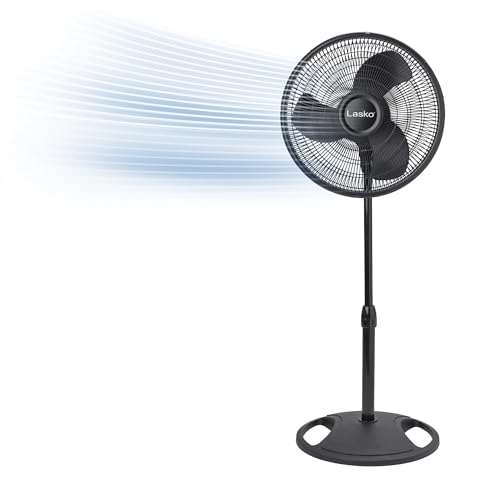
Pedestal fans put a large blade on an adjustable pole, so you can raise the airflow to bed height, couch height, or standing height. They generally move more air than a tower fan of similar price and let you aim that air precisely with tilt and oscillation. The trade-off is a wider base and a more visible presence in the room. They are a strong all-rounder for larger spaces.
Box and window fans
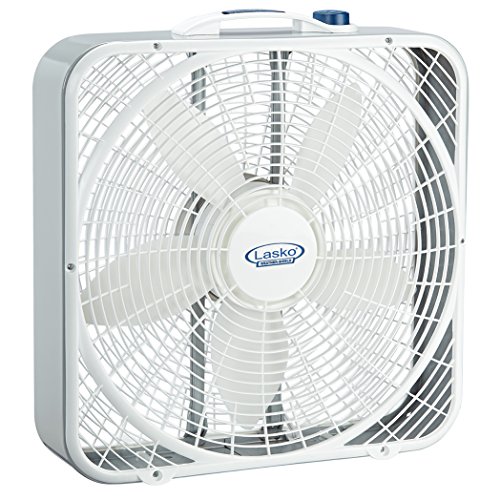
Box fans are simple, boxy, and built to move a lot of air for the money. Their real strength shows up in a window: set one to blow out and it pulls warm indoor air away, or set it to blow in and it draws cooler outside air during the evening. Some people run two, one in and one out, to create a cross-breeze through the whole home. They are less about looks and more about raw air movement and ventilation.
Bladeless fans and air circulators
This group covers two different ideas that often get shelved together. Bladeless fans hide the moving parts inside the base and push air through a ring, which many people prefer around children and pets and for easy cleaning. Air circulators are built to throw a focused, high-velocity stream far across a room to keep the whole space mixing, rather than just cooling the person sitting in front of them. If your goal is even temperatures throughout a room instead of a direct breeze, this is the family to look at.
No matter which type you land on, the same handful of ideas decide whether you will be happy with a fan. Getting a feel for these makes every product description easier to read.
Airflow and CFM
CFM stands for cubic feet per minute, and it measures how much air a fan actually moves. A higher CFM means more air, which usually means a stronger cooling feeling and better ability to serve a larger room. It is the closest thing to a single "how powerful is it" number, though it is not the whole story, since how the air is directed matters just as much as how much of it there is.
As a rough mental model:
- A small personal or desk fan moves a little air over a short distance.
- A room fan handles a bedroom or home office comfortably.
- A large pedestal, box, or high-output circulator can serve an open living area or a garage.
Oscillation and direction
Oscillation is the side-to-side sweep that spreads air across a room instead of a single fixed lane. It is great for shared spaces and for keeping a whole seating area comfortable. When you want to cool one person or push air toward one spot, turning oscillation off and aiming a fixed stream is more effective. Many fans also tilt up or down, which matters more than people expect, since aiming air along the ceiling or floor changes how a whole room feels.
Noise
Noise is the quiet dealbreaker. A fan that is pleasant in a living room can be maddening next to your pillow. A few things help:
- Lower speeds are much quieter, so a larger fan run on low often beats a small fan run flat out.
- A steady "whoosh" is easier to sleep through than a rattle, hum, or clicking, which usually signal a loose part or an unbalanced blade.
- Some people rely on that steady sound as white noise, while others need near silence, so it is a personal call.
Footprint and placement
Where a fan will live is as important as how it performs. Tower fans slip into corners, pedestal fans need floor room, box fans want a window or a flat surface, and circulators need clear space in front to throw air. Measure the spot before you buy, and think about whether the fan needs to move between rooms or stay put.
Energy use
Fans are cheap to run compared with air conditioning, which is a big part of their appeal. Running a fan costs a small fraction of what cooling the same space with an AC unit does. The smartest setup often pairs the two: let the AC do lighter work at a slightly higher setting while a fan keeps the air moving, so you feel just as comfortable for less. On mild days, a fan alone may be all you need.
Portable fans are low-risk appliances, but they are still electrical devices with moving parts, so a little care goes a long way. This is general guidance, not a substitute for the instructions that come with your specific fan.
- Cords: Do not run a fan's cord under a rug or across a doorway where it gets crushed or tripped over. Avoid chaining cheap extension cords, and unplug a fan by the plug, never by yanking the cord.
- Tip-over: Tall pedestal and tower fans can be knocked over, especially by kids or pets. Place them on a level surface and steer clear of high-traffic paths. Some fans include a tip-over cutoff, which is a nice extra.
- Water: Keep fans away from sinks, tubs, and pools, and never handle one with wet hands. A standard room fan is not built for wet locations.
- Guards and cleaning: Keep the grille in place, and keep small fingers and curious pets away from spinning blades. Bladeless designs sidestep a lot of this, which is part of their appeal for family spaces. Unplug any fan before you clean it, and let dust build-up stay in check, since a clogged fan moves less air and works harder.
- Placement and heat: Give a fan clear space so it can pull air in freely, and do not drape clothing or bedding over it. Unplug fans you are not using for a long stretch.
Portable fans, ceiling fans, and air conditioning are not really competitors so much as tools for different jobs, and the best homes often use all three.
A portable fan wins when you want flexibility. You can move it to whatever room you are in, aim it exactly where you want, run it for pennies, and set it up with zero installation. That makes it ideal for renters, spare rooms, workshops, and anyone who wants targeted cooling on demand.
A ceiling fan wins for permanent, whole-room comfort. It is out of the way, cannot be knocked over, and gently circulates air across the entire space without eating floor real estate. The trade-off is that it is fixed in one spot and takes an installation.
Air conditioning is the tool that actually lowers temperature and pulls humidity out of the air. On genuinely hot or muggy days, a fan cannot match it. But running a fan alongside AC lets you feel comfortable at a higher thermostat setting, which trims the running cost of the more expensive appliance.
A simple way to decide: if you need to move air where you are, reach for a portable fan; if you need to cool the air itself, that is an AC job.
You do not need to weigh every option at once. Match your situation to a type, then dig into that dedicated guide:
- Tight on space or want it quiet for a bedroom or office - start with the Tower Fans guide.
- Larger room and you want strong, aimable airflow at any height - start with the Pedestal and Standing Fans guide.
- You want to ventilate, pull in cool evening air, or move a lot of air cheaply - start with the Box and Window Fans guide.
- You want even temperatures throughout a room, or a design that is easy to clean and safer around kids and pets - start with the Bladeless Fans and Air Circulators guide.
