Best Recessed Lighting
Best Recessed Lighting, ranked from aggregated owner ratings and reviews, not first-hand testing. Real pros, cons, and who each pick is best for.

Our Top 3 Picks
Quick Comparison
| Product | Best for | Buy | |
|---|---|---|---|
| HLB6 Series 6-Inch Canless LED Recessed Light | Best Overall | See Amazon | View |
| 6-Inch LED Recessed Downlight (Slim Retrofit) | Best Value | See Amazon | View |
| Oculux 3.5-Inch Adjustable LED Downlight | Best Premium | See Amazon | View |
| Hue BR30 Smart LED Recessed Bulb | Best Smart Pick | See Amazon | View |
| Ultra 6-Inch Canless LED Recessed Light | Best for Whole-Home Retrofits | See Amazon | View |
| 6-Inch LED Direct-to-Ceiling Downlight | Best for New Construction | See Amazon | View |
What to Look For
Canless LED or Traditional Can-and-Trim
For most homeowners replacing old incandescent can lights or adding lighting to a finished ceiling, a canless (wafer-style) LED is the simplest path: the housing is shallow, installation doesn't require attic access for the fixture body, and there's no separate bulb to fail. Choose a traditional can-and-trim system if you want the flexibility to change trims later, or you're matching existing housings in new construction.
Size: 4-Inch vs. 6-Inch
6-inch fixtures are the default for general room lighting; 4-inch fixtures suit hallways, small bathrooms, and accent applications where a tighter beam is wanted. Mixing sizes in one open-plan space usually looks inconsistent - pick one size per room or zone.
IC Rating and Airtight Construction
If the fixture will be near attic insulation, it must be IC-rated. Airtight (AT) construction is worth paying for even where not strictly required - it cuts down on air leakage between conditioned living space and the attic, which the U.S. Department of Energy has flagged as a common source of recessed-lighting-related energy loss.
Lumens and Wattage Equivalent
Compare lumen output, not just wattage-equivalent claims. A 6-inch LED recessed light in the 650-900 lumen range (roughly a 65-75W incandescent equivalent) is typical for ambient lighting; kitchens and workspaces benefit from the higher end of that range or closer fixture spacing.
Color Temperature
Selectable-CCT fixtures (usually switching between 2700K, 3000K, 3500K, 4000K, and 5000K on a small in-housing switch) remove the guesswork - you can test how a space feels before committing. If buying fixed-CCT lights, use 2700-3000K for living rooms and bedrooms and 3500-4000K for kitchens, bathrooms, and garages.
Dimming Compatibility
Confirm the fixture is dimmable and check the manufacturer's list of compatible dimmers - LEDs paired with an incompatible incandescent-era dimmer can flicker, buzz, or fail to dim smoothly. A dimmer rated for LED loads, such as Lutron's Caseta or Diva LED lines, is the safer match.
Damp/Wet Listing for Bathrooms and Exterior Use
Any fixture over a tub or shower, in a soffit, or exposed to weather needs a damp- or wet-location UL listing. Standard dry-location fixtures are not rated for that exposure and shouldn't be substituted.
Smart Features
Smart-enabled recessed lights and retrofit bulbs (color-tunable, app- and voice-controlled) add convenience and scheduling but usually cost more per fixture and may need a hub or bridge depending on the ecosystem. They're a nice upgrade, not a requirement for good lighting.
Who Should Skip a DIY Recessed Lighting Project
Skip the DIY route - and call a licensed electrician instead - if any of the following apply: the ceiling has no accessible attic or joist bay above it and framing would need to be cut; the home has older wiring (knob-and-tube, ungrounded two-wire, or aluminum branch circuits) that hasn't been evaluated; you need to add a new circuit or run cable through finished walls; the ceiling is plaster-and-lath rather than drywall, which cuts and patches very differently; or you're simply not comfortable working inside live electrical panels and ceiling cavities. A licensed electrician can also confirm your local permit requirements, which most US jurisdictions require for new lighting circuits.
For a straightforward swap - replacing an existing bulb, trim, or a like-for-like canless retrofit in a housing that's already safely wired - most confident DIYers can handle the job once the power is confirmed off at the breaker.
Full Ranking, Reviewed
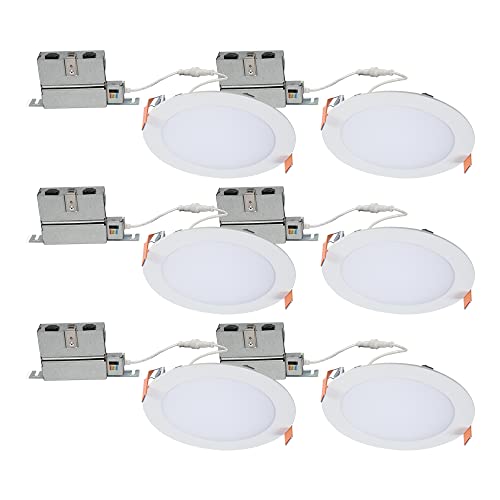
Best for Best all-around ambient lighting for most rooms
- Selectable 2700K-5000K color temperature via in-housing switch
- IC-rated and airtight housing for attic installation
- Dimmable with compatible LED dimmers
- Around 90 CRI light quality
- Fast, tool-light installation in shallow ceiling cavities
- Backed by a well-known, widely stocked lighting brand
- Good fit for both new construction and remodel retrofits
- Selectable-CCT switch has to be set before the trim is closed up on new-construction jobs
Verdict: A dependable, widely available canless LED that covers most general-lighting needs without any surprises.

Best for Budget-friendly retrofit for updating old can lights
- Slim canless design fits shallow retrofit housings
- Selectable or fixed color temperature depending on model
- Dimmable
- ENERGY STAR qualified on select models
- Lower price point than premium brands
- Easy retrofit into standard 5/6-inch can openings
- Widely available at home improvement retailers
- Trim finish options are more limited than premium lines
Verdict: A solid, inexpensive way to replace outdated incandescent or CFL can lights without hiring extra labor.

Best for Accent and gallery-style lighting with precise aiming
- Adjustable gimbal trim for aiming light onto art or features
- High CRI (90+) LED engine
- Available in multiple color temperatures
- Low-glare reflector design
- Premium build quality and finish options
- Excellent color accuracy for art, kitchens, and display areas
- Aimable trim adds flexibility standard downlights lack
- Smaller 3.5-inch size means more fixtures are needed for whole-room ambient lighting
- Higher price per fixture than standard canless LEDs
Verdict: The pick for homeowners who want directional accent lighting rather than flat, even ambient light.

Best for Adding smart control to existing can-and-trim recessed housings
- Works in standard BR30-compatible recessed housings
- App and voice control via Hue Bridge or Bluetooth
- White and color-changing options available
- Schedules, scenes, and dimming from a smartphone
- No rewiring - screws into an existing recessed socket
- Strong smart-home ecosystem and reliability track record
- Works with major voice assistants
- Full feature set (routines, out-of-home control) needs a separate Hue Bridge
- Costs considerably more per bulb than a standard LED
Verdict: The easiest way to add smart lighting to recessed cans you already have, without touching any wiring.

Best for Whole-home retrofit projects with consistent trim and finish
- Canless slim profile for shallow joist bays
- Dimmable LED engine
- IC-rated for insulated ceilings
- Multiple finish and trim color options
- Consistent quality across a large multi-fixture order
- Reasonably priced for bulk or whole-house projects
- Reputable, long-established lighting manufacturer
- Color-temperature selection is fixed per SKU rather than switchable on some models
Verdict: A good middle-of-the-road choice when outfitting an entire home or several rooms at once.

Best for New construction and designer-finish trim matching
- Direct-to-ceiling (canless-style) LED module
- Available in multiple trim finishes to match fixtures and hardware
- Dimmable
- IC-rated housing
- Finish coordination with Kichler's broader lighting and hardware lines
- Solid mid-range build quality
- Good fit for new-construction electricians already speccing Kichler
- Fewer retailer stock options than Halo or Feit for quick same-day purchases
Verdict: Worth choosing when you're coordinating trim finishes with other Kichler fixtures in the same room.
Frequently Asked Questions
Do I need an electrician to install recessed lighting?
For a simple bulb, trim, or like-for-like canless retrofit swap in an already-wired housing, many confident DIYers can do the work safely with the power off. Adding new circuits, cutting into unfamiliar wiring, or working with plaster ceilings should go to a licensed electrician, and most US jurisdictions require a permit for new lighting circuits.
What size recessed light should I buy, 4-inch or 6-inch?
6-inch fixtures are the standard for general ambient lighting in kitchens, living rooms, and basements. 4-inch fixtures work better for hallways, small bathrooms, and tighter accent lighting where a narrower beam is wanted.
Can I put recessed lights in a bathroom or outdoor soffit?
Yes, but only with a fixture rated for that location. Use a UL damp-location listing for bathrooms and covered soffits, and a wet-location listing anywhere the fixture could be rained on directly.
How many lumens do I need per recessed light?
Most 6-inch LED recessed lights used for general room lighting fall in the 650-900 lumen range, roughly equivalent to a 65-75 watt incandescent bulb. Task areas like kitchen counters benefit from the higher end of that range or closer fixture spacing.
Are canless LED recessed lights as good as traditional can-and-trim?
For most homeowners, yes - canless LEDs install faster, fit shallower ceiling cavities, and remove the separate bulb-and-socket connection that eventually fails. Traditional can-and-trim still makes sense if you want to swap trims later or are matching existing housings.