Outdoor & Landscape Lighting: Complete Guide
Comprehensive technical analysis of sizing, materials, installation requirements, and manufacturer standards for outdoor & landscape lighting.

Recommended Products
See the full ranking →


Good landscape lighting does three jobs at once: it makes a yard safe to walk at night, it adds curb appeal after sunset, and it highlights the architecture and plants you already paid for. Bad landscape lighting does one thing well — it lights up the neighbors' bedroom windows while leaving your own front steps dark. The difference almost always comes down to planning before you buy a single fixture.
Most outdoor lighting plans mix several fixture categories rather than relying on one:
- Path lights — low, hooded fixtures that wash light downward onto walkways
- Spotlights and uplights — aimed upward into trees, columns, or facades
- Well lights — recessed in-ground fixtures for flush uplighting in lawns and beds
- Deck and step lights — small fixtures set into risers, rails, or posts for tread visibility
- String lights — for patios, pergolas, and entertaining areas
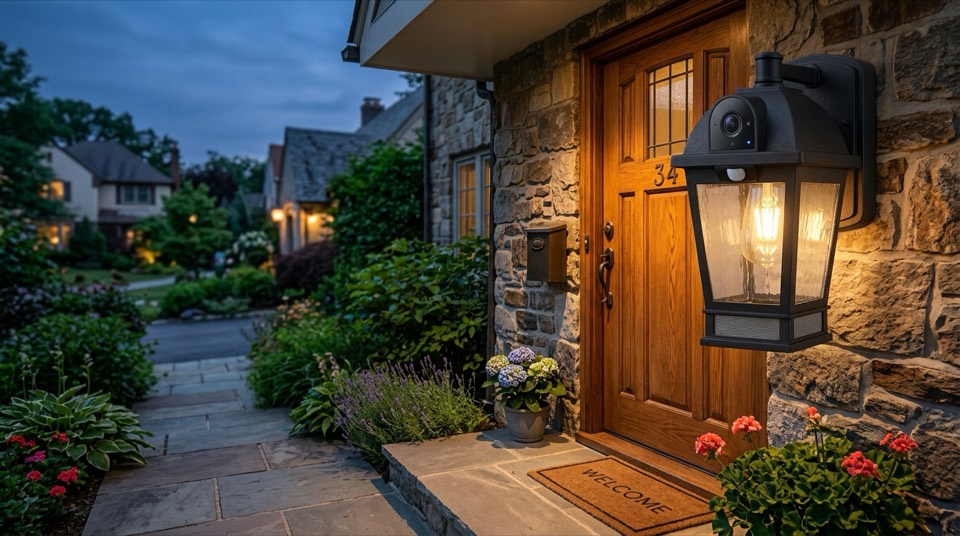
- Flood or security lights — broad, bright coverage for driveways and entry points
Nearly all landscape lighting fixtures run on one of three systems:
- Low-voltage (12V) systems — a transformer steps household 120V power down to 12V, then buried or surface-run cable feeds a string of fixtures. This is the standard for most path, spot, and well lights because it's flexible, relatively easy to expand, and safe to handle at the fixture end.
- Solar fixtures — self-contained units with a small panel, battery, and LED. No wiring at all, but output and runtime depend entirely on how much direct sun the panel gets.
- Line-voltage (120V) systems — full household voltage run through outdoor-rated conduit or cable, typically for permanent floodlights, post lights, or anything requiring higher output over long distances.
Professional-looking landscape lighting uses a handful of repeatable techniques:
- Uplighting — aiming a spotlight up a tree trunk or column to create depth and shadow
- Moonlighting — mounting a fixture high in a tree and pointing it down, mimicking natural moonlight through branches
- Grazing — placing a light close to a textured wall or stone surface so the beam rakes across it
- Silhouetting — lighting a wall behind an interesting plant or feature so its shape stands out in shadow
- Path lighting — spacing fixtures roughly 6 to 8 feet apart, mounted 18 to 24 inches high, alternating sides of a walkway rather than lining both edges evenly, which reads as an airport runway
Walk the property after dark with a flashlight and note focal points: the front door, house numbers, mature trees, retaining walls, water features, and any steps or grade changes that are trip hazards in the dark. Sketch a rough plan marking where each fixture type would go and roughly how much cable run each zone needs. This five-minute walk prevents the most common landscape lighting mistake — buying a boxed 8-fixture kit that doesn't match the actual layout of the yard.
Stick to warm white in the 2700K–3000K range for most residential landscapes — it flatters plant greens, brick, and skin tone, and it reads as intentional rather than clinical. Anything above about 4000K starts to look like a security floodlight. Choose fixtures with shields, hoods, or louvers over the bulb so you see the effect of the light and not the bulb itself; unshielded fixtures aimed at eye level create glare and, on a property line, light trespass onto a neighbor's yard. The Illuminating Engineering Society (IES) and dark-sky advocacy groups both recommend fully shielded, downward-aimed fixtures wherever possible.
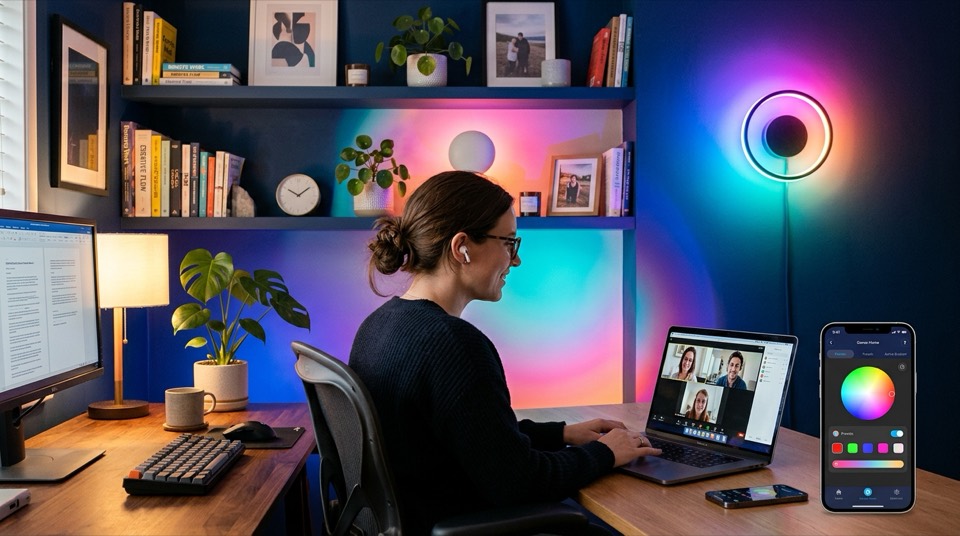
A photocell turns lights on automatically at dusk; a timer adds an automatic off time so lights aren't burning at 3 a.m. Smart plugs and hubs — the same categories used for indoor smart lighting — can layer in scheduling, dimming, and app control for low-voltage transformers rated for smart use.
- Lighting every tree and every plant instead of picking two or three real focal points
- Running low-voltage cable in a straight line to every fixture instead of looping it to reduce voltage drop
- Skipping the GFCI-protected outdoor outlet the transformer needs
- Choosing cool white (4000K+) fixtures that make the yard look institutional
- Aiming spotlights so they shine into windows — your own or a neighbor's
Low-voltage work at the fixture and cable level is genuinely DIY-friendly. The transformer itself should plug into a GFCI-protected outdoor outlet, and any line-voltage work — a new circuit, a new outdoor outlet, or permanent floodlight wiring — should go to a licensed electrician. Always shut off power at the breaker before opening any electrical box, and check local permit requirements before adding new circuits outdoors.
Go Deeper
Detailed companion guides for outdoor & landscape lighting.
Low Voltage vs Line Voltage Landscape Lighting Compared
Low voltage vs line voltage landscape lighting compared: cost, safety, install, and brightness to help you choose the right outdoor system.
How to Size a Landscape Lighting Transformer Correctly
How to size a landscape lighting transformer correctly: add fixture watts, add 25% headroom, plan for voltage drop, and pick the right size.