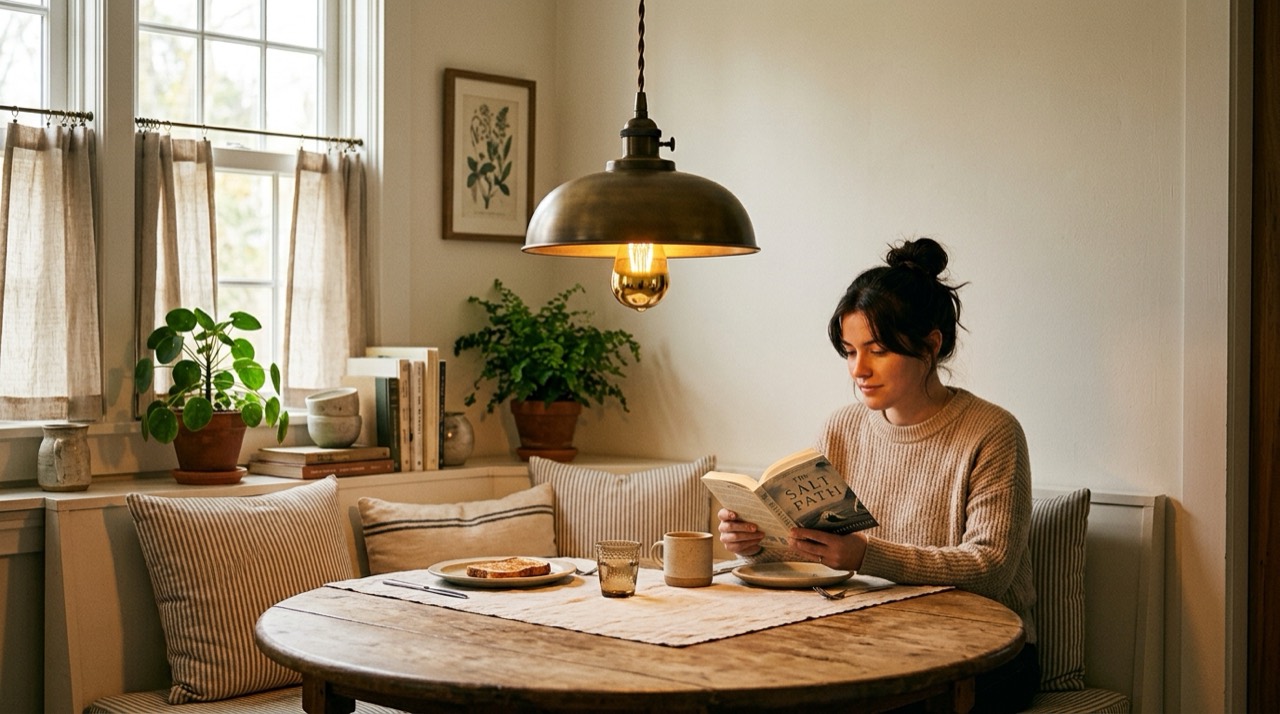


Layering Light: Ambient, Task, and Accent, Room by Room
Good lighting is rarely about one bright fixture in the middle of the ceiling. Rooms that feel well-lit combine three layers of light - ambient, task, and accent - so a space works for movie night, homework, and everything in between. Get the layers right and you can dim, brighten, or re-aim light without ever swapping a fixture. Get them wrong and a room feels either flat and shadowless or harshly overlit in one spot and dark everywhere else.
The Three Layers, Explained
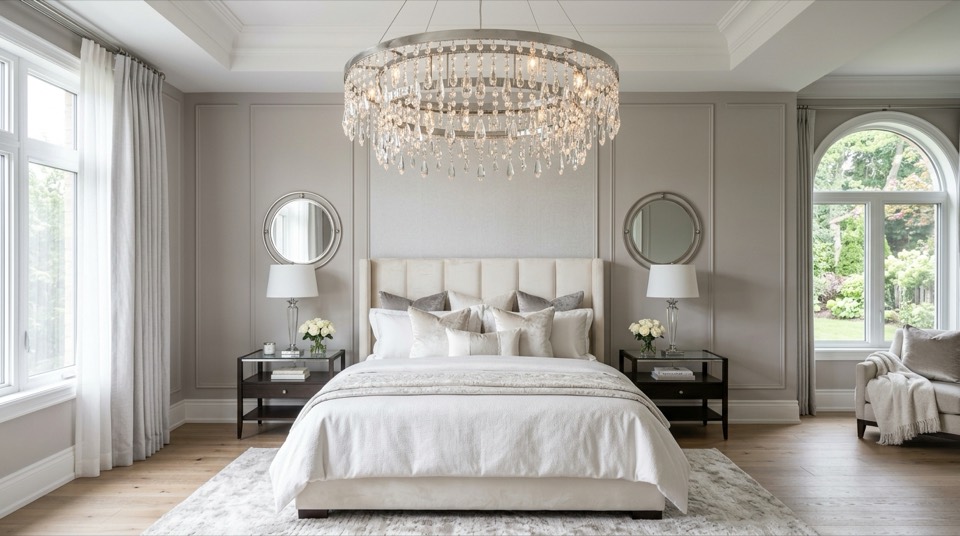
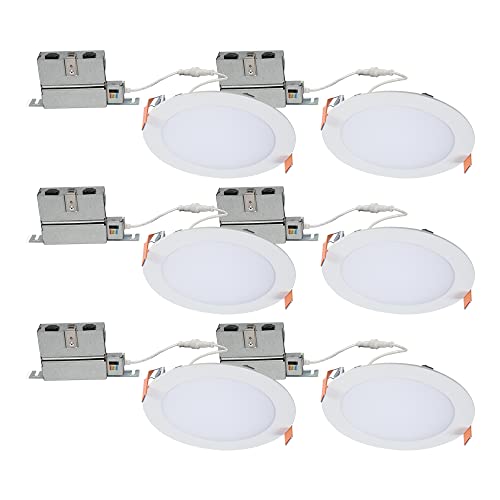
Ambient (general) lighting fills the room with overall brightness - think ceiling fixtures, recessed cans, or a torchiere floor lamp bounced off the ceiling. It's the base layer everything else builds on.
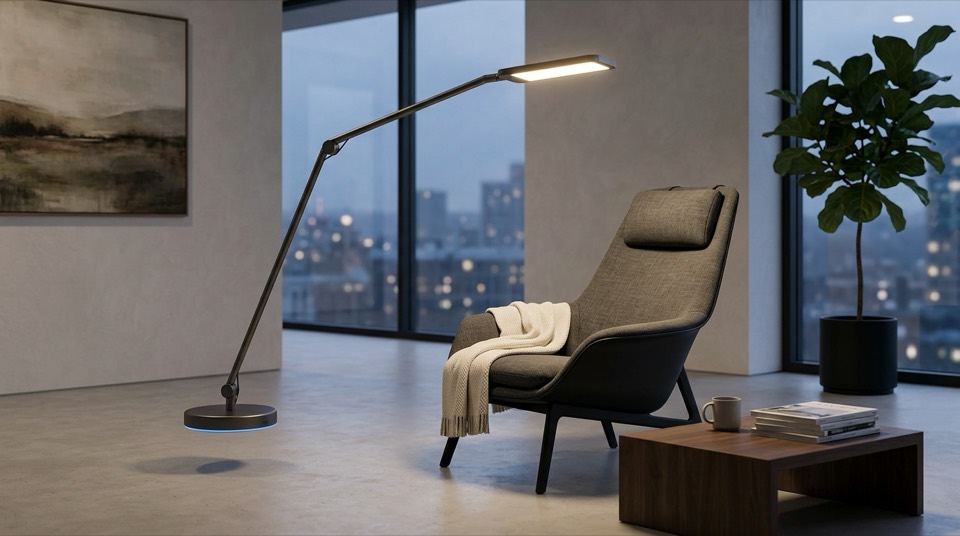
Task lighting is aimed at a specific activity: reading, chopping vegetables, applying makeup, working at a desk. It's brighter and more directional than ambient light, and it should hit the work surface without throwing your own shadow across it.
Accent lighting is decorative rather than functional. Picture lights, LED strips behind a TV or under cabinets, and directional spots on artwork or a bookcase add depth and draw the eye - the difference between a room that looks designed and one that looks flat.
A well-lit room usually needs all three, on separate switches or dimmers, so each layer can be adjusted independently of the others.
How Many Lumens Do You Actually Need?
Lumens measure the total light a bulb or fixture puts out - it's the number on the ENERGY STAR lighting facts label, and it's a far more useful number than watts, which only measures energy used rather than light produced. As a rough planning rule used by lighting retailers and the American Lighting Association, multiply a room's square footage by the foot-candles that its main activity needs, since one foot-candle is roughly one lumen per square foot of floor area. General living spaces call for around 10-20 foot-candles; focused tasks like reading or food prep call for 50-80 foot-candles at the work surface.
That formula gives a starting ambient-layer target - then add task and accent lumens on top. Treat every number below as a planning baseline, not a substitute for a proper photometric layout in a large or unusually shaped room.
Room-by-Room Lumen Targets
- Living room: roughly 1,500-3,000 lumens of ambient light for an average-size room, plus 400-800 lumens per reading lamp and 200-400 lumens per accent fixture.
- Kitchen: kitchens run brighter than any other room - plan on 4,000-8,000 lumens of ambient light overall, with 450-600 lumens of dedicated under-cabinet task lighting per section of counter and 3,000-4,000 lumens combined over an island.
- Bedroom: 1,500-3,000 lumens of soft ambient light is usually enough, since bedrooms lean warmer and dimmer than living areas, plus 400-450 lumens per bedside reading lamp.
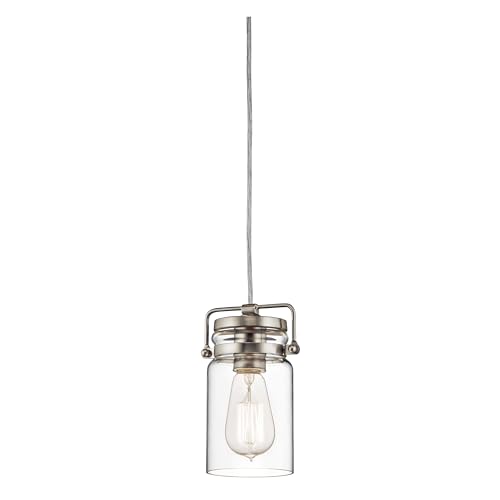
- Dining room: a chandelier or linear fixture centered over the table should deliver roughly 3,000-6,000 lumens combined, sized to the table's length rather than the whole room.
- Hallway: hallways need far less - 200-300 lumens per fixture, spaced every 8-10 feet, is enough to light the path without glare.
- Home office: desk task lighting should hit 450-800 lumens aimed at the work surface, on top of 3,000-4,000 lumens of ambient light for the room as a whole to reduce eye strain against a bright screen.
Matching Color Temperature Across Layers
Lumens aren't the only variable - mixing bulbs at different color temperatures (measured in Kelvin) in the same room reads as sloppy even when the total light output is correct. Living rooms and bedrooms generally look best around 2700-3000K (warm white); kitchens and home offices often shift cooler, toward 3500-4000K, to support alertness and task accuracy. Keep every bulb in a fixture, and ideally every fixture in a room, on the same Kelvin value.
Controlling the Layers
Each layer works best on its own switch, dimmer, or smart control so it can flex with the time of day and activity. A dimmer on the ambient layer, smart bulbs on the accent layer, and a simple on/off task lamp is a common, budget-friendly setup. Smart switches like Lutron Caseta let you dim a hardwired ambient fixture without swapping bulbs, while smart bulbs from brands like Philips Hue add color and scheduling to any lamp already in the room.
A Safety Note Before You Touch Any Wiring
Adding a dimmer, a new switch, or a hardwired fixture means working inside the electrical panel or a wall box. Always turn off power at the breaker before touching any wiring, and if the job involves a new circuit, unfamiliar wiring, or anything you're not fully confident about, hire a licensed electrician. Permits and local code requirements apply to most new hardwired lighting - a DIY dimmer swap on an existing single-pole switch is a common weekend project, but new circuits and box relocations are not.
Common Layering Mistakes
- Relying on a single ceiling fixture as the only light source in a living room or bedroom.
- Mixing warm and cool color temperatures in the same space.
- Skipping task lighting and trying to read or work under ambient light alone.
- Forgetting dimmers, which are what actually let one fixture serve movie night and a bright family gathering equally well.