



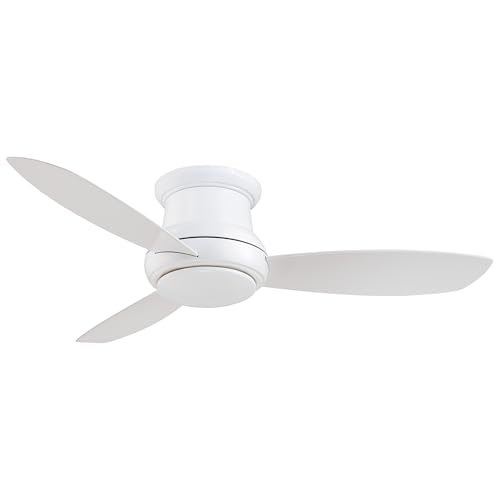
Ceiling Fans for Small Rooms
Small rooms have their own sizing logic, and it runs opposite to what most shoppers expect. The instinct is to buy the smallest fan you can find so it doesn't overwhelm a tight space, but an undersized fan is one of the most common regrets in ceiling fan shopping: it spins fast, sounds busy, and still barely moves air. In a small room, the goal is a fan that is correctly scaled to the floor area and correctly mounted for a low ceiling, not simply the smallest one on the shelf.
What Counts as a Small Room
For sizing purposes, a small room is generally anything under about 144 square feet: a bathroom, laundry room, walk-in closet, small nook, compact home office, or a bedroom in the 10 x 12 ft to 10 x 14 ft range. Multiply length by width in feet to get square footage before you shop; eyeballing a room's size is where most sizing mistakes start.
Blade Span for Small Rooms
| Room Size (sq ft) | Recommended Blade Span | Typical Rooms |
|---|---|---|
| Up to 50 sq ft | 29-36 inches | Bathroom, walk-in closet, small laundry room |
| 50-75 sq ft | 36 inches | Powder room, small nook, compact home office |
| 75-144 sq ft | 36-42 inches | Small to medium bedroom, breakfast nook |
If your room sits right on the border between two sizes, sizing up slightly and running the fan on a lower speed generally works better than sizing down and running it at full speed all the time.
Low-Profile and Hugger Mounts Matter More Here
Small rooms often come with lower ceilings, and mounting style affects both safety and how the fan performs. A flush-mount, or hugger, fan sits directly against the ceiling with no downrod, which keeps blades higher off the floor on ceilings around 8 feet or under. Most building codes and fan manufacturers call for a minimum of 7 feet of clearance between the floor and the blades, so on an 8-foot ceiling a standard downrod-mounted fan may not leave enough headroom. Hugger fans typically move slightly less air than a downrod-mounted fan of the same blade span, which is one more reason not to undersize the blade span itself.
Airflow (CFM) Still Matters in a Small Room
Blade span is a starting point, not the full picture. Airflow is measured in CFM (cubic feet per minute), and ENERGY STAR publishes efficiency figures that make it possible to compare fans beyond diameter alone. For a small room, a combined CFM across all speeds in roughly the 1,000-2,000 range is generally enough to keep air moving without feeling like a wind tunnel. A well-built small fan with a healthy CFM rating will feel more effective than a slightly larger fan paired with a weak motor.
Damp Areas: Bathrooms and Laundry Rooms
A bathroom or laundry room ceiling fan needs the right UL damp rating in addition to the right size. Damp-rated fans are built to handle the humidity and moisture these rooms generate; a standard indoor-rated fan installed in a bathroom can corrode over time or void its warranty. Check the fan's UL listing before buying, not after it's already on the ceiling.
Noise Level in Close Quarters
Small rooms put you physically closer to the fan than a large living room does, so motor noise is more noticeable. Look for fans that specify a quiet or whisper-rated motor, and where possible, favor DC motors, which tend to run quieter than older AC motors at comparable airflow. This matters especially in a bedroom or home office, where a hum or rattle at low speed can be distracting during sleep or focused work.
Blade Material and Finish in Tight Spaces
In a small room, the fan sits closer to eye level and to walls than it would in a large open space, so finish and blade material read more prominently. Painted MDF or plastic blades are budget-friendly and fine for closets or laundry rooms, while wood or wood-look composite blades tend to look better up close in a bedroom or home office. In bathrooms and other humid rooms, favor moisture-resistant plastic or ABS blades over untreated wood-look finishes, which can warp over time even on a damp-rated motor.
A Note on Safety
Ceiling fans are hardwired fixtures regardless of room size, and small rooms are no exception to the electrical basics. Always turn off power to the circuit at the breaker before removing an old fixture or installing a new fan, and confirm it's off with a non-contact voltage tester. Fans need a fan-rated electrical box, not a standard light-fixture box, because they're heavier and vibrate as they spin. If you're adding a new circuit, aren't confident identifying wires, or have any doubt about the existing box, hire a licensed electrician rather than guessing.
Bottom Line
Measure the room, match the blade span to the chart above, and don't reflexively downsize just because the room is small. Check the CFM rating so you know the fan can actually move air, confirm a hugger mount if your ceiling is 8 feet or under, verify a damp rating for bathrooms and laundry rooms, and leave any wiring you're unsure about to a licensed electrician.