

Flush and Semi-Flush Ceiling Lights: A Complete Buying and Sizing Guide
Flush mount and semi-flush mount fixtures are the workhorses of home lighting. They sit close to the ceiling, throw broad, even light across a room, and stay out of the way in spaces where a hanging pendant or chandelier would be impractical - hallways, bedrooms, closets, stairwells, laundry rooms, and any room with standard 8-foot ceilings. If you are furnishing a low-clearance space or replacing a dated builder-grade fixture, this guide covers what actually matters: size, brightness, mounting height, and where these fixtures fit next to ceiling fans and recessed lighting in a whole-room lighting plan.
Flush Mount vs. Semi-Flush Mount
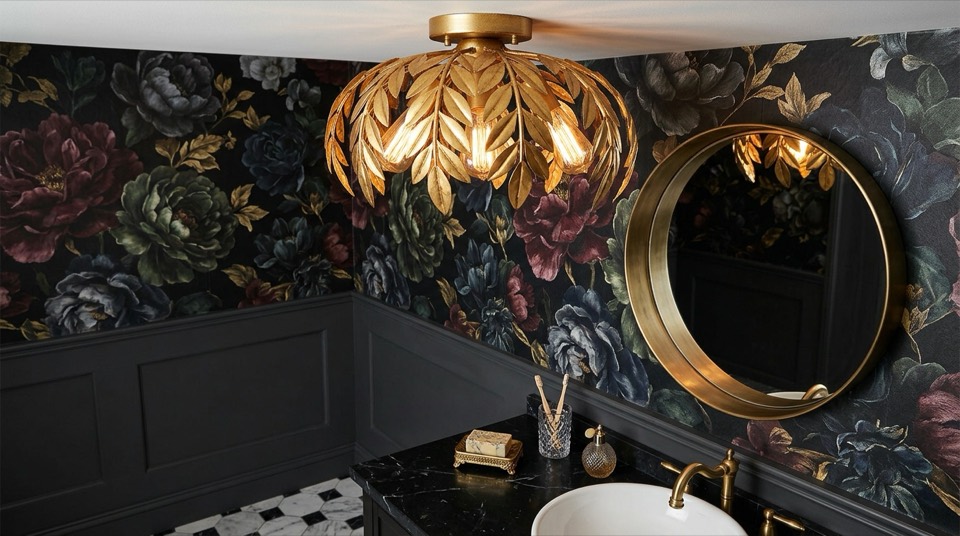
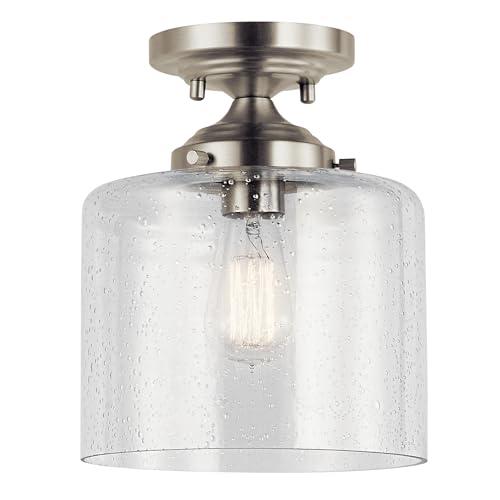
A true flush mount sits directly against the ceiling with no visible gap - the housing is the whole fixture. A semi-flush mount drops down on a short stem or downrod, typically 4 to 10 inches, which lets light spread more evenly around the fixture and gives it a bit more visual presence. Semi-flush fixtures work well in rooms with 9-foot-plus ceilings; true flush mounts are the safer choice anywhere clearance is tight, including over stairs, in mudrooms, or in bedrooms with low ceilings.
Sizing the Fixture to the Room
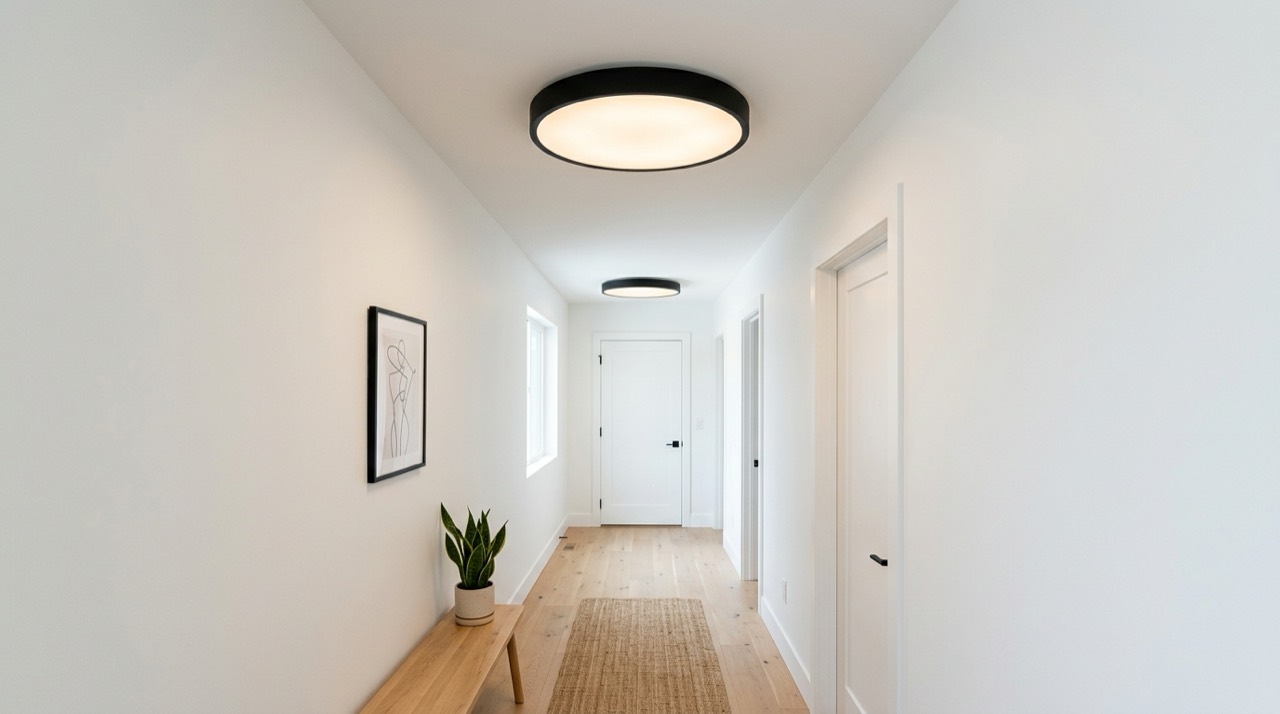
A fixture that is too small for its room looks like an afterthought, and one that is too large overwhelms the space. A simple starting formula: add the room's length and width in feet, and use that number in inches as a rough fixture diameter. A 12-by-14-foot bedroom (26 combined feet) suits roughly a 24 to 26-inch fixture, or two smaller flush mounts spaced evenly if the room is long and narrow. For hallways, a series of smaller flush mounts spaced 8 to 10 feet apart usually reads better than one oversized fixture in the middle.
How Much Light Do You Actually Need
Skip watts and think in lumens, the actual measure of brightness. The American Lighting Association's general guidance is roughly 20 lumens per square foot for a living room or bedroom, and closer to 30 to 40 lumens per square foot for kitchens, bathrooms, and other task-heavy spaces. A 150-square-foot bedroom needs around 3,000 lumens total, which most LED flush mounts now deliver from a single fixture rated at 25 to 35 watts equivalent. Pair that lumen output with the right color temperature: 2,700K to 3,000K (soft white) for bedrooms and living areas, and 3,500K to 4,000K (bright white) for kitchens, bathrooms, and garages where task visibility matters more than ambiance.
Damp, Wet, and Enclosed Ratings
Not every flush mount belongs in every room. Bathrooms, covered porches, and laundry rooms need a fixture rated for damp locations at minimum; anything exposed directly to rain or spray needs a wet-rated fixture, per UL listing standards. Check the fixture's UL or ETL damp/wet rating before buying for any room with humidity, and never install a standard dry-rated fixture over a shower or tub.
Flush Mounts, Ceiling Fans, and Recessed Lighting Together
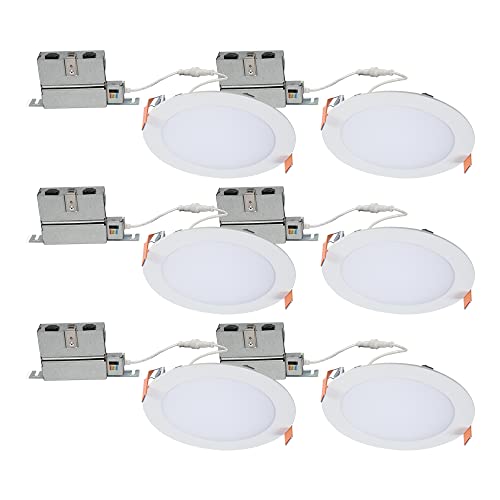
In practice, most rooms combine fixture types rather than relying on one. A bedroom might pair a ceiling fan with light kit as the primary fixture with a semi-flush mount over a reading nook, or use recessed lighting around the room's perimeter with a single flush mount as the central anchor. If a room already has a ceiling fan, keep any nearby flush mount on a separate switch so the two can be controlled independently, and maintain at least 18 to 24 inches of clearance between a fan's blade sweep and any adjacent fixture. For rooms without existing fans, a flush mount alone is usually sufficient central lighting when supplemented by lamps or under-cabinet task lighting.
Installation and Electrical Safety
Swapping a flush mount for a like-for-like replacement on an existing electrical box is a manageable DIY project for many homeowners, but it still involves working with live wiring. Always turn off power at the breaker - not just the wall switch - and confirm the circuit is dead with a non-contact voltage tester before touching any wires. Check that the existing electrical box is rated to support the new fixture's weight; older boxes are sometimes only rated for light fixtures, not for a fan or heavier semi-flush fixture. If you are adding a new circuit, moving a fixture to a new location, converting a switch, or have any doubt about the wiring you find, stop and hire a licensed electrician. Many jurisdictions also require a permit for new circuits or box relocations, so check local code before starting anything beyond a direct swap.
Dimming and Smart Control
Most modern LED flush mounts are dimmable, but only when paired with a compatible dimmer switch - LED-rated dimmers, not the older dimmers designed for incandescent bulbs, which can cause flickering or humming. Smart switches and dimmers from brands like Lutron Caseta let you schedule, dim, and group flush mounts with other lights in the room without replacing the fixture itself, and are one of the simplest upgrades for a room that already has a flush mount you like.
Bottom Line
Match the fixture diameter to the room's footprint, target lumens rather than watts, choose a damp or wet rating where moisture is present, and treat any wiring work with the same caution as a hardwired ceiling fan install. Get those fundamentals right and a flush or semi-flush mount will look intentional and light the room properly for years.