

Before You Start
Turn off the light at the wall switch, and if you're not sure that switch controls the fixture, or if you'll be doing more than a quick bulb swap, turn off power at the breaker and confirm it's off with a non-contact voltage tester. Let the bulb cool for a few minutes if it's been on - recessed bulbs run hotter than open fixtures because they're enclosed.
Step 1: Remove the Trim
Most recessed trims come off one of two ways:
- Spring-clip trims (most common on older can-and-trim fixtures): grip the trim ring or baffle and gently pull straight down. It's held by two or more spring clips that release with firm, even pressure.
- Twist-lock or turn-and-release trims: turn the trim counterclockwise a quarter turn, then pull down.
Step 2: Remove and Replace the Bulb
Once the trim is down, the bulb is usually a standard screw base (E26) or, on some fixtures, a twist-and-lock base (GU10 or GU24). Turn a screw-base bulb counterclockwise to remove it; twist-lock bases release with a quarter turn.
Install the replacement bulb of the same base type, and match the original wattage-equivalent and, ideally, color temperature (Kelvin) so the new bulb doesn't look mismatched next to others in the room. If the fixture is on a dimmer, use a bulb labeled dimmable.
Step 3: Reattach the Trim
Push or twist the trim back into place until the clips seat evenly against the ceiling - an unevenly seated trim will look crooked and can rattle. Restore power and test.
If It's a Canless (Integrated) LED Fixture
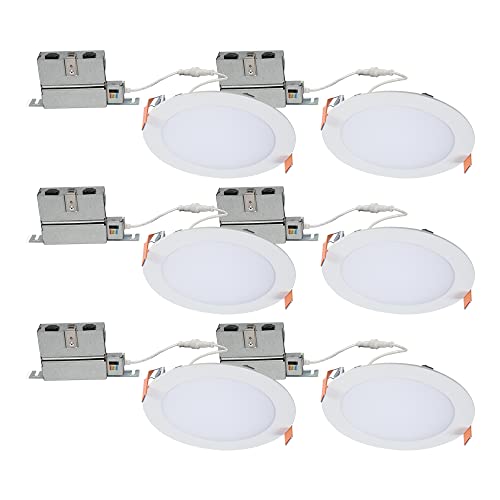
Many modern recessed lights don't have a replaceable bulb at all - the LED, driver, and trim are one sealed unit, integrated into the housing. If a canless fixture stops working, the light module itself is the replaceable part; on some product lines it detaches from the junction box the same way a bulb would, while on others the whole light plate is replaced. Check the manufacturer's documentation for your specific model before assuming a standard bulb swap will work.
When to Call an Electrician Instead
A simple bulb or trim swap with the power off is safe for most DIYers. But if the fixture flickers, buzzes, feels warm at the trim even when off, or the socket looks corroded or damaged, stop and have a licensed electrician inspect it - those are signs of a wiring or connection problem, not just a burned-out bulb, and working on damaged electrical components without training is a real safety risk.


