

Flush Mount vs. Semi-Flush Mount Lighting
The two terms describe how far a ceiling fixture's housing sits from the ceiling surface itself, and that small difference in distance changes both how the fixture looks and how it performs.
What Makes a Fixture "Flush"
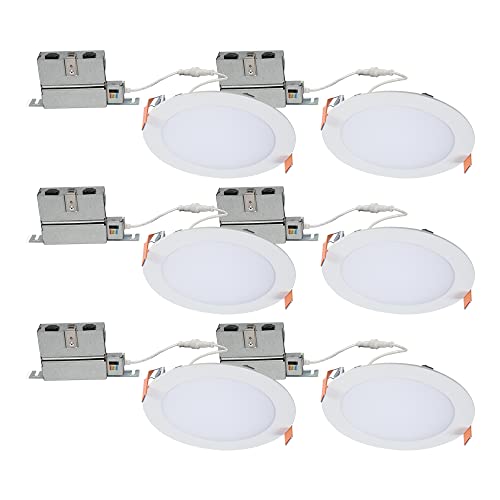
A true flush mount fixture is installed with its housing directly against the ceiling, with no visible stem, rod, or chain. The entire fixture - diffuser, housing, and light source - forms one compact unit close to the ceiling plane. This construction makes flush mounts the standard choice for rooms with 8-foot ceilings, for hallways and stairwells where headroom is already tight, and for closets, mudrooms, and laundry rooms where a fixture needs to stay completely out of the way.
What Makes a Fixture "Semi-Flush"
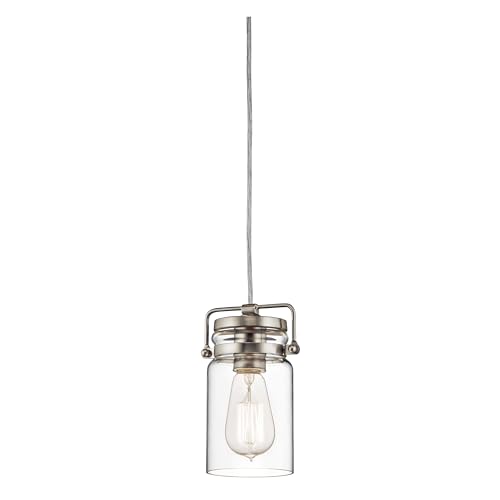
A semi-flush mount uses a short downrod or stem, typically somewhere between 4 and 10 inches, to drop the fixture slightly below the ceiling surface. That small gap changes the physics of how the light spreads: instead of light bouncing directly off the ceiling immediately around the housing, it can radiate outward in more directions, often producing a more even wash of light across the room. The drop also gives the fixture more visual presence and dimension, which is part of why many decorative and designer fixtures - especially those with metal frames or glass shades - are built as semi-flush rather than true flush designs.
Which One Fits Your Ceiling Height
Ceiling height is the most practical deciding factor. In a room with a standard 8-foot ceiling, a semi-flush mount's downrod can bring the bottom of the fixture uncomfortably close to head height, especially for taller occupants, so a true flush mount is usually the safer and more comfortable choice. In rooms with 9-foot or taller ceilings, that extra few inches of drop is proportionally less noticeable and gives the semi-flush mount room to do its job without anyone bumping it.
Which One Fits the Room's Purpose
Beyond ceiling height, think about what the room needs from its lighting. A hallway, stairwell landing, or closet almost always calls for a flush mount, both for clearance and because these are utilitarian spaces where a plain, low-profile fixture does the job without drawing attention. A living room, dining area, or entryway with taller ceilings is a more natural fit for a semi-flush mount, particularly if you want the fixture itself to contribute to the room's style rather than disappear into the ceiling.
Light Output and Coverage Differences
In practice, a semi-flush mount of the same wattage and lumen rating as a flush mount will often feel slightly brighter and more evenly distributed across the room, simply because the extra clearance around the housing lets light travel outward more freely before it hits the ceiling or nearby walls. This difference is usually modest, so it should not be the deciding factor on its own, but it is worth knowing if you are choosing between two similar fixtures for a larger room.
Combining Both in One Home
There is no rule that a home needs to use only one style throughout. Many homeowners use true flush mounts in bedrooms, hallways, and closets where ceilings are standard height and clearance matters, then switch to semi-flush or fully pendant fixtures in living rooms, dining rooms, and entryways with taller ceilings where the fixture can be part of the room's visual design. When replacing an existing fixture, matching the new one's mounting style to the room's ceiling height and function, rather than picking based on appearance alone, gives the most consistently good result.
A Note on Installation
Whether you choose flush or semi-flush, always turn off power at the breaker before removing an existing fixture, and confirm the circuit is dead with a voltage tester before touching any wiring. A straightforward swap onto an existing, correctly rated electrical box is a reasonable DIY project for many homeowners; anything involving a new circuit, a relocated box, or wiring you are unsure about should go to a licensed electrician.


