Best LED Light Bulbs
Best LED Light Bulbs, ranked from aggregated owner ratings and reviews, not first-hand testing. Real pros, cons, and who each pick is best for.

Our Top 3 Picks
Quick Comparison
| Product | Best for | Buy | |
|---|---|---|---|
| Hue White and Color Ambiance A19 | Best Overall | See Amazon | View |
| LED A19 Daylight/Soft White | Best Premium | See Amazon | View |
| LED A19 Soft White | Best Value | See Amazon | View |
| Cync Smart LED A19 | Best Budget Smart Pick | See Amazon | View |
| LED A19 Daylight | Best for Task Lighting | See Amazon | View |
| Smart Color LED Bulb | Best for Color-Changing Accents | See Amazon | View |
How to Pick the Best LED Light Bulbs
The LED bulb market is crowded with near-identical-looking A19 bulbs, so the differences that matter are almost all on the spec sheet, not the packaging photo. Here's what to check before you add bulbs to your cart.
Match Lumens to the Room, Not the Old Wattage Label
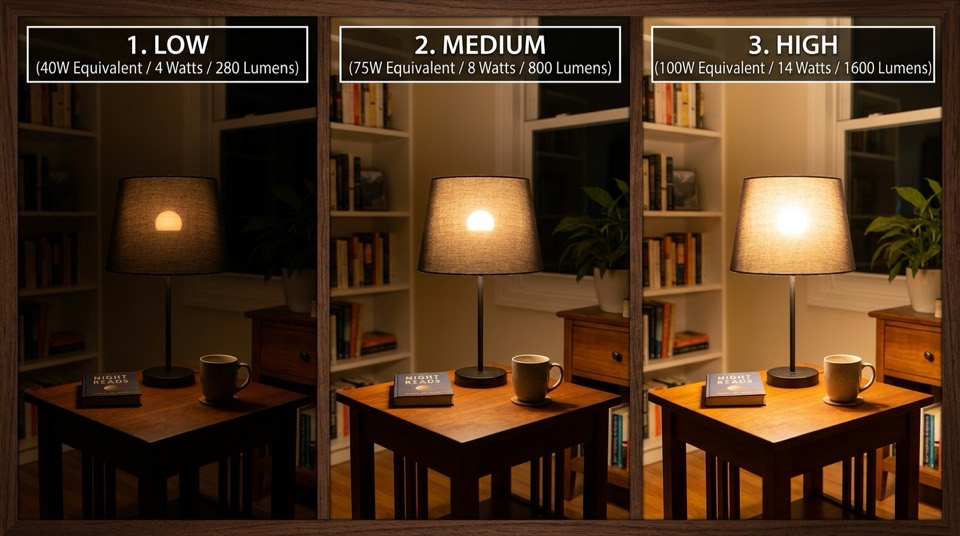
Use the room, not habit, to set your lumen target:
- Living rooms and bedrooms: roughly 1,500-3,000 total lumens per room, spread across multiple fixtures
- Kitchens: roughly 3,000-4,000+ total lumens for general work light
- Bathrooms: roughly 2,000-4,000 lumens, with attention to CRI for vanity lighting
- Hallways and closets: roughly 450-800 lumens per fixture
Decide on Warm, Neutral, or Daylight
As a default, use 2700K in bedrooms and living areas, 3000-3500K in kitchens and bathrooms, and 5000K in garages and workshops. If you're unsure, 2700-3000K "soft white" is the safest, most livable choice for most of the house.
Confirm Dimmer Compatibility Before Buying in Bulk
If any fixture is on a dimmer switch, buy a single bulb first and test it before ordering a full case. LED dimming behavior varies by dimmer brand — Lutron, Leviton, and generic dimmers all behave slightly differently — and a mismatch shows up as flicker, buzz, or a limited dimming range.
Check the Base, Shape, and Fixture Rating
Confirm the base (E26 medium, E12 candelabra, GU10) and bulb shape (A19, BR30, globe) against the old bulb before ordering. For bathroom, shower, and outdoor fixtures, buy bulbs rated for damp or wet locations. For fully enclosed fixtures and ceiling fan light kits, look for "enclosed fixture rated" on the packaging — a standard LED not rated for enclosed use can overheat and fail early in that environment.
Decide Whether Smart Features Earn Their Keep
Smart bulbs are worth the premium for individual fixtures where scheduling, remote control, or color-changing genuinely gets used — porch lights, bedside lamps, accent lighting. They're a poor fit for:
- Renters and multi-occupant households who don't want to set up a hub or app for a shared fixture
- Whole-house retrofits of a dozen-plus bulbs, where the per-bulb smart premium adds up fast for little day-to-day benefit
- Guest-facing fixtures, like a hallway or guest room, where anyone visiting needs to operate a plain wall switch without an app
Look at the Warranty, Not Just the Price Per Bulb
A longer warranty (3 years or more) is one of the better proxies for build quality, since it reflects what the manufacturer is willing to stand behind. Cheap multi-packs with no stated warranty are more likely to show inconsistent color temperature bulb-to-bulb and a shorter real-world lifespan than their rated hours suggest.
Check for the ENERGY STAR Mark
Bulbs carrying the ENERGY STAR certification have been independently tested against U.S. Department of Energy criteria for brightness, color consistency, and rated lifespan, and are a reasonable shortcut if you don't want to compare every spec yourself.
Who Should Skip Premium and Smart Bulbs
If you're relamping a rental property, a shed, or any space where bulbs get left on for long stretches and nobody will use an app, skip smart features entirely and buy basic, ENERGY STAR-rated LED multi-packs — they're cheaper per bulb and just as bright. Save the smart and color-changing bulbs for the handful of fixtures in your own living space where you'll actually use the features.
Full Ranking, Reviewed

Best for Smart fixtures where you want app control, scheduling, and full color
- 16 million colors plus tunable white from 2000K-6500K
- Works with Alexa, Google Home, and Apple Home (Matter-enabled)
- Zigbee connection via Hue Bridge, with Bluetooth for hub-free basic control
- Deep, mature app ecosystem with scenes and scheduling
- Reliable color accuracy and smooth dimming
- Full feature set requires the separate Hue Bridge, an added cost
Verdict: The most capable smart bulb for anyone building out a full smart lighting setup, though the Bridge is a real added cost for just one or two bulbs.
Best for Long-term reliability in frequently used fixtures
- Filament-style LED chip design aimed at consistent light quality
- ENERGY STAR certified with a rated lifespan up to 25,000 hours
- Available in warm white and daylight color temperatures
- Strong reputation for consistent color temperature bulb-to-bulb
- Backed by a multi-year warranty on most lines
- Premium positioning means a higher price than basic big-box multi-packs
Verdict: Worth the extra cost for high-use fixtures like kitchens and hallways where you want consistent light for years without replacements.

Best for Budget-friendly everyday replacement for standard fixtures
- ENERGY STAR certified, roughly 800-lumen output at about 8.5 watts
- Rated for 15,000+ hours, about 13+ years at 3 hours per day
- Sold in multi-packs suited to whole-house relamping
- Low cost per bulb for bulk replacement
- Widely available at hardware and home stores
- Color consistency between individual bulbs can vary slightly in multi-packs
Verdict: A solid, no-frills pick for relamping a whole house or a rental where smart features aren't needed.

Best for Budget smart lighting without a separate hub
- Connects directly to home Wi-Fi, no hub required
- Tunable white and full-color options depending on model
- Works with Alexa and Google Home
- Lower entry price than hub-based smart systems
- Simple setup through the Cync app
- Wi-Fi based bulbs can add load to a home router when used in large numbers
Verdict: A practical way to add a few smart fixtures without buying a hub, though heavy whole-home smart lighting is still better served by a hub-based system.

Best for Task lighting in garages, workshops, and utility spaces
- 5000K daylight color temperature for close work
- ENERGY STAR certified, roughly 100-watt incandescent equivalent brightness
- Instant-on with no warm-up flicker
- Bright, crisp light well suited to detail work
- Competitively priced for the lumen output
- 5000K light reads too cool and clinical for living spaces
Verdict: A dependable daylight bulb for the garage or workbench, but keep it out of bedrooms and living rooms where warmer light suits better.

Best for Budget-friendly color-changing accent lighting
- Full RGB color range plus tunable white
- Direct Wi-Fi connection with app and voice assistant support
- Music-sync and scene modes in the Govee Home app
- Lower price than premium smart color bulbs
- Fun scene and sync features for accent lighting
- App and connectivity are less polished than more established smart lighting ecosystems
Verdict: A good-value way to add color-changing accent lighting to a lamp or reading nook without paying premium smart-bulb prices.

Frequently Asked Questions
Do I need a smart home hub to use smart light bulbs?
It depends on the bulb. Wi-Fi based bulbs like GE Cync and Govee connect directly to your home network and don't need a separate hub. Zigbee-based systems, like the original Philips Hue lineup, need a Hue Bridge for full scheduling and automation, though many newer Hue bulbs also support Bluetooth for basic hub-free control.
Can I put a regular LED bulb in a fully enclosed fixture?
Only if it's rated for enclosed use. Standard LEDs not designed for sealed fixtures can trap heat and fail well before their rated lifespan. Check the packaging for "enclosed fixture rated" before installing an LED in a globe or sealed ceiling fixture.
What's the difference between soft white and daylight bulbs?
Soft white sits around 2700-3000K, matching the warm glow of old incandescent bulbs and suiting living spaces. Daylight sits around 5000-6500K, a bluer, brighter-feeling light better suited to garages, workshops, and task areas than bedrooms or living rooms.
Are dimmable LED bulbs worth paying more for?
Only if the fixture is actually on a dimmer switch. On a standard on/off switch, a dimmable bulb offers no benefit over a cheaper non-dimmable one, so check your switch type before paying the dimmable premium.