Best Grow Lights For Indoor Plants
Best Grow Lights For Indoor Plants, ranked from aggregated owner ratings and reviews, not first-hand testing. Real pros, cons, and who each pick is best for.

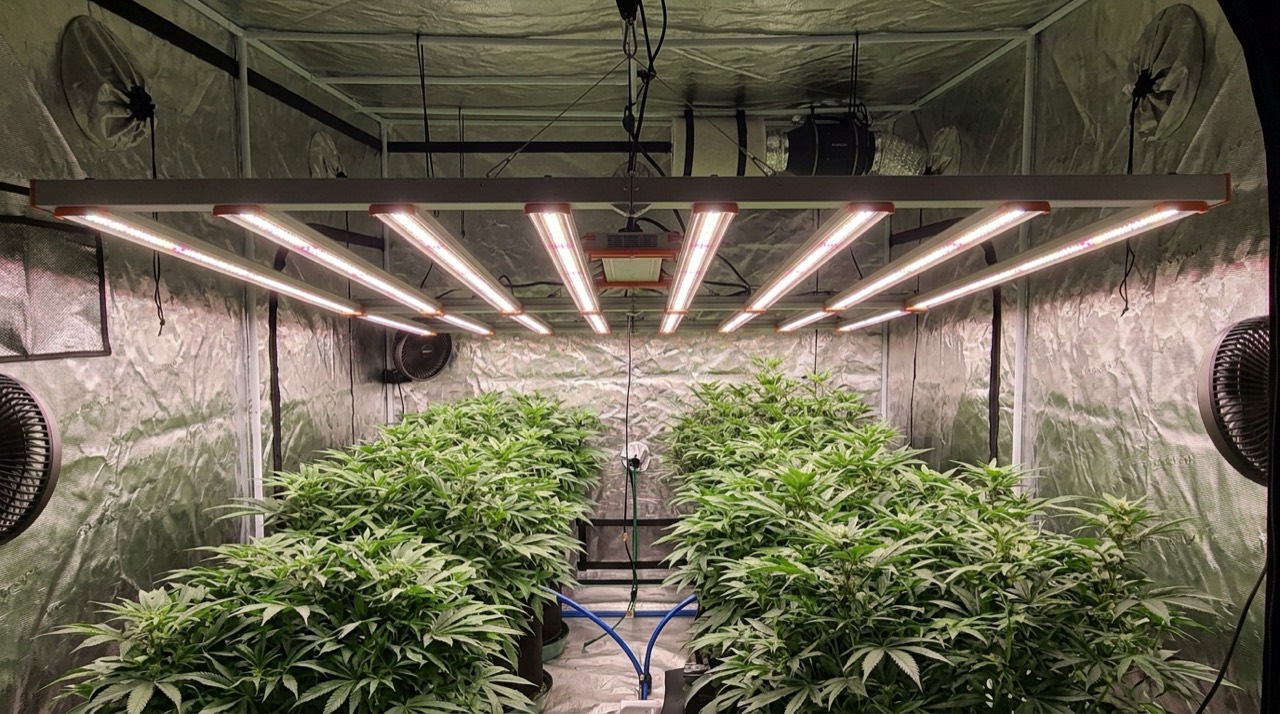
Our Top 3 Picks
Quick Comparison
| Product | Best for | Buy | |
|---|---|---|---|
| Spider Farmer SF-2000 | Best Overall | See Amazon | View |
| Mars Hydro TS 1000 | Best Value | See Amazon | View |
| Spider Farmer SF-4000 | Best Premium | See Amazon | View |
| Mars Hydro FC-E4800 | Best for Large Rooms | See Amazon | View |
| Barrina T5 Grow Light | Best for Seedlings & Shelves | See Amazon | View |
| GE BR30 Grow Light Bulb | Best for Single Plants | See Amazon | View |
How to Choose a Grow Light for Indoor Plants
Start with your space, not the light
Measure the actual footprint you're lighting — a single windowsill pot, a 2x2-foot grow tent, a 4-foot plant shelf — before comparing fixtures. Manufacturer coverage ratings are stated for specific mounting heights, so a light rated for "4x4 feet" usually means at a hanging height around 18–24 inches, shrinking if you need to hang it higher to clear furniture or a low ceiling.
Check the PPFD chart, not just the wattage
Look past headline wattage claims, especially inflated "HPS equivalent" numbers, and look for an actual PPFD map from the manufacturer. A usable PPFD range for most ornamental houseplants and herbs sits well below what's often marketed for high-light vegetable seedlings or a dedicated grow tent — match the fixture's rated output to what you're growing rather than buying the highest-output panel available.
Favor full-spectrum over red/blue-only
A full-spectrum diode mix, often built on Samsung LM301B/LM301H or similar chips in mid-range and premium panels, renders more like natural light, making it easier to spot pests, disease, or nutrient issues on the leaves. It also works across more plant types than an older-style red/blue panel that bathes the room in pink or purple light.
Match the fixture type to the job
- Quantum-board LED panels (Spider Farmer, Mars Hydro) suit grow tents, dedicated shelving units, or multi-plant setups where you want even, adjustable coverage.
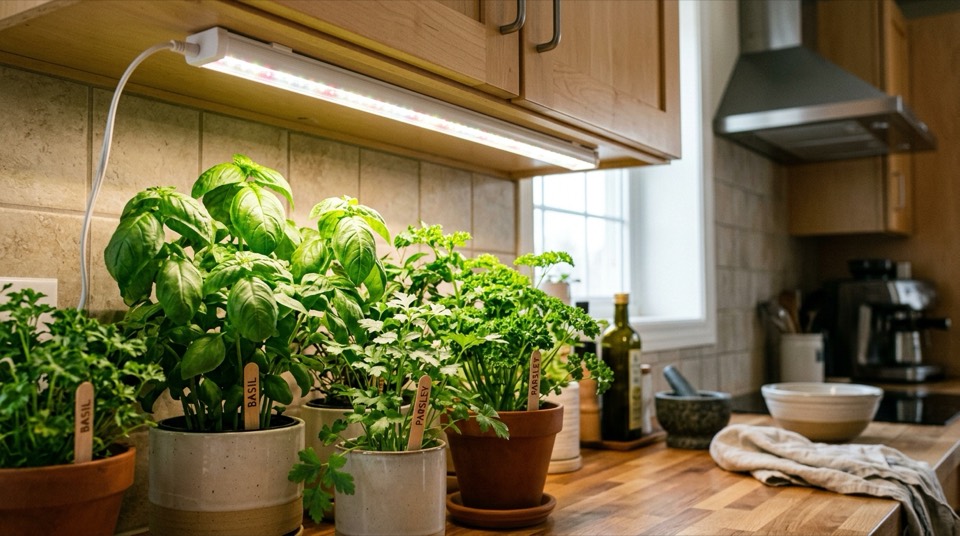
- T5 fluorescent or slim LED strip fixtures (Barrina and similar) suit seedling trays, propagation stations, and narrow shelves where a low-profile fixture matters more than raw output.
- Screw-in reflector grow bulbs (GE and similar) suit a single plant or small cluster in an existing lamp or fixture, with no new mounting setup.
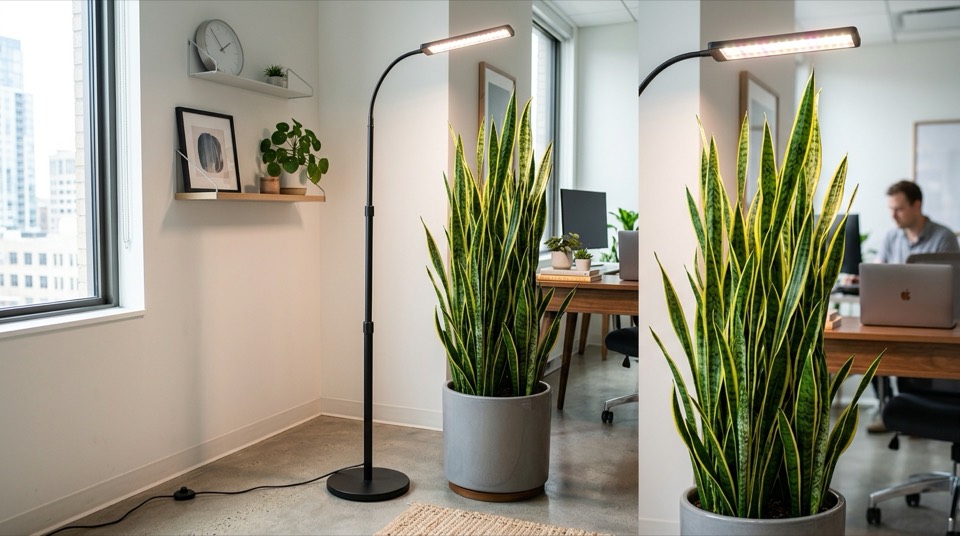
- Design-forward pendant and panel lights (Soltech and similar) suit living rooms and visible spaces where the fixture itself needs to look like a light fixture, not a warehouse panel.
Look for dimming and daisy-chain features
A dimmer knob or multiple power settings lets one fixture serve plants with different light needs, and lets you start seedlings on a lower setting before increasing output as they mature. If you're likely to expand a tent or shelf setup later, check whether fixtures can be daisy-chained on one power cord and controlled from a single timer.
Factor in heat, noise, and running cost
Fanless aluminum-body panels are silent but get warm to the touch and radiate some heat into the room; fan-cooled units stay cooler but add a low hum. Check the fixture's actual wattage draw, not the marketing "equivalent," to estimate running cost on your electricity rate, and remember that ENERGY STAR-type efficiency ratings are a fair way to compare LED options against each other.
Who should skip a dedicated grow light setup
- If you have one or two plants already doing fine within a couple of feet of an unobstructed south- or west-facing window, a full panel is probably overkill — a simple clip-on grow bulb is likely more practical.
- If you're not able to commit to a daily on/off schedule (or add a cheap timer), inconsistent light exposure will undercut even a well-chosen fixture.
- If your plants are low-light species intentionally chosen for a dim room, adding an intense high-PPFD panel isn't necessary and may put out more light than the plant needs.
- Renters who can't hang fixtures from a ceiling or shelf frame should look at freestanding, clip-on, or lamp-based options rather than tent-style hanging panels.
Full Ranking, Reviewed
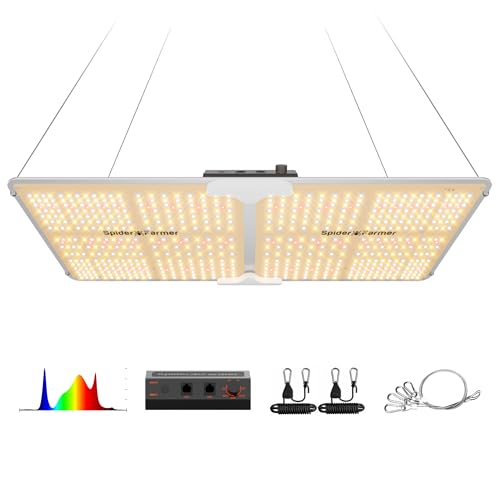
Best for Grow tents and multi-plant shelves up to about 2x4 feet
- Samsung LM301B full-spectrum diodes
- Built-in dimmer for adjusting output by growth stage
- Quiet fanless aluminum body with passive cooling
- Even PPFD spread across the rated footprint
- Dimmable without extra controllers
- Higher upfront cost than basic strip lights
Verdict: A strong all-around panel for anyone lighting a small tent or dedicated shelf who wants adjustable, full-spectrum output without extra accessories.

Best for Budget-conscious growers lighting a single small tent or shelf
- Full-spectrum white LED diodes
- Slim, lightweight aluminum housing
- Simple plug-and-play setup with no separate driver box
- Lower price point than premium quantum-board panels
- Compact size fits small shelves and tents
- Coverage and PPFD output are lower than higher-wattage panels, so it suits smaller footprints
Verdict: A reasonable entry point for a small setup, though growers with a larger footprint will outgrow it quickly.

Best for Larger tents or multi-shelf setups needing higher PPFD
- Samsung LM301H diodes with higher efficacy
- Dimmable driver with daisy-chain capability
- Larger footprint rated for roughly 3x3 to 4x4 feet coverage
- Higher PPFD output supports a bigger coverage area
- Daisy-chain wiring simplifies multi-light setups
- Larger size and higher wattage draw need more clearance and circuit capacity for multiple units
Verdict: Worth the extra cost for anyone lighting a full-size tent or several shelves who wants headroom to expand later.

Best for Larger grow rooms or multi-tent setups
- High-output full-spectrum diode board
- Foldable frame for easier shipping and mounting
- Rated coverage up to roughly 4x4 feet at flowering intensity
- Higher total light output for larger footprints
- Foldable design simplifies hanging in tight tent frames
- Higher actual wattage draw means higher running cost and needs adequate circuit capacity
Verdict: Built for growers who've outgrown a single small panel and need meaningful coverage across a larger tent or room.

Best for Seedling trays, propagation stations, and narrow plant shelves
- Slim T5-style linear fixture with integrated full-spectrum LEDs
- Low-profile design fits tight shelf spacing
- Linkable end-to-end for longer shelving runs
- Inexpensive way to light multiple narrow shelves
- Low heat output works close to seedlings without stressing them
- Output is too low for a full-size flowering tent or high-light plants at distance
Verdict: A practical, low-cost choice for starting seedlings or lighting a multi-shelf plant stand, not a substitute for a high-PPFD panel.

Best for A single plant or small cluster in an existing lamp or fixture
- Standard screw-in base fits most household lamps and fixtures
- Red/blue-enhanced spectrum aimed at supporting plant growth
- No separate driver, timer socket, or mounting hardware needed
- Works in any lamp with a standard bulb socket
- No tent, panel, or mounting hardware required
- Lower output and narrower coverage than a dedicated panel, so it only suits one or two nearby plants
Verdict: The simplest option for a single plant near an existing lamp, though it won't effectively cover more than one or two pots.
Frequently Asked Questions
Can regular LED light bulbs grow plants indoors?
Regular household LED bulbs emit some usable light, but most are tuned for lumens (visual brightness) rather than the red and blue PAR wavelengths plants use, and their output drops off quickly with distance. They can help supplement plants already getting decent natural light, but for a plant relying mainly on artificial light, a bulb or panel labeled specifically for plant growth will put out more usable PAR at the same wattage.
How many hours a day should a grow light run?
Most houseplants and herbs do well with roughly 12–16 hours of light per day, which is easiest to keep consistent with an inexpensive outlet timer rather than manual switching. Exact needs vary by species, so check care guidance for the specific plant rather than assuming one schedule fits everything.
Does a grow light have to be pink or purple?
No. Older red/blue-only LED grow lights produced that pink or purple look, but most current fixtures use a full-spectrum diode mix that appears closer to white or warm daylight. Full-spectrum lights make it easier to see true leaf color and spot problems, and they suit a wider range of plants than a narrow red/blue spectrum.
Will a grow light work if my plant is also near a window?
Yes. Supplemental grow lighting is commonly used alongside window light, especially in winter or in rooms with north-facing or heavily shaded windows. Position the fixture so its light reaches the plant directly rather than relying on reflected light, since intensity drops off quickly with distance.
How much does it cost to run a grow light?
Running cost depends on the fixture's actual wattage draw (check the spec sheet, not marketing 'equivalent' wattage) multiplied by hours run per day and your local electricity rate. A 100-watt-draw panel run 14 hours a day, for example, uses 1.4 kWh — multiply that by your utility's per-kWh rate to estimate daily cost.