



The short answer
Use a floor lamp for broad ambient or over-the-shoulder reading light across a seating area without needing a surface to set it on. Use a table lamp for focused task and accent light on a side table or console. Most well-lit living rooms use both, layering height and pools of light.
Why living rooms need both
Good living room lighting is layered. A single ceiling fixture flattens the room and casts harsh shadows. Floor and table lamps add lower, warmer pools of light that make a space feel comfortable and dimensional. They serve different jobs, so the real question is less "which one" and more "where does each belong."
What a floor lamp does best
A floor lamp stands on its own, so it lights a corner or seating zone without needing a table.
Common types and their strengths:
- Torchiere: aims light upward, bouncing soft ambient light off the ceiling to fill a whole room
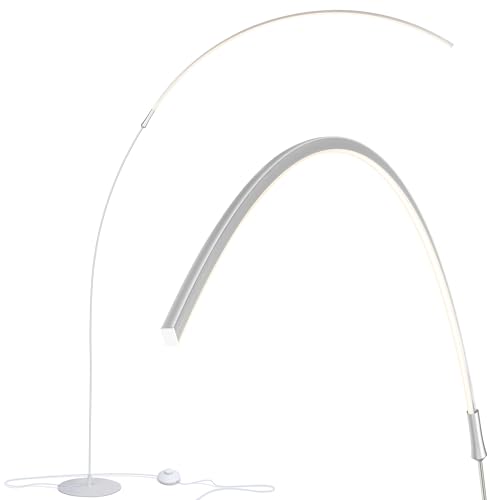
- Arc lamp: reaches out over a sofa or chair to drop task light where you sit, with no table underneath
- Reading floor lamp: a focused, often adjustable head positioned beside a chair for over-the-shoulder reading
- Multi-head or tree lamp: several adjustable heads to light more than one zone at once
What a table lamp does best
A table lamp needs a surface, a side table, console, or shelf, but in return it delivers light exactly at eye and task level where you spend time.
Table lamps are ideal for:
- Task light next to a sofa or armchair for reading and hobbies
- Accent light on a console or sideboard to add warmth and balance
- Symmetry, such as a matched pair flanking a sofa or on end tables
- Layering, filling the middle height between floor and ceiling
Space and furniture considerations
Your furniture layout often decides the answer.
- No side table near the seating? A floor lamp, especially an arc, delivers light without adding furniture.
- Already have end tables? Table lamps put them to use and keep the floor clear.
- Tight on floor space? A table lamp uses vertical surface you already have.
- Big empty corner? A floor lamp fills it and balances the room.
Height, glare, and eye level
Height changes comfort. A table lamp's shade should sit roughly at eye level when you are seated, so the bulb is hidden and light falls on your lap or book, not in your eyes. Too tall a lamp on a high table causes glare.
Floor lamps place light higher. Torchieres send it up for ambient fill, while reading floor lamps bring an adjustable head down to shoulder height. If glare bothers you, look for shades that fully conceal the bulb and lamps with adjustable heads.
How many lamps, and mixing them
Most living rooms benefit from three or more light sources beyond the ceiling. A comfortable mix might be one floor lamp filling a corner or reaching over a chair, plus a table lamp or a matched pair on end tables. Layering different heights, some light high and some low, is what gives a room depth instead of a single flat glow.
Style and scale
Match the lamp to the furniture around it. A table lamp should be proportional to its table, not so large it dominates or so small it disappears. A floor lamp should suit the ceiling height; tall torchieres love high ceilings, while a low reading lamp suits a snug nook. Consistent finishes and warm bulbs tie the layers together.
Which should you choose?
Choose a floor lamp when:
- There is no surface for a lamp
- You want to fill an empty corner
- You need adjustable reading light by a chair
- You want ambient fill from a torchiere
Choose a table lamp when:
- You have a side table or console to use
- You want task light at seated eye level
- You want symmetry with a matched pair
- You want cozy, intimate pools of light
The bottom line
Floor lamps and table lamps are partners, not rivals. Floor lamps bring standalone height and reach; table lamps bring warm, close, task-level light on the surfaces you already have. Combine them, vary the heights, use warm bulbs, and your living room will feel layered, comfortable, and genuinely well lit.


