Best LED Strip Lights
Best LED Strip Lights, ranked from aggregated owner ratings and reviews, not first-hand testing. Real pros, cons, and who each pick is best for.

Our Top 3 Picks
Quick Comparison
| Product | Best for | Buy | |
|---|---|---|---|
| RGBIC LED Strip Lights | Best Overall | See Amazon | View |
| Lightstrip Plus | Best Premium | See Amazon | View |
| SMART+ LED Strip Light Kit | Best Value | See Amazon | View |
| Design Pro LED Tape Light | Best for Kitchens | See Amazon | View |
| Essentials Lightstrip | Best Smart Pick for TVs and Gaming | See Amazon | View |
| InvisiLED IP65 Tape Light | Best for Outdoor and Wet Areas | See Amazon | View |
How to Choose LED Strip Lights
Not every LED strip is built for the same job, and the specs that matter change depending on whether you're lighting a kitchen counter, a TV backdrop, or an outdoor patio. Here's what to actually look at.
Decide what you want the light to do first
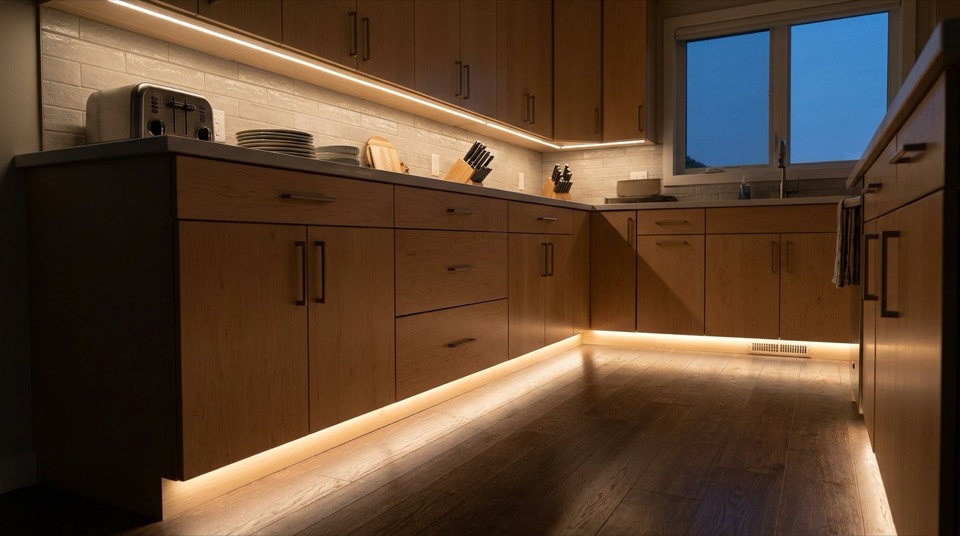
- Task lighting (under cabinets, closets, workbenches) needs high CRI (90+), enough lumens per foot to actually read or chop vegetables by, and usually warm-to-neutral white (2700K-4000K).
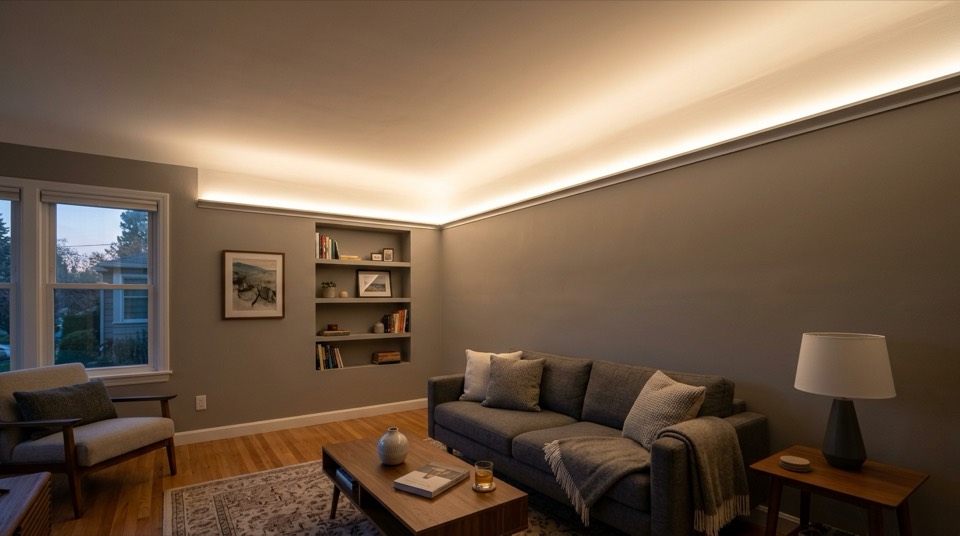
- Accent and mood lighting (behind a TV, along crown molding, under a bed) can prioritize color and effects over raw brightness — this is where RGB and RGBIC strips shine.
- Outdoor or wet-area lighting (patios, under eaves, near a sink backsplash) needs an IP65 or higher rating; don't run an indoor-only IP20 strip anywhere it could get wet.
Brightness and LED density
Look at lumens per foot rather than total watts, since efficiency varies by strip. For general task lighting under cabinets, aim for at least 450-500 lumens per foot. Higher LED density (measured in LEDs per meter) also produces a smoother wash of light with less visible dotting, especially important if the strip won't be hidden inside a diffusing channel.
Voltage and run length
Most home strips are 12V or 24V DC. For any single run longer than about 16 feet, 24V strips hold their brightness more evenly end-to-end because they suffer less voltage drop. If you're set on a 12V strip for a long run, plan to power it from both ends.
Color temperature and CRI
For white light, color temperature is measured in Kelvin: 2700K-3000K reads as warm/cozy, 3500K-4000K as neutral, and 5000K+ as cool/daylight. Match it to the room's existing fixtures so you don't end up with mismatched white tones. Color Rendering Index (CRI) matters wherever you need to judge how things actually look — food, makeup, artwork — and 90+ CRI is worth paying extra for in kitchens and vanities.
RGB vs. RGBIC vs. tunable white
- Single-color or tunable white strips are the simplest, most reliable choice for functional lighting.
- RGB strips change to any single color at once — good for mood lighting, less exciting for effects.
- RGBIC strips can show multiple colors along the same strip simultaneously, enabling gradients and chasing effects, and are the current standard for TV backlighting and gaming-room setups.
Controller, app, and voice control
Basic kits come with an IR remote. Smart strips add Wi-Fi or Bluetooth control through a phone app, scheduling, music sync, and integration with Amazon Alexa, Google Home, or Apple HomeKit (via Matter on newer models). If you want scenes tied to your other smart-home devices, check the Matter/HomeKit/Alexa compatibility line in the listing before buying — not all "smart" strips support every ecosystem.
Cutting, connecting, and length
Nearly all strips can be cut at marked points and joined with solderless clip connectors or extended with connector cables — see the dedicated FAQ on cutting and reconnecting for the specifics. If your project needs strips going around multiple corners, look for kits that include corner connectors rather than relying on tight mechanical bends, which stress the copper traces.
Adhesive and mounting
The included 3M adhesive backing works on clean, smooth, room-temperature surfaces, but it isn't permanent insurance against gravity. For anything overhead, in a hot spot (like above a range hood), or on textured drywall, add mounting clips or an aluminum channel — the channel also helps dissipate heat, which extends LED lifespan.
Who should skip LED strips
If you need bright, even, code-compliant lighting for a home office or a whole-room ceiling application, a strip is the wrong tool — look at flush-mount fixtures or recessed lighting instead. Strips also aren't the right choice if you want a hardwired, switch-controlled fixture with no visible cord or transformer box; that calls for a hardwired under-cabinet light bar or puck lights installed by an electrician. And if you specifically need a fixture rated for full outdoor submersion (a pond or fountain, for example), confirm IP68 rating rather than assuming any "outdoor" strip will do.
Full Ranking, Reviewed

Best for Smart accent and mood lighting with multicolor effects
- RGBIC segments show multiple colors on the same strip at once
- Wi-Fi app control with music-sync and scene modes
- Works with Amazon Alexa and Google Assistant
- Cuttable and extendable with included connectors
- Very bright for the price
- App is easy to set up and offers strong scene customization
- Widely compatible with voice assistants
- Adhesive backing can loosen over time on textured or cold surfaces
Verdict: The best all-around pick for anyone who wants colorful, app-controlled accent lighting without a steep learning curve.

Best for Whole-home smart lighting integration
- Full HomeKit, Alexa, and Google Home support via the Hue app and Bridge
- 16 million colors plus tunable white
- Extendable up to 10 meters per run with official extensions
- Syncs with other Hue fixtures for whole-room scenes
- Best-in-class smart home integration and reliability
- Consistent color output strip to strip and over time
- Long-term software support
- Requires the Hue Bridge for full feature access, adding to the cost
Verdict: Worth the premium if you're already invested in the Hue ecosystem or want the most polished smart-lighting experience.

Best for Budget-friendly Wi-Fi controlled white and color strips
- Wi-Fi control with no separate hub required
- Dimmable tunable white plus RGB color modes
- Works with Amazon Alexa and Google Assistant
- Cuttable at marked segments
- Lower price point than most name-brand smart strips
- No hub needed to get started
- Color accuracy and app polish lag behind pricier competitors
Verdict: A solid entry point into smart LED strips for anyone who doesn't want to pay for a hub or premium branding.

Best for High-CRI under-cabinet task lighting
- 90+ CRI for accurate color rendering on countertops
- 24V design minimizes voltage drop over longer runs
- Available in multiple color temperatures from warm to daylight white
- Designed to pair with Kichler's aluminum channels for heat dissipation
- Excellent, even light quality for food prep and close task work
- Professional-grade construction and connectors
- Costs more than general-purpose consumer strip kits
Verdict: The strip to choose when you want kitchen or workspace lighting that looks like a built-in fixture rather than a retrofit.

Best for TV backlighting and desk/gaming setups
- Thread and Matter compatible for cross-platform smart home control
- RGBIC segments for gradient and chase effects
- Music and screen-sync modes for gaming and media
- Cuttable and reconnectable in short segments
- Matter support future-proofs it across smart home ecosystems
- Effects and sync modes are tailored well for desks and TV setups
- Shorter maximum run length than some competitors without extensions
Verdict: A strong choice for gamers and home-theater setups who want cross-platform smart home compatibility.
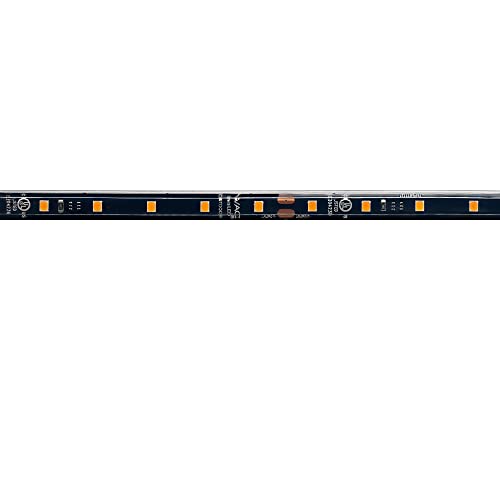
Best for Covered outdoor and damp-location installations
- IP65 silicone-coated rating for splash and moisture resistance
- 24V low-voltage design for longer, even runs
- Available in multiple fixed color temperatures
- Designed for professional integration with WAC drivers and channels
- Built and rated for genuinely damp or outdoor-adjacent locations
- Consistent brightness over long runs
- Not a fully submersible (IP68) product, so it isn't suited to direct water contact
Verdict: The right pick for a covered patio, soffit, or backsplash where moisture resistance is non-negotiable.
Frequently Asked Questions
How long do LED strip lights last?
Quality LED strips are typically rated for 25,000-50,000 hours of use, which works out to many years of typical evening use. Lifespan drops significantly if the strip runs hot (poor ventilation, mounted directly on a heat source) or is run above its rated voltage, so a diffuser channel or mounting clips that keep the strip off direct-contact hot surfaces will help it last closer to the rated figure.
Do LED strip lights use a lot of electricity?
No — LED strips are one of the most efficient lighting options available. A typical run of strip lighting used for accent purposes draws only a few watts per foot, and even a bright under-cabinet installation usually costs a small fraction of what an equivalent incandescent or fluorescent fixture would cost to run over a year, according to U.S. Department of Energy figures on LED efficiency.
Can LED strip lights get wet?
Only if they're rated for it. Check the IP (Ingress Protection) rating: IP20 strips are for dry indoor use only, IP65 strips have a silicone coating that resists splashes and light rain (suitable for a covered patio), and IP67/IP68 strips are sealed for full submersion or direct wet exposure. Never install an unrated or IP20 strip anywhere near a sink, shower, or outdoor location.
Do I need an electrician to install LED strip lights?
For standard plug-in kits with a low-voltage power adapter, no — these are DIY-friendly and don't involve household wiring. If your project involves hardwiring a strip's power supply into a junction box, tying into an existing wall switch or dimmer circuit, or running new wiring, turn off power at the breaker and hire a licensed electrician, especially if a permit is required in your area.