Best LED Shop Lights
Best LED Shop Lights, ranked from aggregated owner ratings and reviews, not first-hand testing. Real pros, cons, and who each pick is best for.

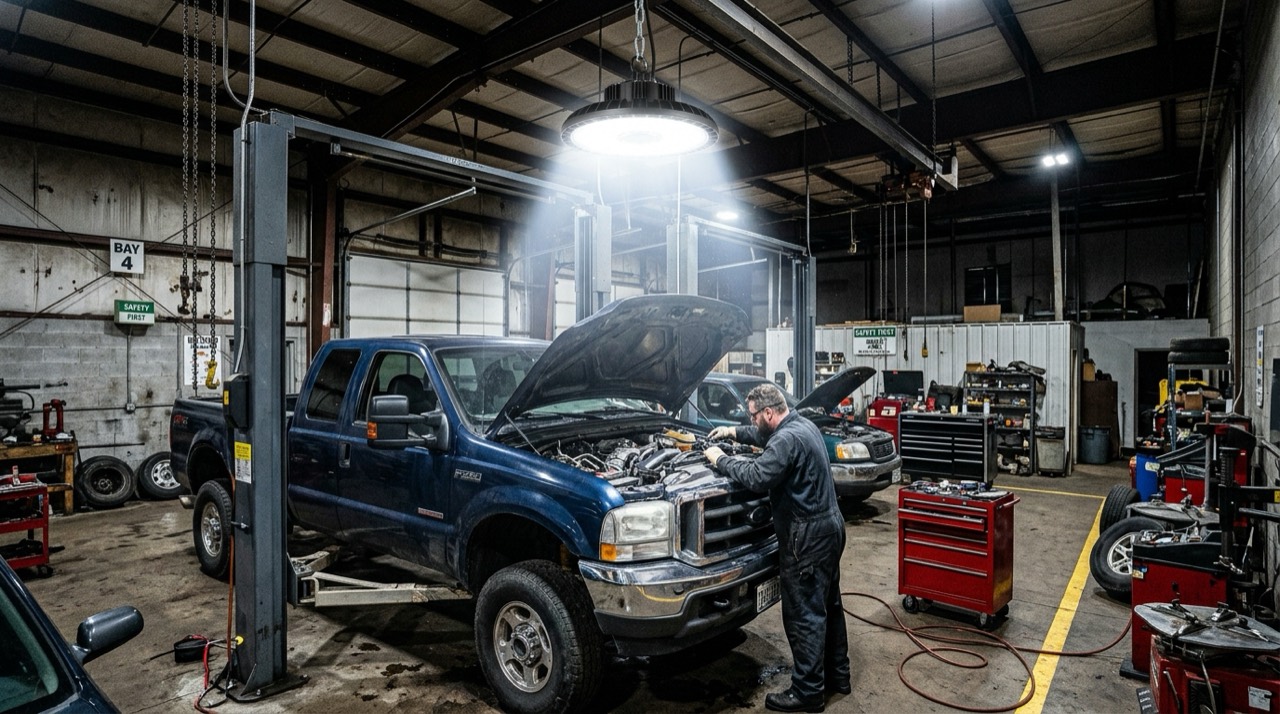
Our Top 3 Picks
Quick Comparison
| Product | Best for | Buy | |
|---|---|---|---|
| 4FT LED Shop Light (T8 Integrated, Linkable) | Best Overall | See Amazon | View |
| 4FT LED Shop Light, Linkable Wraparound | Best Value | See Amazon | View |
| 4FT LED Wraparound Shop Light | Best for Large Garages | See Amazon | View |
| LED UFO High Bay Light | Best for High Ceilings | See Amazon | View |
| Contractor Select CSS Linkable LED Shop Light | Best Commercial-Grade | See Amazon | View |
| 4FT LED Shop Light | Best Budget Backup | See Amazon | View |
What to Look For
Total lumens, not wattage. Compare fixtures by lumen output rather than watts. Most 4-foot LED shop lights fall in the 4,000–6,000 lumen range per fixture; a single-car workspace usually needs two of them, a two-car garage often needs two to four depending on layout.
Color temperature (Kelvin). Look for 4000K–5000K (daylight/cool white) for a shop or garage. This range makes fine detail, small parts, and color differences much easier to see than the warmer 2700K–3000K light meant for living rooms.
Linkable design. Fixtures that daisy-chain with a short connector cord let you wire two or three lights to a single power source instead of running a separate cord or junction box to each one. This is close to standard on modern integrated LED shop lights, but confirm it before buying if you plan to run more than one fixture.
Mounting method. Most shop lights can be mounted flush to the ceiling or hung on chains a few inches down, which spreads light more evenly across a workbench and reduces glare compared to a flush mount close to a low ceiling. Check the included hardware — some fixtures include both mounting options, others require chains or hooks purchased separately.
Damp or wet location rating. If the space isn't fully conditioned — a detached garage, an unheated shop, or anywhere with persistent humidity — choose a fixture explicitly listed for damp or wet locations rather than a standard indoor-only unit.
UL listing. Look for UL (or ETL) listing on any hardwired or plug-in fixture. It confirms the product has been independently tested against a recognized US safety standard, which matters more in a garage than almost anywhere else in the house given the mix of moisture, tools, and vehicles.
CRI (color rendering index). A CRI of 80 or higher renders colors accurately enough for most shop work; if you're doing detailed paint matching, look for CRI 90+.
Instant-on, no-flicker performance. Integrated LED fixtures should reach full brightness instantly and stay flicker-free, including in a cold, unheated garage — a real advantage over older fluorescent tubes, which dim and flicker in low temperatures.
How to Choose Based on Your Space
- One-car garage or small workshop: One or two 4-foot linkable LED shop lights, centered over the main work area, is usually enough.
- Two-car garage used as a shared workspace: Two to four linkable fixtures spaced evenly across the ceiling avoids the shadowed corners a single center fixture leaves behind.
- Detached shop, pole barn, or 12-foot-plus ceilings: A UFO-style LED high-bay fixture concentrates enough lumen output to stay effective at that mounting height, where a linear shop light's spread would thin out before reaching the floor.
- Contractor or heavy daily use: A commercial-grade linkable fixture built for repeated on/off cycling and continuous duty is worth the added cost over a basic residential model.
- Renters or anyone who might move the setup: A plug-in fixture that hangs from existing hooks or a surface mount avoids any wiring changes and comes down easily when you move.
Who Should Skip a Standard LED Shop Light
If your garage or shop has ceilings above roughly 10–12 feet, skip linear shop lights and go straight to a high-bay fixture — a linear light mounted that high will look dim at floor level even with a high lumen rating, because the light spreads out over more distance before it reaches your workbench. Anyone working in an environment requiring explosion-proof or hazardous-location-rated fixtures (near flammable vapors or dust, for example) needs a specialty industrial fixture, not a standard consumer LED shop light — check with an electrician or the fixture's hazardous-location rating before installing in that kind of space. And if you're not comfortable running new wiring or adding a switch, stick to plug-in models rather than a hardwired install.
Full Ranking, Reviewed

Best for Most one- and two-car garages needing bright, even overhead light
- Integrated 4-foot LED fixture, roughly 4,000–5,000 lumens depending on model
- 5000K daylight color temperature for clear detail work
- Linkable design connects multiple fixtures in a row from a single power source
- Very high lumen output for the price point
- Simple plug-and-hang or flush-mount installation
- Included mounting hardware is basic — chain or hooks may need to be purchased separately for a hung install
Verdict: A well-priced, bright linear fixture that covers most standard garages without needing a high-bay upgrade.

Best for Budget-conscious buyers who still want a linkable, wraparound-style fixture
- Wraparound lens design that diffuses light more evenly than a flat-panel strip
- Linkable cord-and-plug design for connecting multiple units
- 4000K–5000K color temperature options depending on model
- Strong lumen-per-dollar value compared to name-brand alternatives
- Wraparound lens reduces glare compared to open-strip designs
- Bulkier profile than slim integrated strip lights, which matters in a lower-clearance garage
Verdict: A dependable budget pick when you need to light a full garage without spending on premium fixtures.
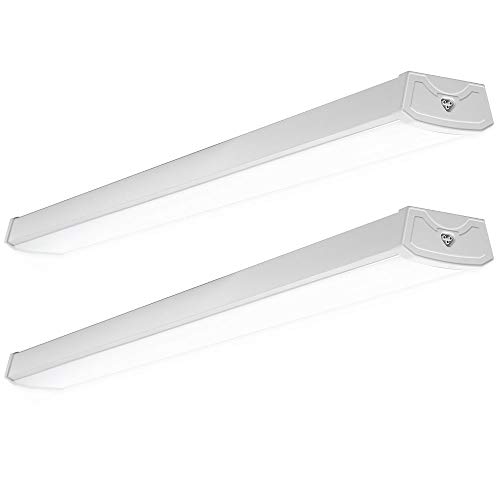
Best for Two-car and larger garages that need several fixtures spread across the ceiling
- Wide wraparound lens for broad, even light spread across a work area
- High lumen output suited to multi-fixture installs
- Instant-on, flicker-free performance including in cold garages
- Even light distribution reduces shadowing across a wide workbench
- Backed by a longer-than-typical manufacturer warranty on many models
- Higher price per fixture than basic strip-style shop lights
Verdict: A strong choice when you're lighting a full two-car garage and want consistent output across several linked fixtures.

Best for Detached shops, pole barns, or garages with 12-foot-plus ceilings
- Compact round high-bay fixture built for mounting well above head height
- High concentrated lumen output designed to stay effective at distance
- 5000K daylight color temperature standard on most models
- Far more effective than a linear shop light once ceiling height exceeds about 10–12 feet
- Compact footprint compared to a run of linear fixtures needed to match the same coverage
- Overkill (and mounted too high to be useful) in a standard 8-foot residential garage
Verdict: The right tool specifically for tall-ceiling spaces where linear shop lights would spread too thin.

Best for Heavy daily use, rental properties, or anyone wanting a commercial-grade build
- Linkable linear fixture built under Lithonia's commercial Contractor Select line
- Consistent output rated for continuous duty and frequent on/off cycling
- Available in multiple length and lumen configurations
- Commercial-brand build quality backed by a well-established lighting manufacturer
- Widely stocked at home improvement and electrical supply retailers for easy replacement parts
- Costs more than comparable consumer-brand shop lights with similar lumen output
Verdict: Worth the premium if the space sees heavy daily use or you simply prefer a commercial-grade brand behind the fixture.

Best for Adding an extra fixture or two on a tight budget
- Integrated 4-foot LED strip fixture with standard mounting hardware included
- 5000K daylight output
- Lightweight housing simplifies solo installation
- One of the more affordable options for filling in extra coverage
- Easy one-person installation thanks to the lightweight housing
- Lumen output on the lower end compared to premium fixtures at a similar length
Verdict: A reasonable low-cost option for topping up coverage rather than serving as a garage's only light source.

Frequently Asked Questions
Do LED shop lights need to be hardwired?
No. Most 4-foot LED shop lights sold today come with a plug and a pull-chain or attached switch, so they simply plug into a standard outlet or an existing fixture's pigtail cord — no hardwiring required. Some models also include a hardwire junction box option for a permanent, switch-controlled install; if you go that route, turn off power at the breaker first and hire a licensed electrician if you're not confident with the wiring.
How far apart should I space LED shop lights in a garage?
A common rule of thumb is to space linear shop lights roughly the same distance apart as they are from the ceiling to the work surface, and to run them parallel to how you'll typically face your work (for example, parallel to a workbench rather than perpendicular to it). For a two-car garage, spacing two to four linkable fixtures evenly across the ceiling generally avoids the dark corners a single centered fixture leaves behind.
Can I use LED shop lights in a cold or unheated garage?
Yes — unlike fluorescent tubes, integrated LED shop lights reach full brightness instantly and don't flicker or dim in cold temperatures, which makes them a better fit for unheated garages and shops. If the space is also damp or exposed to the outside, choose a fixture explicitly rated for damp or wet locations rather than a standard indoor-only unit.
Are linkable shop lights safe to daisy-chain on one outlet?
Linkable fixtures are designed to be connected in a short chain, and LED shop lights draw far less power than old fluorescent fixtures, so two or three linked units on one circuit is typically well within a standard outlet's capacity. Check the total wattage of your planned chain against the circuit's rating, especially if the same circuit already powers tools, a freezer, or other high-draw equipment.