Best Track Lighting
Best Track Lighting, ranked from aggregated owner ratings and reviews, not first-hand testing. Real pros, cons, and who each pick is best for.

Our Top 3 Picks
Quick Comparison
| Product | Best for | Buy | |
|---|---|---|---|
| LTKUNVLED LED Track Lighting Kit | Best Overall | See Amazon | View |
| 4-Light Brushed Nickel Track Lighting Kit | Best Value | See Amazon | View |
| FlexRail2 Monorail Lighting System | Best Premium | See Amazon | View |
| 42-Inch Linear LED Track Head Kit | Best for Kitchens | See Amazon | View |
| Multi-Head Track Lighting Collection | Best for Large Rooms | See Amazon | View |
| 3-Light Adjustable Track Lighting Kit | Best Budget Starter Kit | See Amazon | View |
How to Choose Track Lighting
Match Your Existing Track Profile First
If you're adding to or replacing part of an existing track run, this is the single most important spec. H-track, J-track, and L-track heads are not interchangeable between systems, and mismatched connectors either won't lock in or won't make reliable electrical contact. Check the head or canopy of your current system, or the model number on the original packaging, before ordering replacement heads. Starting from scratch in a new room removes this constraint entirely — pick whichever profile the kit you like uses.
Fixed Rail vs. Monorail/Flexible Rail
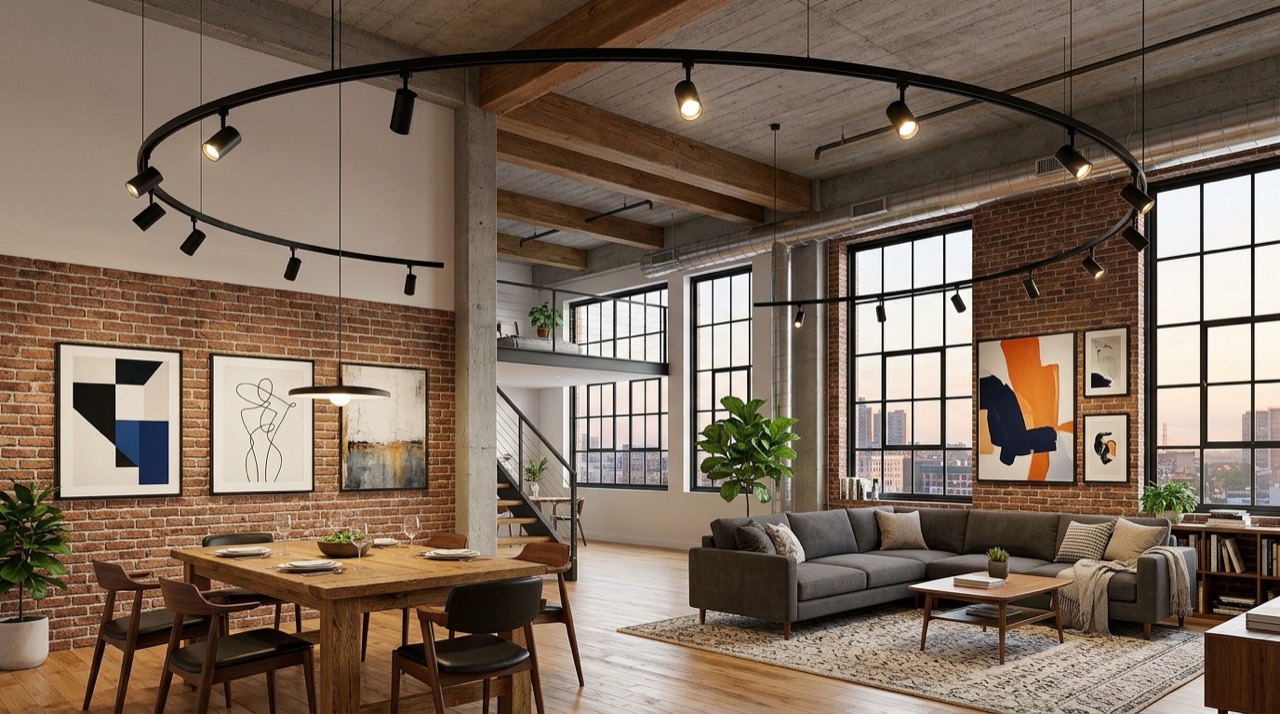
Fixed straight or L-shaped rail is simpler, cheaper, and covers most kitchen and hallway layouts. Flexible monorail systems (popularized by brands like WAC Lighting) bend into curves and freeform shapes, which suits open kitchens, feature walls, or ceilings without a clean straight run — at a higher price point and often requiring a compatible low-voltage transformer.
Line-Voltage or Low-Voltage
Line-voltage kits wire straight into your 120V circuit and are generally easier for a straightforward fixture swap. Low-voltage systems need a transformer (usually built into the canopy) and cap the total wattage and run length you can support — check the transformer's rated wattage against the combined draw of all the heads you plan to install before buying extra heads separately.
Head Type for the Job
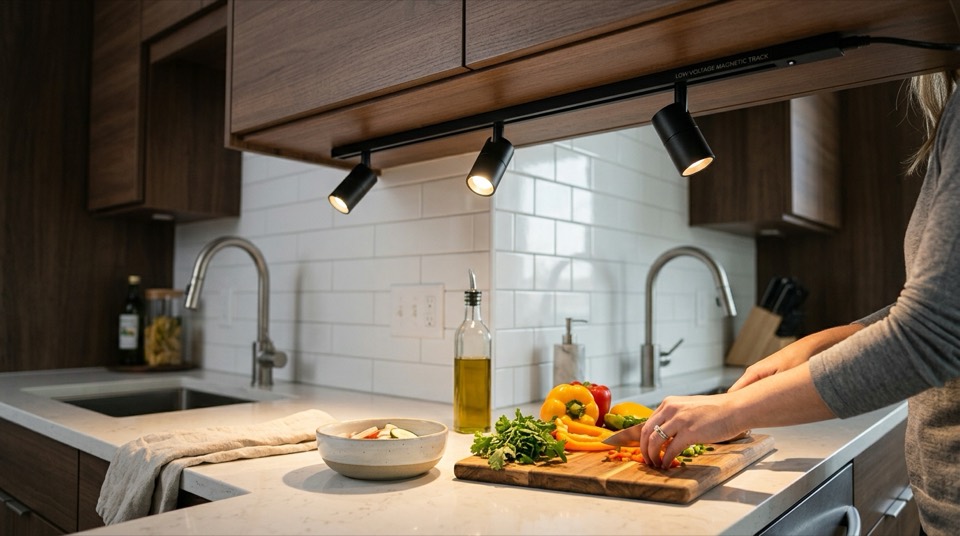
- Buying for a kitchen island or counter: look for higher-CRI (90+) gimbal or floodlight heads.
- Buying for artwork or a gallery wall: cylinder or pinhole heads with adjustable beam spread.
- Buying for general room fill: floodlight heads, warmer color temperature (2700K-3000K).
Dimmer Compatibility
Check whether the kit is rated for TRIAC or ELV dimming, and match that to the dimmer switch you plan to install (or already have). Many LED track flicker or dimming-range complaints trace back to a mismatched dimmer rather than a faulty fixture. If you want smart-home control, confirm the kit works with a smart in-wall dimmer like Lutron Caseta rather than assuming any dimmer will pair with any app.
Finish and Room Style
Because track sits visibly on the ceiling rather than hiding inside it, finish is a bigger design decision than with recessed lighting. Matte black and brushed nickel are the most common modern finishes; white blends into a white ceiling; brass and bronze options suit warmer, traditional rooms. Pick a finish that matches other fixtures in the room — cabinet hardware, faucets, or a nearby pendant light — rather than treating it as an afterthought.
Number of Heads and Track Length
Most starter kits ship with 3-4 heads on a 3-4 foot section of track, which suits a small kitchen work area or a single accent wall. Larger rooms, longer runs, or multi-wall gallery lighting usually need either a longer kit or separate extension sections and additional heads purchased to match the existing profile. Measure the run you actually need before ordering, and remember you can usually add heads to a track later as long as the profile matches.
Who Should Skip Track Lighting
- Renters without existing track wiring: unless you have a plug-in track kit (some short display-style kits exist), permanent track requires the same electrical work as any hardwired fixture.
- Rooms wanting a single soft ambient glow: a flush mount, a ceiling fan with a light kit, or recessed lighting on a dimmer is simpler and less visually busy than a full track run.
- Very low ceilings: track heads add several inches below the ceiling line; in rooms under roughly 8 feet, that clearance can start to feel tight, especially with cylinder or larger floodlight heads.
- Anyone not comfortable with electrical work and without an existing junction box in the right spot: that's a licensed electrician job, not a weekend DIY one.
A Note on Reviews and Specs
None of the picks below come from lab testing — we haven't run photometric tests ourselves. Recommendations here are based on published manufacturer specs (lumens, CRI, wattage, dimmer compatibility) and how those specs match common household needs, cross-checked against aggregated owner feedback where it's consistent. Always confirm current specs and dimmer compatibility on the manufacturer's own listing before buying, since kits get updated.
Full Ranking, Reviewed

Best for Straightforward kitchen or living room upgrades on H-track profile
- Integrated LED heads with no bulbs to replace
- Line-voltage, H-track compatible connectors
- Dimmable with compatible TRIAC dimmers
- Adjustable gimbal-style heads
- Simple fixture-swap installation for existing H-track setups
- Widely available at major hardware retailers
- Solid lumen output for the price point
- Fixed head style limits dramatic spotlighting compared to cylinder heads
Verdict: A dependable, no-surprises LED track kit for anyone replacing an existing fixture or starting a standard H-track run.

Best for Budget-conscious buyers wanting a complete starter kit
- 4 adjustable gimbal heads on a straight rail section
- Brushed nickel finish
- Compatible with standard H-track extensions
- LED-compatible sockets
- Low price for a complete multi-head kit
- Easy to find at Home Depot and online
- Enough heads for a small kitchen or hallway out of the box
- Included fixtures feel less premium than higher-end brands
Verdict: The practical pick when you need several working heads on a tight budget without sacrificing basic reliability.

Best for Curved layouts, feature walls, and higher-end kitchen remodels
- Flexible low-voltage rail that bends into curves
- Compatible with WAC's range of low-voltage heads
- Freeform layout not limited to straight runs
- Transformer-fed system with dimming support
- Handles ceiling layouts straight track can't follow
- Sleek, modern low-profile heads
- Reputable brand within the monorail category
- Higher cost and more planning required around transformer wattage limits
Verdict: Worth the premium when a straight track run doesn't fit your ceiling or design vision.

Best for Task lighting over counters and islands
- Higher-CRI LED heads suited to food-prep areas
- Linear head style for wider, even task coverage
- Line-voltage, standard track profile compatible
- Dimmable with compatible dimmers
- Even light spread reduces shadows on counters
- Higher color accuracy than basic gimbal heads
- Reputable lighting brand with wide dealer support
- Linear head shape is less suited to accent/gallery lighting than cylinder heads
Verdict: A strong choice specifically for kitchen task lighting where color accuracy and even spread matter more than dramatic spotlighting.

Best for Longer runs and larger open-plan spaces
- Extension-compatible track sections for longer runs
- Wide range of head styles within one compatible profile
- Line-voltage, standard connector
- Multiple finish options
- Easy to scale up with additional heads and track sections
- Consistent connector profile across the product line
- Good fit for open kitchens or great rooms
- Buying enough sections and heads for a large room adds up in cost
Verdict: The right pick when one small starter kit isn't enough track or heads for the space.

Best for First-time buyers testing track lighting in a small space
- 3 adjustable heads on a compact rail
- Simple line-voltage installation
- Compact size suited to hallways or small kitchens
- Budget-friendly complete kit
- Low cost of entry for trying track lighting
- Compact enough for small rooms and hallways
- Simple, uncomplicated installation for a straightforward fixture swap
- Only 3 heads and a short rail limits coverage in larger rooms
Verdict: A sensible low-risk way to try track lighting in a small space before committing to a larger system.
Frequently Asked Questions
Can I mix track heads from different brands on the same track?
Only if they share the same rail profile (H-track, J-track, or L-track) and voltage type. Even within a compatible profile, fit and electrical contact can be less reliable across brands than staying with one manufacturer's heads, so check compatibility notes before mixing.
How many lights can I put on one track run?
It depends on your transformer (for low-voltage systems) or your circuit's amperage (for line-voltage systems), not just physical space on the rail. Add up the wattage of every head you plan to install and compare it against the rated capacity listed on the transformer or track connector before adding more heads.
Is track lighting good for a kitchen?
Yes — it's one of the more common uses. Track over an island or counter with CRI 90+ gimbal or floodlight heads gives directional task light that a single centered fixture can't match, and heads can be re-aimed later if the layout changes.
Does track lighting use a lot of electricity?
Modern LED track heads draw far less than older halogen track systems did. Check the ENERGY STAR-rated wattage-equivalent on the packaging; most LED heads use a fraction of the wattage of an equivalent-brightness incandescent or halogen bulb.