Best Pedestal Fans
Best Pedestal Fans, ranked from aggregated owner ratings and reviews, not first-hand testing. Real pros, cons, and who each pick is best for.

Our Top 3 Picks
Quick Comparison
| Product | Best for | Buy | |
|---|---|---|---|
| Lasko 2521 Elegance & Performance Pedestal Fan | Best Overall | See Amazon | View |
| Rowenta Turbo Silence Extreme Pedestal Fan (VU5551) | Best for Quiet Operation | See Amazon | View |
| Honeywell QuietSet Pedestal Fan | Best Value | See Amazon | View |
| Dreo Cruiser Pro+ Pedestal Fan | Best Smart Pick | See Amazon | View |
| PELONIS 16-Inch Adjustable Pedestal Fan | Best for Large Rooms | See Amazon | View |
How to Choose the Best Pedestal Fan for Your Room
Pedestal fans range from under $40 basic AC models to $150+ DC-motor units with remotes and app control. The right pick depends less on price and more on matching a few specs to how and where you'll actually use the fan.
Start with room size, not the box
Manufacturers rarely print CFM on the packaging, so use blade diameter as a stand-in: 16-inch blades suit bedrooms and home offices, while 18-inch-plus blades push more air across larger living rooms, garages, or sunrooms. If you're cooling a single person at a desk, even a modest pedestal fan will do the job — the reach becomes far more important once you're trying to move air across an entire room.
Decide how you'll use height and tilt
Walk through the room in your head before buying. A fan next to a couch needs to clear the seat back and aim at head/torso height — typically 42–48 inches off the floor. A bedroom fan often sits lower and tilts to sweep across the bed rather than straight ahead. Check the advertised height range (most pedestal fans adjust somewhere between 40 and 55 inches) and make sure the pole locks solidly; a wobbly or slowly-sagging pole is a common complaint in owner reviews of cheaper models.
Oscillation: wide sweep or direct aim
A standard 70–90 degree oscillation sweep suits most rooms. If you want to cool a wide living area evenly, look for a model with a wider sweep (some Dreo and Honeywell models advertise 120 degrees or more) or vertical oscillation for extra coverage. If you mainly want focused airflow on one spot — a desk, a favorite chair — make sure oscillation can be switched off so the fan blows straight ahead instead.
Noise: read reviews, not spec sheets
Because decibel ratings aren't consistently published or tested the same way across brands, the most reliable signal is aggregated owner feedback about noise specifically at low and medium speeds, which is where most people actually run a fan for extended periods (overnight, during a work call, etc.). Fans built around a DC motor and a higher blade count generally get more consistent praise for quiet running, but always check reviews for the specific model.
AC vs DC motor — is the upgrade worth it?
An AC motor pedestal fan is the practical, budget-friendly choice: simple, durable, usually 3 speeds, and inexpensive to replace if it fails after years of service. A DC motor fan costs more upfront but runs more efficiently, offers finer speed control (often a dozen or more steps instead of 3), and tends to run quieter — which matters if the fan will be on for hours at a time, especially overnight. If you use a fan constantly through a hot season, the lower running noise and lower electricity draw of a DC motor can be worth the price gap; for occasional or seasonal use, an AC motor is fine.
Extra features worth paying for
- Remote control — genuinely useful once the fan is out of arm's reach
- Timer / auto-off — useful for bedroom use so the fan doesn't run all night unnecessarily
- Multiple speed steps — DC motors typically offer far more granular control than the 3 fixed AC speeds
- Removable, washable grille — makes it far easier to keep dust out of the airflow
Who should skip a pedestal fan
If floor space is tight or you have young kids or pets who might tip a top-heavy base, a tower fan's narrower footprint may be a safer, more space-efficient choice. If you need whole-room air movement without any floor footprint at all, a ceiling fan is the better long-term investment, though it requires a compatible ceiling box and, for a new installation, a licensed electrician. And if you're cooling a single desk or nightstand rather than a room, a smaller desk fan will do the job for less money and less noise.
Full Ranking, Reviewed
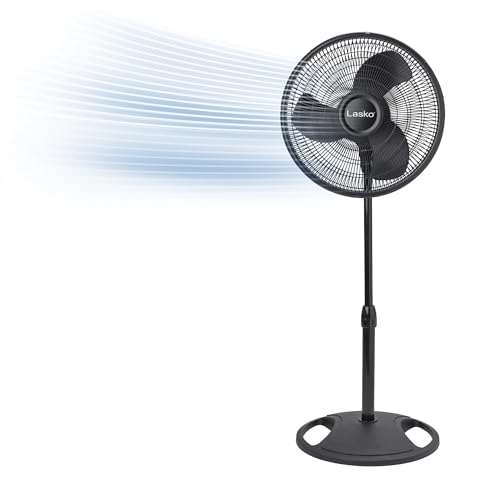
Best for Everyday whole-room cooling at a low price
- 3-speed AC motor with widespread oscillation
- Adjustable height for seated or standing use
- Simple tilt-back fan head
- Strong airflow for the price
- Easy tool-free assembly
- Widely available and inexpensive to replace
- Only 3 fixed speeds, no fine control
Verdict: A dependable, no-frills pedestal fan that covers a typical living room or bedroom without a premium price tag.

Best for Bedrooms and home offices where low noise matters most
- Turbo Silence blade design aimed at reduced noise
- 4 speed settings plus oscillation lock
- Remote control included
- Noticeably quieter at low and medium speeds than typical AC fans
- Sturdy, wobble-resistant base
- Remote control for bedside adjustment
- Higher price than basic AC pedestal fans
Verdict: The pick for anyone who plans to run a pedestal fan overnight and doesn't want to notice it.

Best for Shoppers who want multiple quiet-focused speed settings without a DC price tag
- QuietSet speed settings tuned for different noise/airflow tradeoffs
- Adjustable height and tilt head
- Oscillating and fixed-direction modes
- Good balance of features and price
- Multiple named speed settings, not just high/med/low
- Reputable brand with wide parts/support availability
- Airflow reach is more modest than larger-bladed models
Verdict: A well-rounded mid-price option for anyone who wants more speed flexibility than a basic 3-speed fan without paying DC-motor prices.
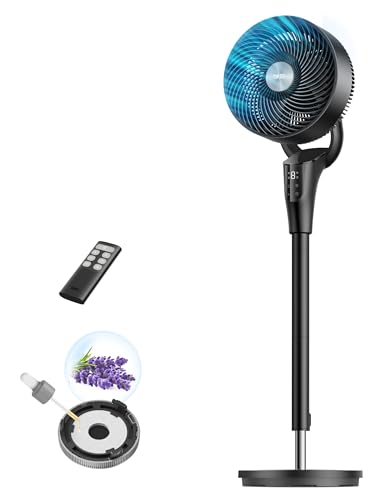
Best for Buyers who want a DC motor, wide oscillation, and app/remote control
- Brushless DC motor with multiple fine-grained speed steps
- Wide oscillation angle plus remote control
- Sleep-mode and timer settings
- Quiet running even at higher speeds thanks to the DC motor
- Very wide oscillation sweep for whole-room coverage
- Precise speed control beyond typical low/med/high
- Costs noticeably more than AC-motor competitors
Verdict: The best option if you want DC-motor efficiency and quiet running plus modern conveniences like a timer and wide sweep.

Best for Larger living rooms, garages, or sunrooms needing more reach
- 16-inch blade with widespread oscillation
- Adjustable height and tilt
- Remote control on select models
- Strong airflow reach for an AC-motor fan
- Stable, weighted base
- Competitively priced for the airflow it delivers
- Noticeably louder than DC-motor options at top speed
Verdict: A solid choice when the priority is moving air across a larger space and noise is a secondary concern.
Frequently Asked Questions
How much airflow (CFM) do I actually need from a pedestal fan?
For a bedroom or home office, under 1,500 CFM at top speed is usually enough. For a living room or open-plan space, look for roughly 1,500–2,500 CFM. For a garage, sunroom, or larger open area, 2,500 CFM and up gives you noticeably more reach across the room. If CFM isn't listed, an 18-inch or larger blade generally moves more air than the common 16-inch size.
Is a DC motor pedestal fan worth the extra cost?
It depends on how often you'll run it. DC motors are more energy-efficient, run quieter, and offer far more speed steps than a standard 3-speed AC motor. If the fan will run for hours daily or overnight through a hot season, the lower noise and lower power draw can justify the higher price. For occasional or seasonal use, a standard AC motor fan is perfectly adequate and costs less to replace if it eventually fails.
What oscillation angle should I look for?
A standard 70–90 degree sweep works for most rooms and is the most common spec. If you want airflow spread across a wider living area, look for models advertising 120 degrees or more, or vertical oscillation for extra coverage. Make sure oscillation can also be switched off if you sometimes want direct, focused airflow on one spot.
Are pedestal fans noisy enough to disturb sleep?
At top speed, most pedestal fans are noticeable, but at low-to-medium speeds — which is what most people actually use overnight — noise varies a lot by model. DC-motor fans and models with a higher blade count are generally reported as quieter at these speeds in owner reviews. Since decibel specs aren't tested consistently across brands, checking reviews for noise at the speed you'll actually use is more reliable than comparing spec-sheet numbers.
How tall should the fan be for a living room versus a bedroom?
In a living room where people are mostly seated, aim the fan head around 42–48 inches high, roughly head-and-torso height, for the most noticeable cooling effect. In a bedroom, many people prefer the head a little lower with the tilt angled across the bed rather than aimed straight down a wall. Most pedestal fans adjust somewhere in the 40–55 inch range, so check the advertised height range against your furniture layout.