Best Ceiling Fans With Remote Control
Best Ceiling Fans With Remote Control, ranked from aggregated owner ratings and reviews, not first-hand testing. Real pros, cons, and who each pick is best for.

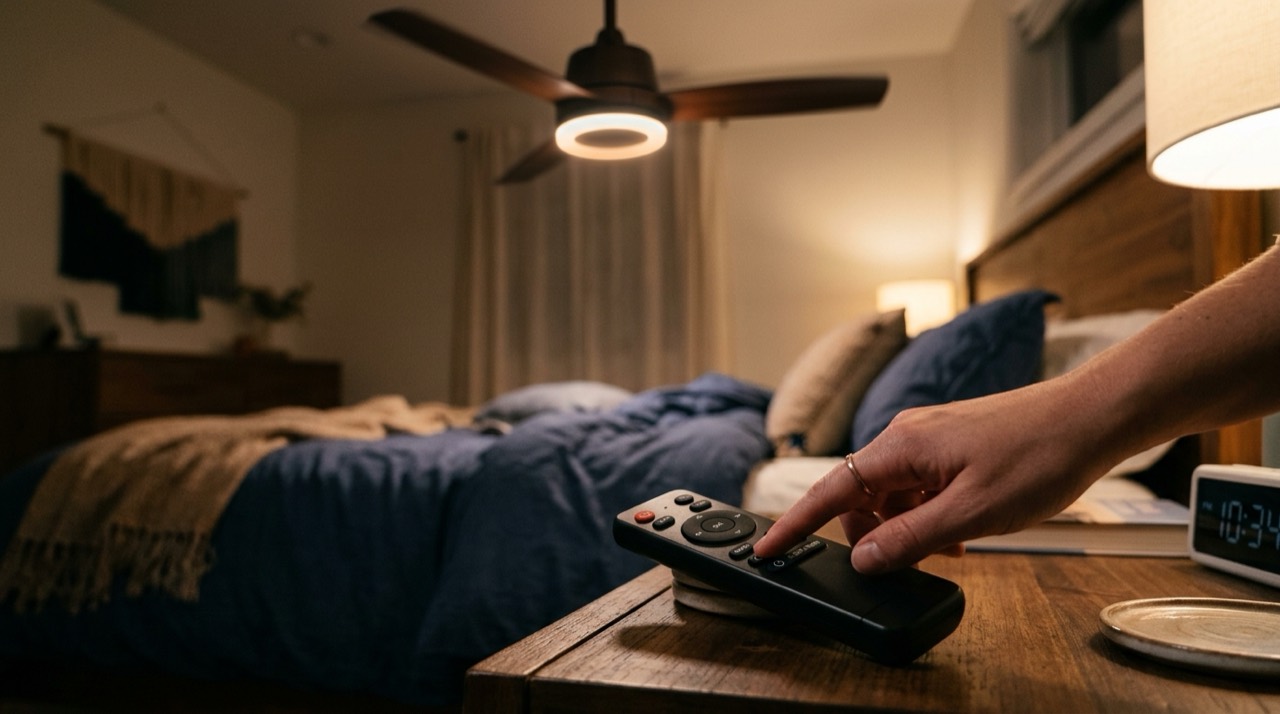
Our Top 3 Picks
Quick Comparison
| Product | Best for | Buy | |
|---|---|---|---|
| Anslee 52-Inch Ceiling Fan with Remote Control | Best Overall | See Amazon | View |
| Belmar 52-Inch Ceiling Fan with Remote Control | Best Value | See Amazon | View |
| Concept III 52-Inch LED Ceiling Fan with Remote | Best Premium | See Amazon | View |
| Stealth DC 54-Inch Ceiling Fan with Remote | Best for Large Rooms | See Amazon | View |
| Haiku L Series Smart Ceiling Fan | Best Smart Pick | See Amazon | View |
| Cameron 52-Inch Ceiling Fan with Remote Control | Best for Bedrooms | See Amazon | View |
What to Look For in a Remote-Control Ceiling Fan
RF vs. infrared. Nearly every current fan uses radio-frequency (RF) remotes rather than older infrared (IR) units. RF doesn't need line of sight, which matters if your fan sits above a bed, a sloped ceiling, or furniture that could block a signal path. If you're comparing an older or budget listing, confirm it's RF before buying.
Number of speeds. AC-motor fans typically offer three speeds; DC-motor fans commonly offer six or more, with finer steps between low and high. If you run the fan for background air movement most of the day, more speed steps mean you're less likely to land between "too still" and "too breezy."
Reverse-direction switch. Look for a remote that includes a direction toggle, not just a switch buried on the motor housing. Reversing the blades to run clockwise on low in winter gently pushes warm air at the ceiling back down without a cooling breeze, per U.S. Department of Energy guidance on ceiling fan use.
Light dimming and separate channels. If the fan includes a light kit, check whether the remote dims the light on a separate channel from fan speed. Cheaper combined receivers can cause light flicker tied to fan speed changes.
DIP switches for multi-fan homes. If you're buying more than one remote-control fan for the same house, confirm the remote and receiver both expose DIP switches (or an equivalent digital pairing code). Without unique codes, a single remote can end up controlling two fans within range of each other.
Wall cradle availability. A wall-mounted cradle that holds the handheld remote solves the "where did the remote go" problem in guest rooms, kids' rooms, and rentals. Not every fan includes one out of the box — check whether it's bundled or sold separately.
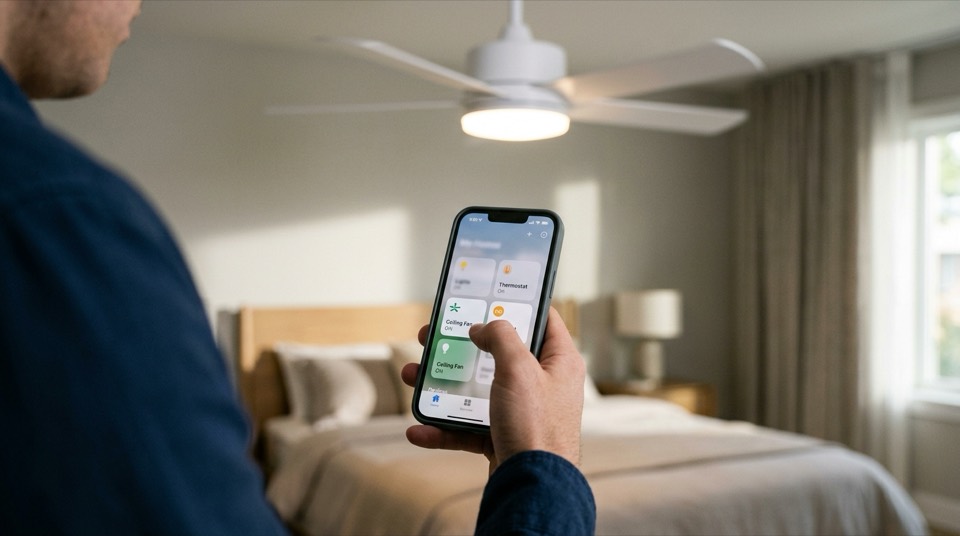
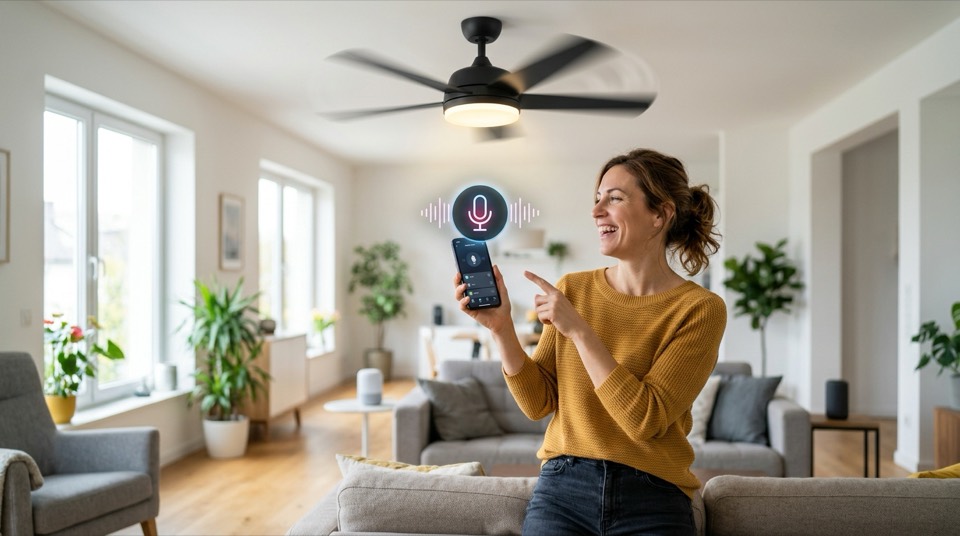
Smart home compatibility. If you want Alexa or Google Home control, confirm the fan has a genuine Wi-Fi module (built-in or as a smart receiver add-on) rather than relying on a smart plug, which can only cut power entirely and won't control individual speeds.
Battery type and life. Handheld remotes run on a coin-cell or AAA battery. This is a minor factor, but it's worth noting if you dislike hunting for uncommon battery sizes — some remotes use widely available AAAs, others use less common coin cells.
UL listing and damp/wet ratings. If the fan is going on a covered porch or in a bathroom, confirm it carries a UL "damp-rated" or "wet-rated" listing appropriate to that location, independent of whichever remote or control method it ships with.
Who Should Skip a Remote-Control Fan
If you already have a smart wall switch or smart plug system you're happy with, and you mainly want fan speed control rather than scheduling or voice control, a simpler pull-chain fan paired with an existing smart switch may serve you just as well for less money. Remote-control fans also add one more device to keep batteries in and one more remote to lose track of — if that's a real annoyance in your household, a basic wall-control-only fan removes that variable entirely. And if your priority is pure ceiling lighting rather than airflow, you may be better served browsing dedicated fixtures from Kichler, Progress Lighting, or WAC Lighting instead of a fan/light combo.
A Note on Reviews and Ratings
We haven't independently tested the fans below in a lab. The picks and notes here are based on published manufacturer specifications, ENERGY STAR and U.S. Department of Energy guidance on fan efficiency and use, and patterns reported consistently across verified owner reviews. Always check current listings for the latest price, finish options, and included accessories before buying.
Full Ranking, Reviewed
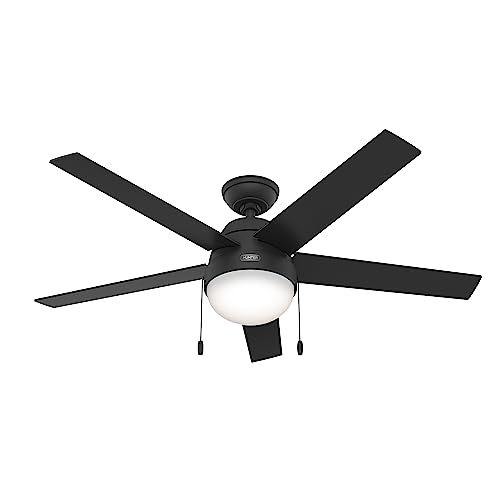
Best for Living rooms and bedrooms wanting a dependable all-around remote-control fan
- Included RF handheld remote with reverse switch
- Integrated dimmable LED light kit
- WhisperWind motor for quiet operation at all three speeds
- 52-inch blade span suited to mid-size rooms
- Straightforward remote pairing out of the box
- Widely available replacement parts and finishes
- Only three speeds versus six or more on DC-motor fans
Verdict: A safe, well-supported choice for anyone who wants reliable remote control without stepping up to DC-motor pricing.

Best for Budget-conscious buyers who still want reverse and light dimming on the remote
- Handheld RF remote controls speed, light dimming, and reverse
- Reversible blades (finish varies by side)
- Frosted glass light kit included
- Strong feature set for the price point
- Easy DIP-switch pairing if running multiple fans
- Remote housing feels less premium than pricier competitors
Verdict: Hits the core remote-control features most households actually use without paying for extras like Wi-Fi.

Best for Design-forward rooms wanting integrated LED lighting and a refined remote
- Fully integrated dimmable LED light ring
- Six-speed DC motor with reverse
- Slim handheld remote with backlit buttons
- Noticeably quieter operation thanks to the DC motor
- Six speed steps for fine-tuned airflow
- Premium price relative to AC-motor alternatives
Verdict: Worth the upgrade cost if quiet, precise speed control and a modern light ring matter more than budget.

Best for Great rooms and open-plan spaces needing higher CFM with quiet DC efficiency
- 54-inch blade span rated for larger open spaces
- DC motor with multiple speed settings and reverse
- Remote includes fan and optional light control
- Moves air effectively in larger rooms without excess noise
- DC motor keeps running costs lower at high speed
- Larger blade span needs adequate ceiling height and clearance
Verdict: A strong pick when the room is too big for a standard 52-inch fan but you still want low operating noise.

Best for Households that want app and voice control alongside a physical remote backup
- Wi-Fi enabled with SenseME app control
- Compatible with Amazon Alexa and Google Home
- Optional wall or handheld remote as a manual backup
- Scheduling and away-mode automation via the app
- Very quiet DC motor across its speed range
- Higher price than remote-only fans, and full functionality depends on home Wi-Fi
Verdict: The right choice if you specifically want smart-home integration rather than remote control alone.

Best for Bedrooms wanting quiet nighttime operation and simple remote dimming
- Handheld RF remote with reverse and light dimming
- Reversible blade finishes to match seasonal or decor changes
- Compact profile suited to standard ceiling heights
- Quiet enough for overnight use on low speed
- Straightforward remote setup
- Fewer finish options than some larger fan lines
Verdict: A solid, no-fuss remote-control fan sized right for a typical bedroom.
Frequently Asked Questions
Do all ceiling fans come with a remote control included?
No. Many budget and mid-range fans still ship with only a pull chain, and some remote-equipped models sell the wall cradle separately. Always check the box contents on the specific listing rather than assuming a remote is included.
Can I control a ceiling fan with Alexa or Google Home?
Only if the fan has a genuine smart module, either built in or added as a smart receiver kit. A smart plug on a pull-chain fan can only turn power fully on or off; it can't select a specific speed the way a true smart-fan integration can.
What's the difference between RF and infrared ceiling fan remotes?
RF (radio-frequency) remotes send a signal through walls and furniture, so you don't need to point them at the fan. Older infrared (IR) remotes need a clear line of sight to a receiver eye, which is easy to block on a fan mounted above a bed or in an alcove. Almost all current fans use RF.
Will a ceiling fan remote work through a switched wall outlet?
It can, as long as the wall switch controlling that outlet or circuit is left in the on position so the fan's receiver stays powered. If the switch is off, the receiver has no power and the remote won't do anything, regardless of battery or pairing.
Do I need an electrician to add remote control to an existing fan?
Most retrofit remote kits are designed for a homeowner comfortable working at a switched-off electrical box, but any time you're unsure about your home's wiring, or the fan involves a new circuit or unusual wiring, hire a licensed electrician rather than guessing.