


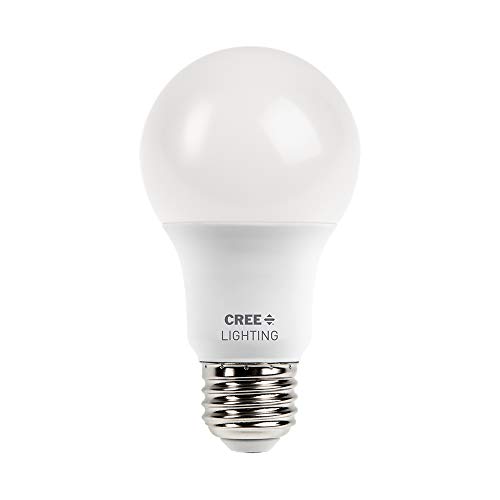


Lumens vs watts in one line
Lumens tell you how bright a bulb is. Watts tell you how much electricity it uses. For decades we bought bulbs by watts because, among incandescents, more watts meant more light. LEDs break that link: they produce far more light per watt, so watts no longer describe brightness. Buy LEDs by lumens.What lumens measure
A lumen is a unit of visible light output. The higher the lumen number, the brighter the bulb appears.- A dim accent bulb might be 200 to 450 lumens.
- A standard household bulb is often 800 lumens.
- A bright bulb for a kitchen or workspace can be 1,600 lumens or more.
What watts measure
A watt is a unit of power consumption. It tells you how much energy the bulb draws, which affects your electricity bill, not how bright the light is.- An incandescent turned most of its watts into heat, so it needed many watts for modest light.
- An LED converts far more of its energy into light, so it needs very few watts for the same brightness.
Why the old watt habit misleads
Shoppers still ask for a 60-watt bulb out of habit. With LEDs that figure is almost meaningless for brightness, because an LED reaching the same brightness might be labeled 8, 9, or 10 watts depending on its efficiency. Reading watts alone, you could buy something far dimmer or brighter than you expected. This is why bulb packaging now leads with a lumens figure and lists watts second.Rough incandescent-to-lumen equivalents
Use these familiar comparisons as a starting point:- 40-watt incandescent = about 450 lumens
- 60-watt incandescent = about 800 lumens
- 75-watt incandescent = about 1,100 lumens
- 100-watt incandescent = about 1,600 lumens
Efficacy: lumens per watt
The ratio of lumens to watts is called efficacy, measured in lumens per watt (lm/W). It tells you how efficiently a bulb turns electricity into light.- Incandescents delivered roughly 10 to 17 lm/W.
- Typical LEDs deliver around 75 to 110 lm/W, and efficient models go higher.
How many lumens do you need
A useful approach is lumens per square foot for the room's purpose. General ranges:- Bedrooms and living rooms: lower, softer levels, often 10 to 20 lumens per square foot.
- Kitchens and bathrooms: brighter task areas, often 30 to 40 lumens per square foot at work surfaces.
- Home offices and workshops: bright, around 50 to 70 lumens per square foot at the task.
Specs to check alongside lumens
Lumens is only one number. For the right feel, also read:- Color temperature (Kelvin): warm 2700K to 3000K for cozy spaces, neutral 3500K to 4000K for kitchens and baths, cool 5000K for task and garage.
- CRI (color rendering index): 90 or above makes colors and skin tones look natural.
- Dimmable rating: confirm the bulb is dimmable if you use a dimmer.
- Beam angle for spots and floods, and the base type such as A19 or BR30.
A note on fixture ratings
Because LEDs use so few watts, you rarely approach a fixture's wattage limit, which is a safety benefit. Still, respect the fixture's maximum wattage marking and use enclosed-rated LEDs in fully enclosed fixtures so heat does not shorten their life. If you are replacing hardwired fixtures rather than bulbs, turn off power at the breaker and, for any hardwiring or new circuits, hire a licensed electrician. This is general information, not a substitute for professional electrical advice.Bottom line: choose the lumens that match the brightness you want, then pick the lowest-watt LED that delivers them for the best efficiency.


