Best Living Room Lighting Ideas
Best Living Room Lighting Ideas, ranked from aggregated owner ratings and reviews, not first-hand testing. Real pros, cons, and who each pick is best for.

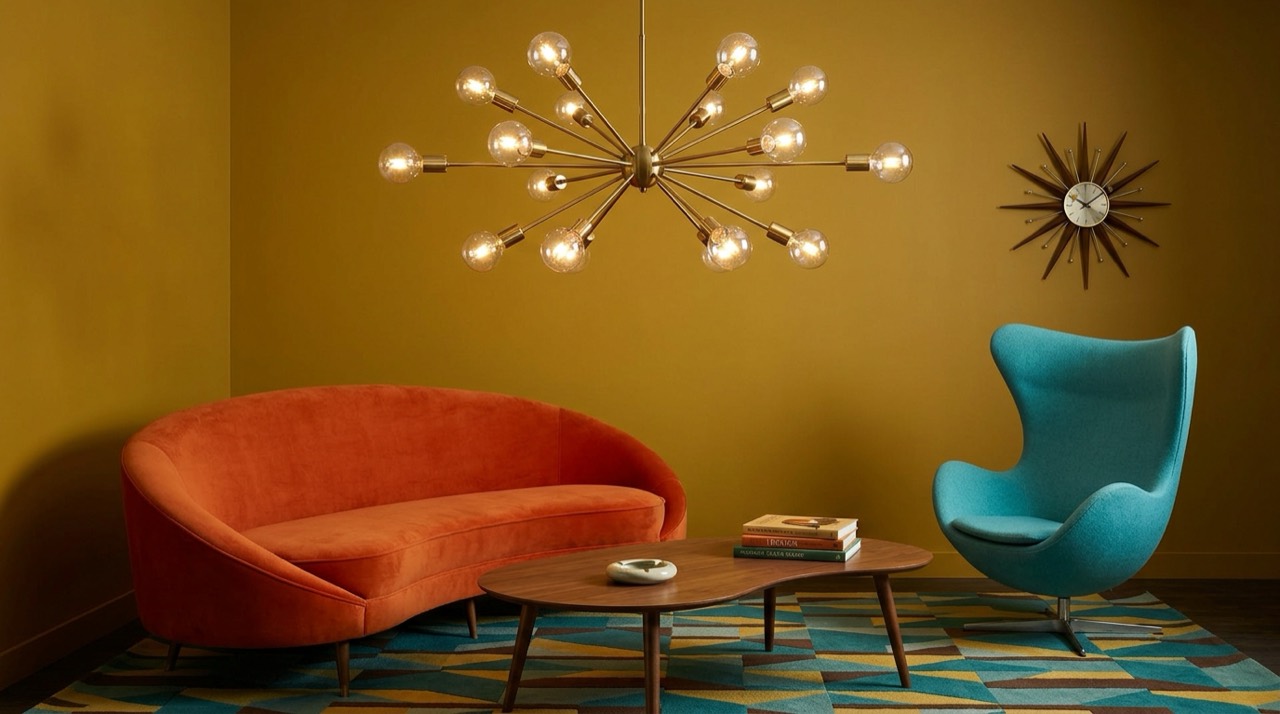
Our Top 3 Picks
Quick Comparison
| Product | Best for | Buy | |
|---|---|---|---|
| White and Color Ambiance A19 Starter Kit | Best Overall | See Amazon | View |
| LED Flush Mount Ceiling Light | Best Value | See Amazon | View |
| Bailey Semi-Flush Mount | Best Premium | See Amazon | View |
| Caseta Smart Dimmer Switch | Best Smart Pick | See Amazon | View |
| RGBIC LED Strip Lights | Best for Accent Lighting | See Amazon | View |
| Sparq LED Torchiere Floor Lamp | Best for Reading | See Amazon | View |
How to Choose Living Room Lighting
A living room usually gets the most varied use of any room in the house - movie nights, reading, hosting, working from the couch - so it needs more lighting flexibility than almost any other space. Shopping fixture-by-fixture without a plan is how rooms end up either dim and flat or overlit in one spot.
Start With the Ambient Layer
The ambient layer is your baseline: a ceiling fixture (flush mount, semi-flush, or a chandelier for higher ceilings), recessed cans, or one or two floor lamps bounced off the ceiling or walls. For an average living room, aim for roughly 1,500-3,000 combined lumens on this layer, on a dimmer so it can drop down for movie night and come back up for cleaning or hosting. If the room has no existing overhead fixture and adding one means new wiring, a pair of torchiere or tree floor lamps can substitute for a ceiling fixture entirely - no electrician required.
Add Task Lighting Near Seating
Anywhere someone reads, works on a laptop, or does close-up work needs its own light, aimed at the surface rather than the ceiling. A table lamp beside a reading chair or a floor lamp with an adjustable arm should put out 400-800 lumens at that specific spot. Overhead ambient light alone almost always leaves a shadow across a book or laptop screen.
Layer In Accent Lighting Last
Accent light is what makes a living room look designed rather than simply lit. LED strip lighting behind or under a TV, a picture light over art, or directional shelf lighting adds depth using relatively little light - 200-400 lumens per fixture is typically plenty, since accent lighting is meant to draw the eye, not compete with the ambient layer.
Match Color Temperature Across Every Bulb
Living rooms read as warm and inviting at roughly 2700-3000K. Mixing a 5000K "daylight" bulb into one lamp while everything else in the room sits at 2700K is one of the most common - and most fixable - living room lighting mistakes. Check the Kelvin rating on the packaging or the ENERGY STAR lighting facts label before buying, and try to keep every bulb in the room at the same value.
Smart Bulbs vs. Smart Switches vs. Traditional Dimmers
Smart bulbs (Philips Hue, Govee) install in seconds, work in any existing lamp or fixture, and add color-changing accent options plus app or voice control - but every lamp needs a dumb wall switch left permanently "on" for them to respond to commands. Smart in-wall switches (Lutron Caseta) control a hardwired fixture directly and work with any bulb already installed in it, but putting one in means working inside a wall box. A basic plug-in or in-line dimmer is the simplest and cheapest option if app control isn't a priority at all.
Style and Finish
Match the fixture's finish (matte black, brushed nickel, brass, warm bronze) to the room's existing hardware - cabinet pulls, curtain rods, or picture frames - rather than treating the light fixture as an isolated decision. A fixture with the right lumen output but the wrong finish will still look out of place.
Who Should Skip Smart Lighting
If you're renting, don't want to manage an app, or just want light that works the instant you flip a switch, skip smart bulbs and switches entirely - a good plug-in lamp on a mechanical timer or a simple in-line dimmer covers most of what smart lighting offers, without the setup. Smart lighting earns its keep in rooms where you genuinely want scheduling, remote control, or color-changing accent effects; it's not a requirement for good layered lighting.
A Quick Safety Reminder
Any project that touches a wall switch, dimmer, or hardwired fixture means working with live wiring. Turn off power at the breaker before starting, and hire a licensed electrician for new circuits, box relocations, or anything that goes beyond swapping an existing switch or fixture on a like-for-like basis.
Full Ranking, Reviewed

Best for Adding dimmable, color-tunable light to any existing lamp or fixture without rewiring
- 16 million colors and tunable white from 2000K-6500K
- Works with Alexa, Google Assistant, and Apple HomeKit via the Hue Bridge
- Schedules, routines, and away-from-home control through the Hue app
- 800 lumens per A19 bulb, dimmable down to 1%
- Retrofits into existing lamps and fixtures with no wiring
- One kit can cover ambient and accent layers at once
- Full smart features require a separate Hue Bridge in some kit configurations
Verdict: The easiest way to add real layered-lighting control to a living room that already has lamps and fixtures in place.

Best for A budget-friendly ambient ceiling fixture for living rooms without existing overhead lighting
- Integrated LED, no bulbs to buy or replace
- Low-profile flush mount fits rooms with 8-foot ceilings
- Dimmable with a compatible wall dimmer
- 3000K warm white color temperature
- Inexpensive way to add a real ambient ceiling layer
- Integrated LED simplifies long-term maintenance
- Fixed color temperature - can't be tuned cooler for other uses
Verdict: A straightforward, inexpensive ambient fixture for anyone starting from a bare ceiling box.

Best for A statement ambient fixture for living rooms with higher ceilings or a more finished look
- Etched glass or fabric shade options depending on finish
- Compatible with standard dimmers
- Available in brushed nickel, matte black, and brass finishes
- Uses standard medium-base bulbs so lumens and color temperature are adjustable
- Higher-end finish options that match existing hardware
- Bulb socket design lets you choose your own lumen output and Kelvin value
- Costs noticeably more than a basic flush mount for similar light output
Verdict: Worth the upgrade if the living room ceiling fixture is a visible, central design element.

Best for Adding app and voice-controlled dimming to an existing hardwired ambient fixture
- Works with any dimmable bulb already installed - no bulb replacement needed
- Requires a Lutron Smart Bridge for app, Alexa, and Google Assistant control
- Wall switch retains manual dimming without the app
- Pairs with Pico remotes for wireless secondary switches
- Controls the fixture directly, so any bulb style or brand works
- Manual wall control still works if the app or Wi-Fi is down
- Installation is inside a wall switch box - turn off the breaker and hire an electrician if unsure
Verdict: The better long-term choice over smart bulbs when the ambient fixture is already hardwired and dimmable.

Best for Behind-TV, under-shelf, or media wall accent lighting
- Multi-color segments (RGBIC) so different sections of the strip show different colors at once
- App and voice control via Alexa and Google Assistant
- Music-sync mode reacts to sound in real time
- Adhesive backing for tool-free mounting behind furniture or shelving
- Adds a genuine accent layer for very little cost
- Flexible strip fits behind curved or irregular furniture
- Adhesive backing can loosen over time on textured or unpainted surfaces
Verdict: The easiest way to add a color-capable accent layer behind a TV or entertainment unit.
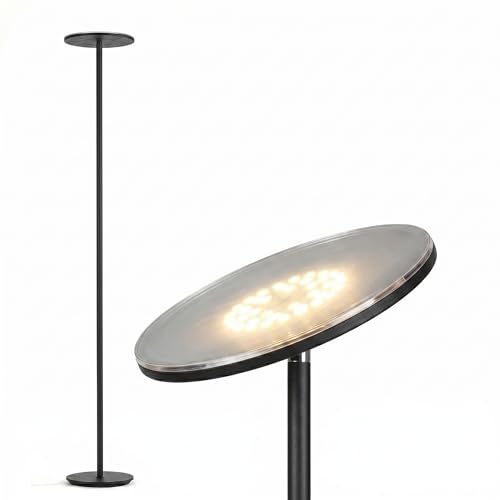
Best for Dedicated task lighting next to a reading chair or sofa
- Torchiere design bounces light off the ceiling for soft ambient fill plus reading-height output
- Built-in LED with adjustable brightness dial
- Slim base footprint suited to tight spaces beside a chair
- No bulb replacement needed for the life of the fixture
- Doubles as ambient fill light and a focused reading lamp
- No electrician or ceiling wiring needed to add a real task layer
- Torchiere-style uplighting is less effective in rooms with dark or very high ceilings
Verdict: A solid dedicated task-lighting pick for a reading chair or sofa corner the ambient layer alone doesn't reach.
Frequently Asked Questions
What's the best color temperature for living room lighting?
Most living rooms look warmest and most inviting between 2700K and 3000K. Check the Kelvin number on the bulb packaging or the ENERGY STAR lighting facts label, and keep every bulb in the room at the same value to avoid a mismatched, clinical look.
How many lumens do I need for a 12x18-foot living room?
A room that size calls for roughly 1,500-3,000 lumens of combined ambient light, plus 400-800 lumens per task lamp near seating and 200-400 lumens per accent fixture. These are planning baselines - larger rooms, dark paint colors, or low ceilings can push the number higher.
Do I need a ceiling fixture, or are lamps enough for a living room?
Lamps alone can cover the ambient layer just fine - a pair of torchiere or tree floor lamps bounced off the ceiling, plus table lamps for task light, is a common no-wiring solution. A ceiling fixture just makes it easier to spread even light across a larger room from one source.
Can I add smart living room lighting without rewiring anything?
Yes - smart bulbs like Philips Hue screw into any existing lamp or ceiling fixture and add dimming, color, and scheduling entirely through an app, with no electrical work. Smart in-wall switches, like Lutron Caseta, are the option that does require basic wiring work inside a switch box.