


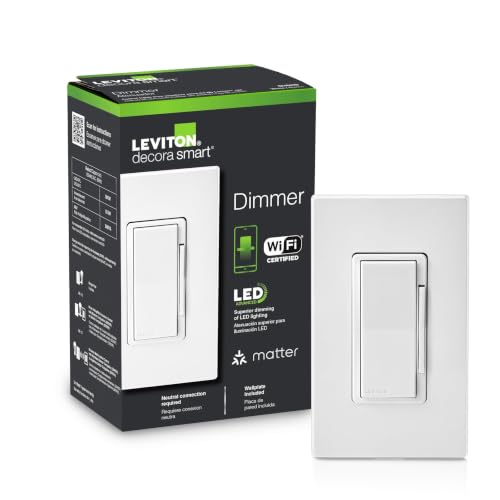


The core difference
A single-pole dimmer is the only control for a light: you turn the light on, off, and up or down from that one switch. A 3-way dimmer controls the same light from two separate locations, working together with a second switch. The classic example is a stairway or hallway light you can operate from either end. The name refers to how many places can control the circuit, not how many switches are dimmers.What a single-pole dimmer does
A single-pole dimmer sits alone on the circuit. It is the simplest setup:- One switch, one location.
- On, off, and brightness all handled at that point.
- Typical for a bedroom ceiling light, a dining fixture, or any room with one entrance.
What a 3-way dimmer does
A 3-way dimmer controls a light from two locations. It is used where you want to switch a light on at one end of a space and off at the other, such as:- The top and bottom of a staircase.
- Both ends of a long hallway.
- Two entrances to the same large room.
The wiring difference
This is where the two truly diverge.- A single-pole switch has two brass terminals (plus ground): line in and load out. On and off breaks one conductor.
- A 3-way switch has three terminals (plus ground): one common terminal and two traveler terminals. Two 3-way switches are joined by a pair of traveler wires so either switch can complete or break the circuit.
How to tell which one you have
- Count the locations. If two wall switches control the same light, it is a 3-way circuit; one switch means single-pole.
- Count the terminals. With power off, remove the switch plate and look. Two hot terminals plus ground suggests single-pole; three terminals plus ground suggests 3-way.
- Check the existing switch markings. Many switches are stamped 3-way or single-pole.
Can you mix a dimmer and a regular switch?
Yes, and it is common. In a 3-way setup you can install one 3-way dimmer and one standard 3-way toggle. You then set brightness at the dimmer location and turn the light on or off from either. If you want to dim from both ends, you need a system designed for that, typically a main dimmer plus a compatible companion or accessory dimmer from the same product line. Mixing random brands in a dual-dimmer 3-way often does not work.Choosing the right one
- For a single-entry room, a single-pole dimmer is all you need and is the cheaper option.
- For two control points, buy a dimmer explicitly labeled 3-way, and pair it with the companion device its maker specifies.
- Confirm the dimmer suits your bulbs (LED-compatible, correct wattage) and whether it needs a neutral wire, which many smart and some standard dimmers require.
- Some modern dimmers are labeled single-pole/3-way, meaning one device works in either role depending on how it is wired.
Safety note
Replacing any switch means working on 120V wiring inside the box. Turn off the circuit at the breaker and confirm the wires are dead with a voltage tester before touching them. Three-way circuits are easy to miswire because of the traveler and common terminals; if you are unsure which wire is the common, or the box lacks a neutral your dimmer needs, stop and call a licensed electrician. New circuits, unclear wiring, or anything you are not confident about should be left to a professional. This article is general information, not a substitute for a licensed electrician, and your work must meet local electrical code.In short: single-pole for one location, 3-way for two. The bulb type and dimmer compatibility rules are the same for both; only the wiring and terminal count change.


