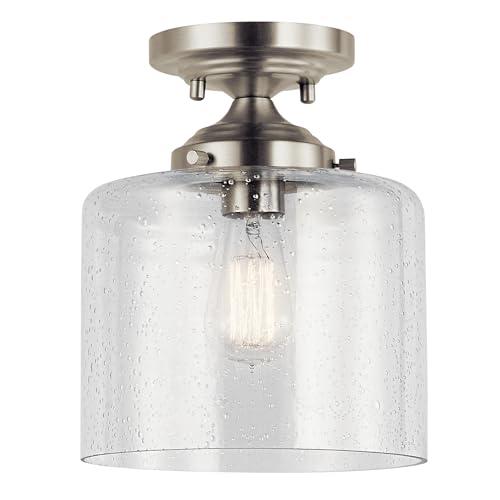
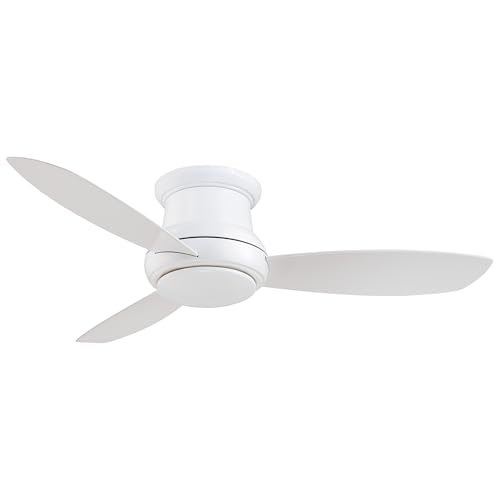
A flush mount ceiling light sits directly against the ceiling with no gap, ideal for low ceilings and tight spaces. A semi-flush mount hangs down a few inches on a short stem, adding depth and letting light spread onto the ceiling. As a rule, choose flush for ceilings under 8 feet and semi-flush for 8 feet and up.
The core difference
Both fixtures mount to a ceiling electrical box, but they sit differently:
Flush mount fixtures attach flat against the ceiling with essentially no gap. The shade or diffuser hugs the surface.
Semi-flush mount fixtures hang down on a short stem or spacer, typically 4 to 12 inches below the ceiling, leaving a gap between the fixture and the surface.
Those few inches of clearance change how each looks, how it lights a room, and where each one belongs.
Ceiling height is the deciding factor
The clearest rule is to match the fixture to your ceiling height.
Under 8 feet: flush mount. You want maximum headroom and nothing intruding into the space. Flush mounts are the standard for hallways, closets, laundry rooms, and lower bedrooms.
8 feet and up: semi-flush becomes an option and often looks better. The small drop adds visual interest and proportion without the clearance problems of a pendant or chandelier.
9 to 10 feet or more: semi-flush, or a pendant, helps fill the vertical space so the room does not feel bare.
A general headroom guideline: keep the bottom of any fixture at least 7 feet off the floor in walkways.
How they light a room
Flush mounts direct most light downward and outward. Because the fixture sits tight to the ceiling, less light spills upward, so the ceiling itself can read slightly darker. This gives efficient, even ambient light for general use.
Semi-flush mounts let light escape upward through the gap and bounce off the ceiling. That uplight softens shadows and makes a room feel more open and layered, though slightly less of the output goes straight down.
If your priority is bright, no-nonsense light in a low room, flush wins. If you want a warmer, more dimensional glow in a normal-height room, semi-flush has the edge.
Style and presence
Flush mounts are understated and practical. They come in low-profile drums, domes, and slim LED panels, and they tend to disappear into the ceiling, which is good when you do not want the fixture to be a focal point.
Semi-flush mounts read as more decorative. The exposed stem and the space around the shade give them a real-fixture presence, bridging the gap between a plain flush mount and a hanging pendant or mini-chandelier. They suit entryways, dining areas, and bedrooms where you want a statement without a long drop.
Cleaning and maintenance
Semi-flush fixtures have a gap and often more surfaces, so they collect a bit more dust and take slightly more effort to clean. Flush mounts, sitting tight to the ceiling, are simpler to wipe down and less likely to gather cobwebs, though fully enclosed ones can trap insects near the diffuser.
Which should you buy?
Choose a flush mount if:
Your ceiling is under 8 feet
It is a hallway, closet, laundry, or low bedroom
You want the fixture to stay visually quiet
Headroom and clearance matter
Choose a semi-flush mount if:
Your ceiling is 8 feet or taller
You want decorative presence and a layered glow
It is an entry, dining nook, or bedroom feature spot
You like the uplight effect on the ceiling
Safety note
Both types are hardwired to a ceiling electrical box. Turn off the breaker and verify with a voltage tester before removing an old fixture or wiring a new one. Confirm the box is rated to support the fixture's weight. For a new box, new wiring, or anything you are unsure about, hire a licensed electrician and follow local code. This article is general information, not a substitute for professional electrical advice.
Bottom line
Flush and semi-flush mounts solve the same problem, ambient ceiling light without a long drop, at two different heights. Under 8 feet, go flush for headroom and simplicity. At 8 feet and above, semi-flush adds depth, uplight, and a touch of style. Let ceiling height lead the decision, then pick the look you prefer.
Frequently Asked Questions
A flush mount sits flat against the ceiling with essentially no gap. A semi-flush mount hangs a few inches lower on a short stem, typically 4 to 12 inches, leaving a gap. That gap lets a semi-flush cast light upward onto the ceiling and gives it more decorative presence than a flush mount.
Yes. Eight feet is generally the point where semi-flush mounts start to work well. Choose one with a modest drop and keep the bottom of the fixture at least 7 feet off the floor in walkways. On ceilings under 8 feet, a flush mount is usually the safer choice for headroom.
Not necessarily less total light, but they direct more of it downward and outward, with little spilling onto the ceiling. Semi-flush mounts send some light upward for a softer, more layered look. Both can light a room well when you match the fixture's lumen output to the room's size and use.