


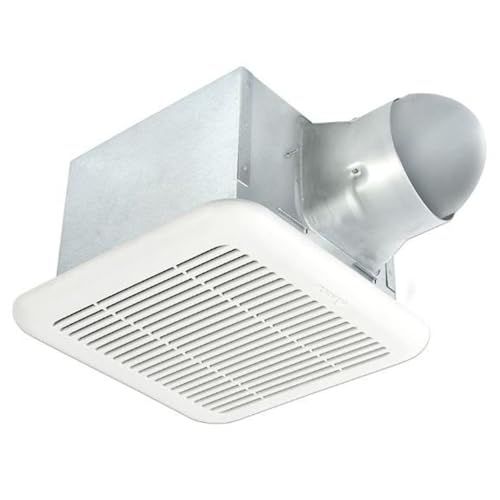


Why a Clogged Fan Quietly Fails
To clean a bathroom exhaust fan, cut the power at the breaker, remove the plastic grille cover, vacuum the dust from the cover and blower wheel, wipe both down with a damp cloth, and check the vent cap outside. Done twice a year, this keeps airflow strong and the motor from overheating.
Dust is the enemy of any exhaust fan. Over months, a fuzzy gray blanket builds on the grille, the blower wheel, and the motor. That buildup does three things: it chokes airflow so the fan clears far less moisture, it makes the fan louder as the blower fights the clog, and it traps heat around the motor, shortening its life. A neglected fan can also become a mildew and lint reservoir, which is the opposite of what you want in a room you are trying to keep dry.
Before You Start: Kill the Power
Even though you are mostly dusting, a bathroom fan is wired into household power, and you will be reaching into the housing.
- Turn off the fan at the switch, then switch off the breaker that feeds the bathroom.
- Confirm the fan is dead by trying the switch.
- Set up a step stool on stable, dry footing, and wear a dust mask and safety glasses; you are about to loosen a lot of fine dust overhead.
Step by Step: Cleaning the Fan
1. Remove the grille cover. Most covers pull straight down a couple of inches to expose two spring clips (metal V-shaped wires). Pinch each clip inward and it releases. Some covers use small screws instead.
2. Clean the cover. Vacuum the loose dust first, then wash the grille in warm soapy water. For stubborn grime, let it soak. Dry it fully before it goes back up.
3. Vacuum the housing and blower. With a vacuum brush or crevice tool, pull dust off the visible blower wheel (the little squirrel-cage fan) and the inside of the metal housing. Go gently; the blower fins are thin.
4. Detail the blower wheel. This is where most of the clog hides. If the fan is a plug-in model, you can sometimes unplug the motor assembly and lift it out for a deeper clean. Use a dry toothbrush or a can of compressed air to knock caked dust out from between the fins, then vacuum it up.
5. Wipe down surfaces. A barely damp microfiber cloth removes the last film. Avoid soaking the motor; electronics and water do not mix.
6. Reassemble. Reseat the motor if you removed it, clip the dry cover back on, restore power, and run the fan to confirm smooth, quiet operation.
Do Not Skip the Exterior Vent
A fan is only as good as its exit. The duct runs to a cap on your roof or an exterior wall, and that cap is where lint, dust, and even bird or insect nests collect. A blocked cap means the fan spins but the moist air has nowhere to go.
- Find the cap outside and check that the damper flap opens freely when the fan runs.
- Clear any lint, leaves, or nesting from the louvers and screen.
- If you can safely reach the duct, look for sagging, crushed sections, or disconnected joints in flex duct, which strangle airflow.
How Often Should You Clean It
A practical schedule:
- Every 6 months - pull the cover, vacuum, and wipe. This is the core routine.
- Once a year - deep-clean the blower wheel and check the exterior cap.
- More often if the bathroom gets heavy daily use, if you have pets shedding fine hair, or if you notice the fan getting louder or the mirror staying fogged longer than usual.
When Cleaning Is Not Enough
Sometimes a good cleaning reveals the fan is simply worn out. Warning signs include a grinding or squealing bearing, a motor that runs hot or cuts out, a burning smell, or airflow that stays weak even with a spotless blower and clear duct. Motors do not last forever, and a builder-grade unit that is a decade old may be near the end.
If you decide to replace rather than clean, remember that swapping a fan involves the same wiring precautions: power off at the breaker, verify it is dead, and bring in a licensed electrician for anything beyond a like-for-like swap you are confident handling.
Regular cleaning is the cheapest maintenance in the bathroom. Fifteen minutes twice a year keeps the fan quiet, keeps humidity and mildew in check, and helps the motor reach its full lifespan instead of choking to an early death under a blanket of dust.


