

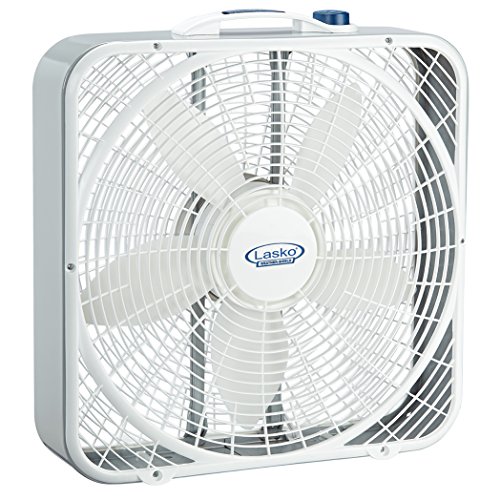
Which Way Should a Box Fan Face?
A box fan doesn't have a built-in intake/exhaust switch the way a dedicated window fan does,
so "which way" really means: where do you place it, and which direction do you point it,
relative to the room and any open windows.
For Direct Personal Cooling
If the goal is simply to feel cooler — sitting at a desk, sleeping, working in a garage —
point the fan directly at yourself or across the space you're occupying. This is straight
airflow-over-skin cooling (the same principle as wind chill), and direction relative to
windows doesn't matter much here; what matters is distance and speed setting.
For Venting a Hot Room Through a Window
This is where direction matters more, and where box fans get used most like window fans:
- Facing out (exhaust), fan near the top of an open window: Hot air rises and collects
- Facing in (intake), fan lower in the window: Useful specifically for pulling in cooler
The Two-Fan Whole-House Trick
For the best results with plain box fans (no reversible switches needed), use two fans:
house, ideally on the opposite side so air has to travel through the living space between
them.
Open interior doors along that path so air can actually flow from the intake side to the
exhaust side. Run this setup overnight once outdoor air is cooler, and switch it off (closing
windows and blinds) once the sun is back on the hot side of the house in the morning.
A Few Practical Notes
- A box fan facing into a closed room with no window open just recirculates the same air —
- Never run a box fan facing directly into rain or a window opening exposed to blowing rain;
- For a single window with no second opening available, angling the fan to exhaust from the
