

How High Should a Pedestal Fan Be?
The right height for a pedestal fan depends on where people actually sit or lie in the room relative to the fan, not just what looks tidy. Air movement cools most effectively when it reaches skin directly, so the goal is aiming the fan head at head-and-torso height for whoever's in the room, rather than blowing across empty space above or below them.
Living rooms and home offices
In a room where people are mostly seated on a couch or at a desk, set the fan head roughly 42 to 48 inches off the floor. That range lines up with head and upper-torso height for someone sitting down, which is where moving air produces the most noticeable cooling effect. If the fan is positioned farther from where people sit, you can raise it slightly and rely on the oscillation sweep and airflow reach to compensate for distance.
Bedrooms
Bedroom use is a bit different because the target — someone lying down — is lower than someone seated. Many people prefer the fan head a little lower than in a living room, often combined with a downward tilt so the airflow sweeps across the bed rather than blowing straight across the room at head height for someone standing. If your model has a tilt-adjustable head, use that in combination with height rather than relying on height alone.
Why height adjustment matters more than it seems
A fan aimed too high blows over people's heads and mostly moves air near the ceiling, which does little for comfort. A fan aimed too low mostly cools ankles and floor-level air, which also undersells the fan's potential. Getting the height right is one of the simplest, no-cost ways to get noticeably better performance out of a fan you already own.
Check the adjustable range before buying
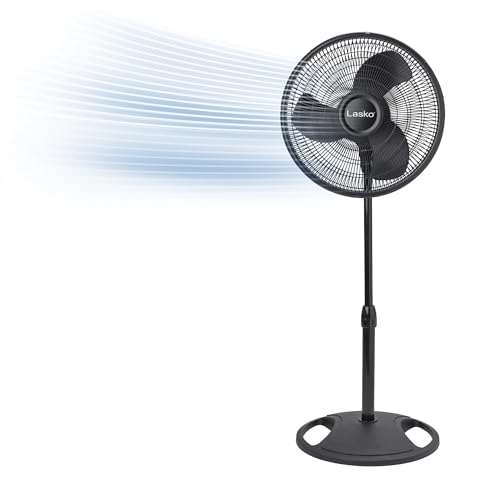
Most pedestal fans have a telescoping pole that adjusts somewhere between about 40 and 55 inches, though the exact range varies by model. If you have a specific setup in mind — a tall floor lamp table, a low bed frame, a room with vaulted ceilings — check the manufacturer's listed height range rather than assuming all pedestal fans adjust the same amount. Also check how the pole locks at your chosen height: cheaper fans can sag slightly under the fan head's weight over months of use, so a fan with a secure locking collar or twist-lock mechanism tends to hold its position better over time.
A quick way to test it
Once assembled, sit or lie where you'd normally be in the room and have someone adjust the fan height and tilt while it's running on a low-to-medium speed. You'll typically feel a fairly narrow height band where the airflow feels noticeably stronger — that's the height worth locking the pole at, rather than a generic "average adult height" guess.
