



The Core Difference in One Line
A whole house fan pulls cool outdoor air through open windows into your living space and pushes hot air out through the attic, cooling the whole home. An attic fan only ventilates the attic itself, lowering its temperature. They sound similar and get confused constantly, but they solve different problems and are not interchangeable.
The confusion is understandable: both are large fans, both often live near the attic, and both move a lot of air. The difference is what air they move and why. Getting this right saves you from buying the wrong product for your goal.
How a Whole House Fan Works
A whole house fan is mounted in the ceiling of your top floor, usually in a central hallway, venting into the attic above. When you open windows and switch it on, it draws a strong breeze of cooler outdoor air through the house, across the living space, and up into the attic, where it escapes through the attic vents.
The result is two-fold: you get a direct cooling breeze indoors, and you flush the day's built-up heat out of both the house and the attic. It works best in the evening and early morning, when outdoor air is cooler than indoor air, in climates with meaningful day-to-night temperature swings.
Key points:
- You must open windows when it runs, or it cannot pull in air.
- It cools the living space, not just the attic.
- It uses a fraction of the power of air conditioning.
How an Attic Fan Works
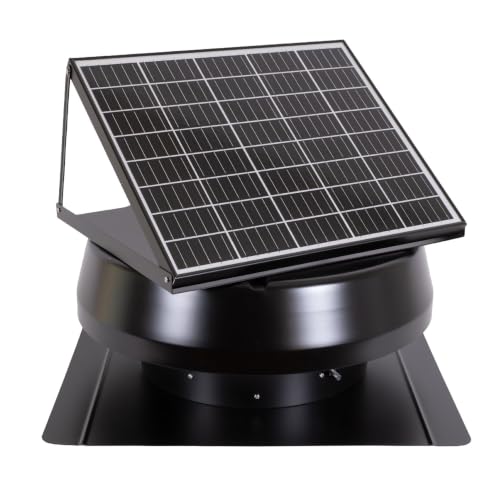
An attic fan (also called a powered attic ventilator) is mounted on the roof or in a gable wall and exhausts hot air from the attic to the outside. Its only job is to lower attic temperature and reduce moisture buildup. It does not move air through your living space, and you do not open windows for it.
A blistering attic can radiate heat down into the rooms below and make your air conditioner work harder, so cooling the attic can help indirectly. Attic fans are often paired with a thermostat that switches them on above a set attic temperature, and sometimes a humidistat for moisture control.
Key points:
- It ventilates the attic only.
- It runs automatically on a thermostat.
- Its benefit to the living space is indirect, by reducing heat soak.
Side by Side
| Feature | Whole House Fan | Attic Fan |
|---|---|---|
| What it cools | The living space and attic | The attic only |
| Windows open? | Yes, required | No |
| Main benefit | Direct breeze, flushes house heat | Lowers attic temp and moisture |
| When it runs | Evening or morning, when outside is cooler | Whenever the attic gets hot |
| Replaces AC? | Can reduce AC use significantly | No, only reduces heat load |
Which One Do You Actually Need
Choose based on your goal:
- You want to cool the house cheaply on mild evenings and live where nights get comfortably cooler than days: a whole house fan is the strong choice. It can dramatically cut air-conditioning hours in the right climate.
- Your upstairs bakes, your AC struggles, or the attic traps heat and moisture: an attic fan (or better attic ventilation generally) targets that specific problem.
- You live somewhere hot and humid around the clock, where night air brings no relief: a whole house fan has little to work with, and you will lean on air conditioning regardless.
Can You Have Both
Yes, and in some homes they complement each other. A whole house fan handles active cooling on pleasant evenings, while attic ventilation manages daytime attic heat. The important caveat is that they should not fight each other or compromise your attic's balanced intake and exhaust ventilation. An oversized or poorly planned combination can pull conditioned air or backdraft gas appliances, so the whole system needs to be designed sensibly.
Install and Safety Notes
Both are hardwired appliances that involve cutting into the ceiling or roof and connecting to household wiring, and whole house fans move enough air to affect combustion appliances if the house is sealed too tight.
- Turn off power at the breaker before any electrical work, and verify it is off.
- Whole house fans require adequate attic exhaust venting to let the air out; undersized attic vents choke the fan and can pressurize the attic.
- Never run a whole house fan with the house closed up, and be cautious about backdrafting fireplaces, water heaters, or furnaces.
- For the wiring, roof penetrations, and sizing, hire a licensed electrician and, for roof work, a qualified installer. This article is general information, not a substitute for licensed trades.


