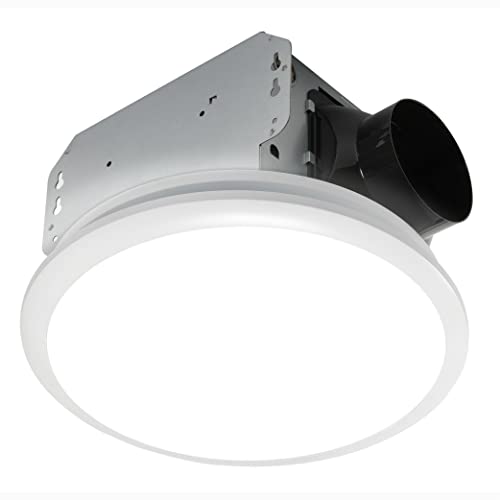
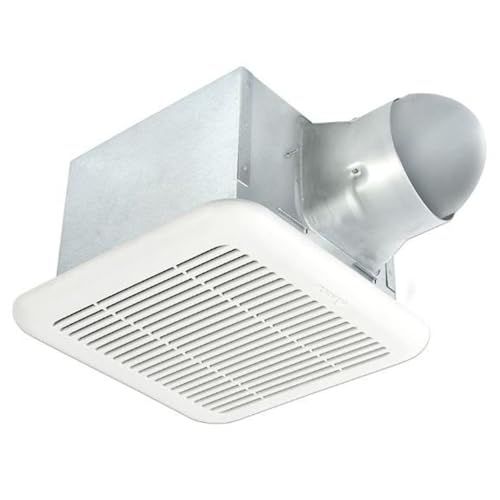
Bathroom exhaust fan heaters are worth it for taking the chill off a small bathroom fast and cheaply, because you run them only a few minutes at a time. A typical 1,500-watt unit costs just a few cents per use. The catch: they are spot heaters for brief comfort, not a way to heat a room for hours.
The value question really comes down to how you use it. Flipped on for the five minutes before and after a shower, a heater fan is one of the most cost-effective comfort upgrades in a bathroom. Left running as a primary heat source, it becomes an expensive space heater bolted to your ceiling.
What They Actually Cost to Run
Running cost is simple to estimate. A heater's wattage divided by 1,000 gives kilowatts; multiply by hours of use and by your electricity rate.
A 1,500-watt heater equals 1.5 kilowatts.
Run for one full hour, that is 1.5 kilowatt-hours (kWh).
At an example residential rate of about 16 cents per kWh, one hour costs roughly 24 cents.
But you almost never run it a whole hour. In practice:
10 minutes of use is about 0.25 kWh, or roughly 4 cents.
A 5-minute warm-up is about 2 cents.
Even twice a day, every day, that is only a few dollars a month.
Your real number depends on your local electricity rate, which varies widely by state and utility, so plug in your own rate from a recent bill. The pattern holds regardless: short bursts are cheap, long runtimes are not.
Where Heater Fans Shine
These units solve a specific, real problem well:
Fast spot warmth. A radiant or fan-forced element warms the immediate area quickly, so stepping out of the shower is not a shock.
Small, targeted spaces. A bathroom is exactly the kind of small room where a 1,500-watt burst makes a noticeable difference.
Low install footprint. A combo fan-light-heater replaces a fixture you already have, without a separate wall heater or plumbing for a radiator.
Occasional use. Because you run them briefly, the energy cost stays trivial even in cold months.
For a chilly guest bath, a basement bathroom, or an older home where central heat reaches the bathroom last, a heater fan is a sensible, inexpensive fix.
Where They Fall Short
Be honest about the limits before you buy:
They are not efficient room heaters. Resistance heating converts electricity to heat at a fixed rate; there is no efficiency trick like a heat pump. Running one for long periods is costly compared with your central system.
They do not heat evenly. Ceiling-mounted heat warms the space near it, not the whole room uniformly, and the warmth fades fast once it is off.
They add electrical demands. A 1,500-watt heater usually needs a dedicated circuit, which can mean an electrician and added install cost.
Noise and airflow. Fan-forced models blow air, which some people find drafty, and they add to the sound in the room.
If your goal is to keep a large or poorly insulated bathroom warm for a long soak in the tub, a heater fan is the wrong tool.
Keeping the Running Cost Low
To get the value without the waste:
Use a timer switch. A spring-wound or digital timer guarantees the heater shuts off, so it never runs forgotten for hours.
Run it in short bursts. Warm up just before you need it, not for the whole morning.
Pair it with a well-sealed room. Weatherstripping the door and insulating the ceiling keep the heat you paid for from escaping.
Right-size the unit. A bigger heater warms faster and can run for less total time; oversizing is not automatically wasteful if it shortens runtime.
A timer is the single best upgrade. Most of the "these cost a fortune" complaints trace back to a heater left on all day.
The Verdict
For their intended job, quick comfort in a small bathroom used in short bursts, exhaust fan heaters are absolutely worth the running cost. A few cents per shower for a warm bathroom on a cold morning is an easy trade. They stop being worth it the moment you treat them like central heat and leave them running.
One practical caveat on installation: because the heating element is a large electrical load, adding or replacing a heater fan often involves a dedicated circuit and connections at the panel. Turn off power at the breaker before any work, and hire a licensed electrician for new circuits or hardwiring. This article is general information, not a substitute for a licensed electrician. Buy the heater fan for what it does best, add a timer, and it will earn its keep at pennies a day.
Frequently Asked Questions
A 1,500-watt heater uses 1.5 kWh per hour, so at roughly 16 cents per kWh a full hour costs about 24 cents. Since you typically run one for only 5 to 10 minutes, each use costs about 2 to 4 cents. Check your own electricity rate for an exact figure.
Not when used as intended. In short bursts before and after a shower they cost only a few cents each time, even daily. They become expensive only if left running for hours as a primary heat source, because resistance heating has no efficiency advantage over your central system for long runtimes.
Yes, a timer switch is the best way to control cost. It guarantees the heater shuts off instead of running forgotten for hours, which is the main cause of high bills. A spring-wound or digital timer lets you set a short 10 to 15 minute warm-up and walk away worry-free.