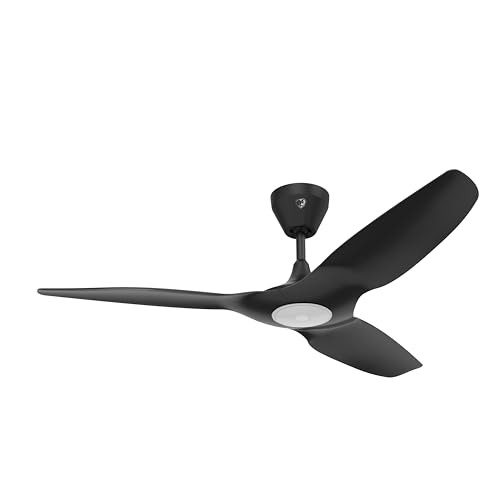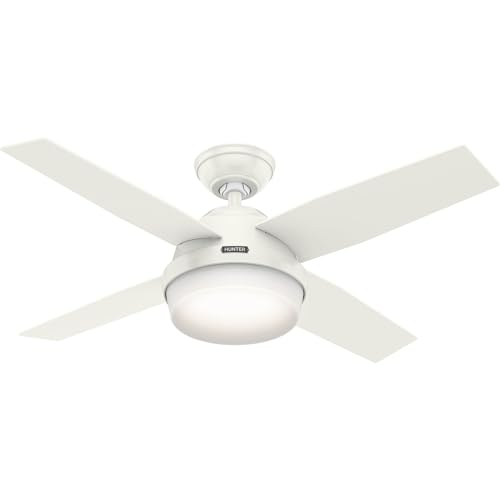

Yes, ceiling fans can save a little on heating, but only if you use them correctly and turn down the thermostat. Run the fan clockwise on low in winter to push warm air trapped near the ceiling back down into the room. The savings come from lowering the thermostat a degree or two, not from the fan warming the air.
How a fan helps in winter at all
A ceiling fan does not heat or cool air. It only moves it. In summer that movement creates a wind-chill effect that makes you feel cooler. In winter you want the opposite: gentle circulation without a draft.
Warm air rises and pools against the ceiling, a phenomenon called stratification. In a room with tall or vaulted ceilings, the air near the ceiling can be several degrees warmer than the air where you sit. Running a fan clockwise (the reverse setting) on its lowest speed nudges that warm air down along the walls and back into the living space, evening out the temperature.
Where the actual savings come from
Here is the honest part: the fan itself uses electricity, and it does not add any heat. Any savings depend entirely on you turning the thermostat down because the room feels more comfortable with the warm air redistributed.
- If you run the fan and leave the thermostat where it was, you spend slightly more, because the fan draws power for no heating benefit.
- If the improved circulation lets you set the thermostat a degree or two lower while staying comfortable, the reduced heating runtime can more than offset the fan's small energy use.
When winter fan use pays off most
The benefit is largest in specific situations:
- High, vaulted, or cathedral ceilings, where warm air has the most room to stratify.
- Rooms with a lot of glass or open volume that hold heat unevenly.
- Homes with forced-air or radiant heat that tends to leave warm air near the ceiling.
How to run the fan for winter savings
- Switch the fan to clockwise (reverse) using the direction switch on the housing or the remote setting.
- Keep it on the lowest speed. Higher speeds create a draft that makes you feel cooler, defeating the purpose.
- Lower the thermostat slightly and see whether the room still feels comfortable. That setback is what creates the saving.
- Run it only in occupied rooms. Circulating air in an empty room just uses power.
- Turn it off when you leave. A fan cools people, not rooms, so there is no benefit to an empty space in either season.
Setting realistic expectations
Do not expect dramatic heating bills to vanish. The effect is real but modest, and it is easy to erase by running the fan too fast, leaving the thermostat untouched, or running fans in empty rooms. Think of a winter fan as a comfort tool that makes a lower thermostat setting livable, rather than a heater in its own right.
Pairing the fan with your heating system
The fan works best alongside, not against, your heat source. Let the heating system reach the set temperature first, then run the fan on low to spread that warmth evenly. In homes with a wood stove or a single heat source, gentle clockwise circulation is especially useful for carrying warm air from that hot spot toward cooler corners of the room. Keep return vents and registers clear so the moved air actually circulates rather than stalling.
A quick safety note
If your fan lacks a reverse switch or the direction control is not working, avoid forcing anything. Any repair inside the housing means turning off power at the breaker first, and hardwiring or motor repairs should go to a licensed electrician. This site provides general information, not a substitute for a licensed electrician.
Bottom line
Ceiling fans can trim heating costs by fixing warm-air stratification, but the savings live in the thermostat, not the fan. Run it clockwise and slow, drop the thermostat a couple of degrees, and use it only where people actually are. Do that and the fan earns its small energy cost. Skip the thermostat setback and it quietly adds to your bill instead.