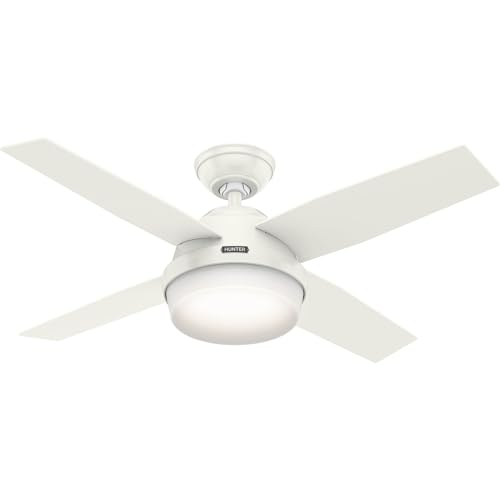


Why an Indoor Fan Doesn't Belong on a Covered Porch
It's a common shortcut: a covered porch feels sheltered enough, so why not hang the ceiling fan that's already in the garage or a spare bedroom? The problem is that indoor ceiling fans carry a dry UL rating, which means they're only tested and built to handle a stable, climate-controlled indoor environment — not the temperature swings, humidity, and airborne moisture present on even a well-covered porch.
What Actually Fails
Dry-rated motors aren't sealed against humidity the way damp- and wet-rated motors are. Over months of exposure to outdoor humidity swings, moisture works into the motor housing and can corrode windings and bearings, leading to a fan that hums, wobbles, or fails outright well before its expected lifespan. Blades are the other weak point: many indoor fans use finished wood, MDF, or wood-composite blades that will absorb moisture, warp, delaminate, or peel their finish once humidity levels swing the way they do outdoors — even under a roof.
The Electrical Risk
Beyond durability, there's a safety issue. An indoor fan's wiring and motor components aren't built to the same moisture-sealing standard as an outdoor-rated fan, and a motor that isn't protected against humidity is more likely to develop an electrical fault over time. That risk is exactly why UL created separate outdoor ratings in the first place, and why most manufacturers won't cover an indoor fan under warranty if it's installed outdoors, covered porch or not.
What a Covered Porch Actually Needs
A covered porch — one with a solid roof and walls or screening on at least a couple of sides that keep direct rain and sprinkler spray off the fixture — calls for, at minimum, a damp-rated fan. Damp-rated fans are built specifically for the humidity and incidental moisture of a sheltered outdoor space, using weather-resistant blade materials and more moisture-tolerant motor housings than indoor fans. If the porch is only partially covered, gets wind-driven rain, or sits near a pool or open yard where sprinklers can reach it, step up to a wet-rated fan instead, which has a fully sealed motor and weatherproof blades rated for direct water contact.
If You're Not Sure Which Rating Applies
When a space is borderline — a porch with a roof but open sides, for instance — the safer and generally recommended choice is to go with the higher rating (wet-rated) rather than assume the lower one (damp-rated) will hold up. A wet-rated fan will always perform safely anywhere a damp-rated fan would, but the reverse isn't true.
Installation Still Matters
Rating aside, a porch ceiling fan is an electrical fixture wired into a switched circuit, mounted to a box that needs to be rated to support a fan's weight and motion — not a standard light-fixture box. Shut off power at the breaker before doing any wiring, and bring in a licensed electrician for new circuits, box replacements, or anything about the wiring or local permit requirements you're not fully confident about. Swapping in the correctly rated fan solves the weather problem; correct wiring and mounting is what keeps the installation safe.