

The Short Answer
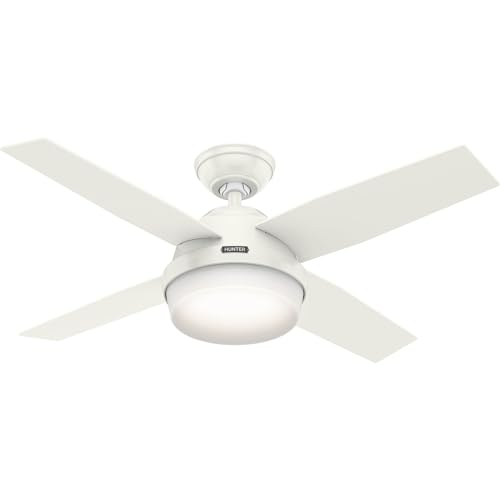
A low-profile ceiling fan, almost always called a "hugger" fan, is built to mount close against the ceiling instead of hanging from a downrod. Where a standard ceiling fan drops the motor housing several inches (or more) below the ceiling on a metal downrod, a hugger fan bolts the motor housing directly to the mounting bracket or uses only a very short stub, pulling the blades up as close to the ceiling as the design allows, typically leaving somewhere between 4 and 10 inches of clearance depending on the model.
Why Manufacturers Build Fans This Way
The whole point is headroom. In a room with a standard 8-foot (96-inch) ceiling, a downrod fan can leave the blade tips low enough to feel unsafe or simply be in the way, especially in a room with furniture like a tall bookshelf or a bed frame nearby. Hugger fans exist specifically to solve that, and they're standard equipment in most builder-grade homes with 8-foot ceilings, finished basements, and converted attic spaces with sloped or low ceilings.
The Airflow Tradeoff
Mounting a fan closer to a flat ceiling does cost some efficiency. Air circulation improves when there's more distance between the blades and the ceiling surface above them, because a nearby ceiling disrupts the airflow pattern the blades create. That's why hugger fans generally move somewhat less air than the identical blade span on a standard downrod mount, all else being equal. Manufacturers have narrowed this gap over the years with better blade pitch and stronger motors, but it's still worth comparing a hugger fan's published CFM (cubic feet per minute) rating rather than assuming a 52-inch hugger performs exactly like a 52-inch downrod fan.
Hugger vs. Flush-Mount: Same Thing?
Yes — "hugger" and "flush-mount" are used interchangeably by most manufacturers and retailers to describe this mounting style. You may also see "low-profile" used as a third, equivalent term. All three refer to the same basic idea: a fan engineered to sit close to the ceiling rather than on a standard downrod.
When to Choose One
Choose a hugger or flush-mount fan when your ceiling is 8 feet or lower, when you're installing on a sloped ceiling with a compatible slope adapter, or when you specifically need extra headroom in a room with tall furniture or frequent foot traffic near the fan (like over a bed or a doorway threshold). If your ceiling is 9 feet or higher, a standard downrod fan, even with just a short 4 to 6-inch downrod, will typically move more air for the same blade span and be the better choice.
What to Check Before Buying
Look at the manufacturer's listed mounted height (the ceiling-to-blade gap) rather than assuming all hugger fans give the same clearance, since this varies by model. Also compare CFM ratings across models you're considering, and confirm the room's floor-to-blade clearance will meet the roughly 7-foot minimum most codes and manufacturers recommend once the fan is installed. If the fan includes a light kit, check its lumen output separately from the fan's airflow specs, since the two are unrelated performance numbers on the same fixture.