

Finding a Ceiling Fan Style That Actually Fits Your Room
Blade span and airflow get most of the attention in ceiling fan shopping guides, but style is what you'll actually notice every time you walk into the room. A fan that moves plenty of air but looks like an afterthought will bother you long after the specs stop mattering. The good news is that ceiling fan styles have expanded well past the beige five-blade fan of decades past, and most major brands now build the same solid motors into several distinct looks.
Modern and contemporary fans
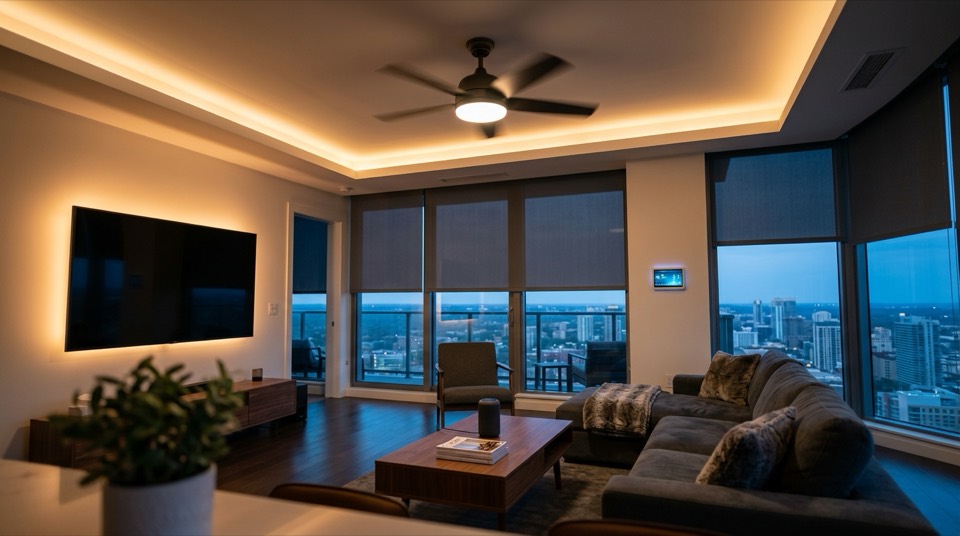
Modern ceiling fans lean minimalist: two to four slim blades, low-profile motor housings, and finishes limited to a tight palette of matte black, brushed nickel, or white. Many use DC (direct current) motors instead of older AC motors, which run quieter, use less energy, and offer more precise speed steps. Integrated LED light kits are standard, usually with a flush frosted lens rather than a traditional glass shade. This is the style to reach for in open-plan living rooms, condos, and any space where you want the fan to disappear into the ceiling rather than announce itself.
Farmhouse and rustic fans
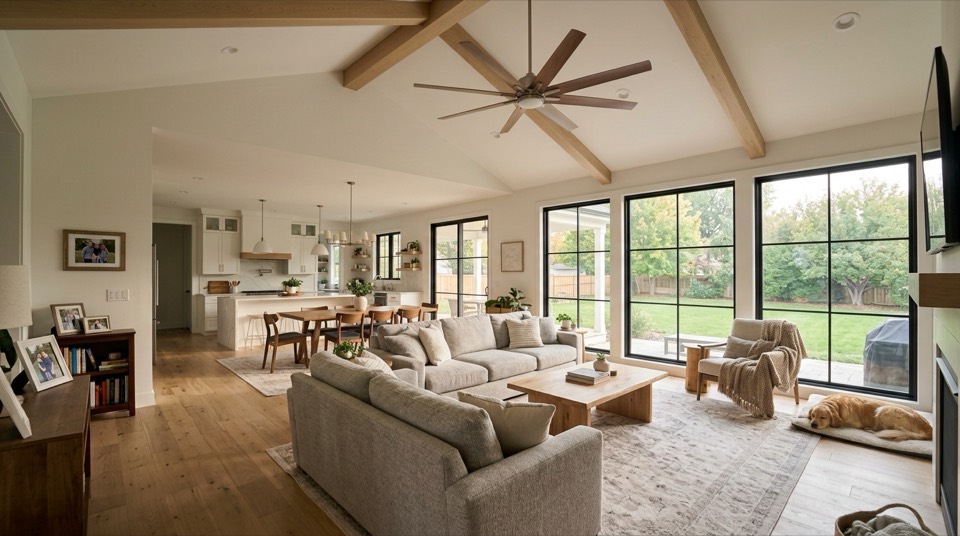
Farmhouse-style fans borrow cues from barn architecture: wider wood-tone or whitewashed blades, distressed or aged metal finishes, and often a caged light kit or drum shade in place of a bare fixture. Matte black remains popular here too, but paired with wood accents instead of chrome. These fans read as warm and lived-in rather than cold or clinical, which is why they show up so often in kitchens, dining rooms, and covered porches in traditionally styled homes. Wood or wood-composite blades also tend to run a touch quieter than stamped metal ones at low speeds.
Industrial and transitional in-betweens
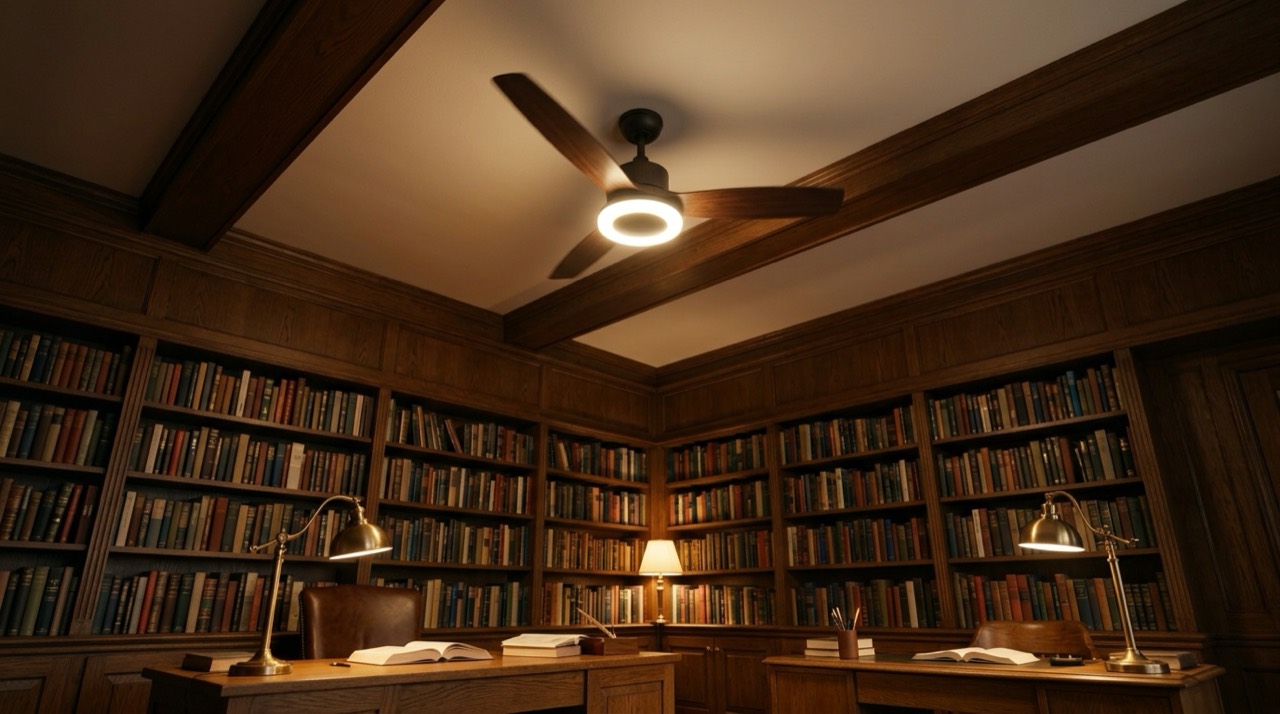
If neither pure modern nor full farmhouse feels right, industrial-style fans split the difference: exposed cage guards, matte black or aged bronze finishes, and Edison-style bulbs visible through the cage. Transitional fans go the other direction, using traditional five-blade silhouettes but simplifying the ornamentation and finishing them in current colors like matte black or warm brass instead of the polished brass and oak finishes common in the 1990s and 2000s. Both styles work well as a bridge in homes where the decor itself is a mix of old and new.
Coastal and tropical fans
Palm-style blades, woven wicker or rattan-look material, and wet-rated motors define the coastal and tropical category. These fans are built for covered porches, sunrooms, and humid climates, so check the damp- or wet-rating before buying one for an exposed outdoor space; a fan rated only for indoor or damp locations should never be installed where it will take direct rain.
Matching finishes on purpose
Fan finish doesn't need to match your light fixtures and door hardware exactly, but it should feel intentional. A common approach is to let the ceiling fan match either the room's metal accents (cabinet pulls, faucet, sconces) or its wood tones (flooring, furniture), rather than trying to match both. Matte black has become the flexible "neutral" finish because it pairs reasonably well with brass, nickel, and wood alike, which is why you'll see it dominate both modern and farmhouse product lines right now.
Don't let style override airflow
It's easy to fall in love with a look and forget the fan still has a job to do. Whatever style you choose, confirm the blade span and airflow rating suit the room size — a striking fan that's undersized for a great room will look right and perform poorly. If you're also deciding on size and placement, it's worth reading through the ceiling fan sizing guide alongside this one, since the two decisions happen together in practice.
Lighting and installation notes
Most styled fans ship with a matching integrated light kit, but options vary in color temperature (measured in Kelvin) and total lumens, so check that the included light actually suits the room before assuming "it has a light" is enough detail. If you're replacing an existing fixture with a ceiling fan, or the room has no existing fan-rated electrical box, always turn off power at the breaker before touching any wiring, and bring in a licensed electrician to confirm the box is fan-rated and the circuit can handle the load. This isn't a step to skip to save time — a fan that isn't properly supported or wired can come loose or create a fire hazard.
For smart-home households, several of the styles above are also available with smart ceiling fan controls, so style and connected features aren't mutually exclusive if that's on your list too.
A quick way to narrow it down
If you're still stuck between two directions, walk the room and note the finish on your door hinges, cabinet pulls, and any existing light fixtures — that single detail usually settles more style debates than staring at product photos does. A room with mostly brushed nickel or chrome accents will read as more modern regardless of which fan you add, while a room with worn brass, oil-rubbed bronze, or unfinished wood will lean farmhouse no matter how sleek the fan itself is. Buying a fan that fights the room's existing hardware is one of the more common regret purchases in this category, and it's also one of the easiest to avoid with five minutes of looking around before you shop.
It also helps to think about how long you expect the room to keep its current look. Kitchens and living rooms tend to get refreshed on a longer cycle than bedrooms, so a more neutral, timeless finish is often worth the small trade-off in personality if you're outfitting a high-traffic shared space. Bedrooms and home offices are lower-stakes places to take a stronger style swing, since a bolder finish there affects fewer people and is easier to live with if trends shift.