

Mounting and Clearance
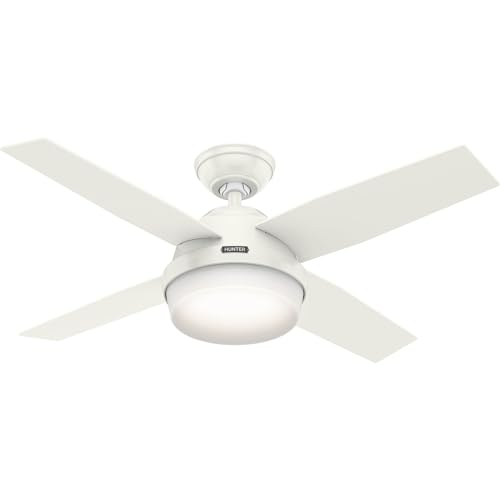
A nursery ceiling fan should hang at least 7 feet above the floor, the same minimum most electrical codes require for any room. Beyond code minimums, aim for as much clearance as practical above the crib and any furniture a climbing toddler might eventually stand on, since babies become mobile toddlers faster than most parents expect. Choose a compact blade span for a typical nursery — most fall well under 144 square feet, so a 36-42 inch fan is usually plenty per ENERGY STAR sizing guidance.
Use a Fan-Rated Electrical Box
This matters in every room, but especially one where the fan will run for hours every night. Ceiling fans vibrate and carry real weight, and a standard light-only electrical box isn't built to handle that load long term. Confirm the box is UL-listed and fan-rated before installation. If you're converting an existing light fixture to a fan, or you're not certain what's behind the ceiling, that's a job for a licensed electrician — turn off power at the breaker first regardless of who does the work.
Choose Quiet, Low-Speed-Capable Models
Babies sleep better with consistent, low-level white noise and airflow rather than a fan cycling loudly on and off. A DC motor typically runs quieter at low speeds than a traditional AC motor and often gives you finer control between "off" and "noticeably on." Look for a model with at least three speed settings so you can find a gentle setting for overnight use.
Skip the Pull Chain
A pull chain is fine in a garage or workshop, but in a nursery it becomes a safety issue as soon as a child can reach it by climbing on a dresser, crib rail, or rocking chair. Choose a fan controlled by a wall switch or handheld remote instead, and keep any remote stored well out of reach.
What the Research Says About Airflow and Sleep
Some observational research, including work associated with Kaiser Permanente's Division of Research, has found an association between fan use in an infant's sleep environment and a lower reported rate of sudden infant death syndrome (SIDS). This is correlational research, not proof that a fan alone changes risk, and it doesn't replace the core safe-sleep guidance from the American Academy of Pediatrics: babies should sleep on their backs, alone, on a firm surface, in a bare crib with no blankets, bumpers, or soft toys. A fan can be one part of a safe nursery setup, but it isn't a substitute for following that guidance.
Placement Relative to the Crib
Many parents choose to position the crib slightly to the side rather than directly under the fan, simply for peace of mind, even though a properly installed, well-maintained fan poses no more inherent risk overhead than any other fixture. If that gives you more confidence, it's a reasonable, low-cost choice — just don't let it compromise the blade-height and electrical-box requirements above.