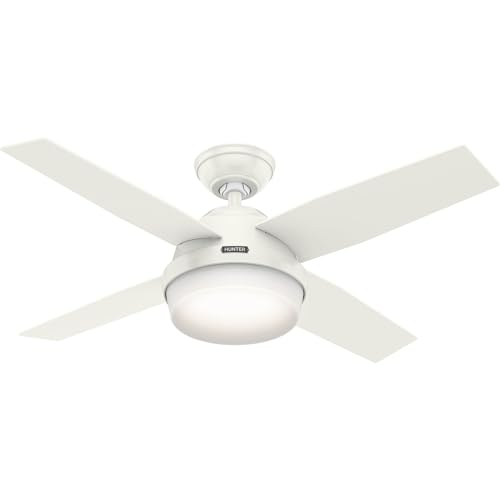


Two retrofit paths
A smart fan wall switch. Products like Lutron's Caseta fan speed control install in place of your existing wall switch and are built specifically to handle fan-motor speed control (a standard smart light switch usually can't do this safely, since a fan motor draws power differently than a light circuit). These pair with the manufacturer's app and, on many models, with Alexa, Google Home, or Apple HomeKit — giving you real app and voice control from the switch rather than the fan.
A smart remote receiver replacement. Many ceiling fans that came with a simple RF remote have a small receiver module inside the fan's canopy or motor housing. Some third-party smart receivers are designed to swap in for that stock module, adding Wi-Fi or Bluetooth app control to a fan that was never designed to be smart. This route varies more by fan brand and age, so check compatibility carefully before buying.
What you gain and what you don't
Both retrofit methods typically give you:
- On/off and basic speed control from a phone app
- Voice assistant commands, if the specific product supports it
- No need to replace a fan you otherwise like
- The full range of DC-motor speed steps (retrofits are often limited to a handful of discrete speeds)
- Separate, integrated control of a light kit's color temperature
- Manufacturer firmware updates tied to the fan itself rather than the switch
Installation and safety
A smart wall switch replaces a standard switch at the switch box, and a smart receiver replacement involves opening the fan's canopy or motor housing — both mean working where house wiring carries live current. Turn off power at the breaker before starting, and confirm it's off with a non-contact voltage tester rather than assuming the switch position means the circuit is dead. If your home's wiring is older, unlabeled, or you're not confident identifying which breaker controls the circuit, hire a licensed electrician to do the swap. This is a genuinely common and low-cost upgrade, but the electrical basics apply exactly as they would for any switch or fixture work.
When to just buy a new smart fan instead
If the existing fan is old, an AC motor, unbalanced, or you want full app control of both fan speed and light color temperature together, a retrofit switch will only get you partway there. In that case, it's usually more satisfying — and not dramatically more expensive at the budget end — to replace the fan with one that's smart from the factory.