

How Do You Measure a Ceiling Fan?
Ceiling fan measurements matter for two different reasons: blade span tells you whether the fan suits your room, and mounting height, or downrod length, tells you whether it will hang at a safe, effective height. Here's how to measure both, plus a few other numbers worth knowing.
Measuring Blade Span
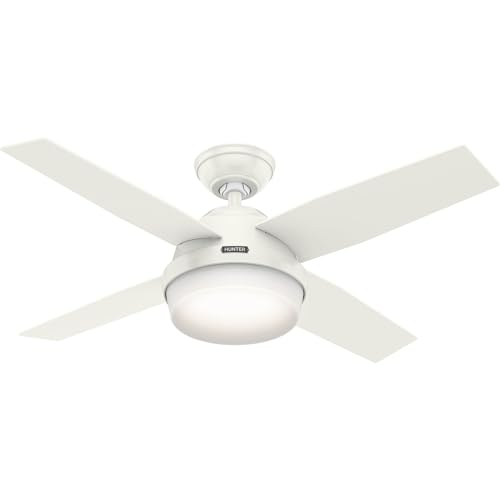
Blade span, also called fan size or sweep, is the diameter of the full circle the blades make as they spin, not the length of a single blade.
- Even number of blades (4 or 6 is most common): Measure in a straight line from the tip of one blade straight across to the tip of the blade directly opposite it.
- Odd number of blades (3 or 5): There's no blade directly opposite another, so measure from the center of the motor housing to the tip of one blade, then double that number.
Measuring Mounting Height and Downrod Length
The second measurement that matters is how far the blades will hang below the ceiling, which depends on your ceiling height and the fan's downrod, or lack of one on hugger and flush-mount fans.
As a rule of thumb, add about 1 inch of downrod for every foot of ceiling height above 8 feet. Most fan brands sell downrods in a range of standard lengths, commonly 6, 12, 18, 24, 36, and 48 inches, so you can match your ceiling without a custom part.
Other Measurements Worth Checking
- Mounting bracket to blade distance: how far the blades sit below the ceiling mount itself, useful for confirming the minimum 7-foot floor clearance most codes and manufacturers require.
- Motor housing width and depth: matters mainly on very low ceilings, where a slim, low-profile hugger housing can gain an extra inch or two of headroom.
- Blade pitch, the angle of the blades: not something you measure yourself, but listed in the spec sheet. A steeper pitch, around 12-15 degrees, generally moves more air per rotation than a shallow one.
Before You Measure for Installation
If you're measuring to replace an existing light fixture with a fan, check what's actually inside the electrical box first. Ceiling fans are heavier and vibrate in a way standard light fixtures don't, so they require a fan-rated electrical box rated for the fan's weight. Turn off the power at the breaker before opening any fixture, and if the existing box isn't fan-rated or you're unsure about the wiring, have a licensed electrician confirm or upgrade it before you hang the new fan.