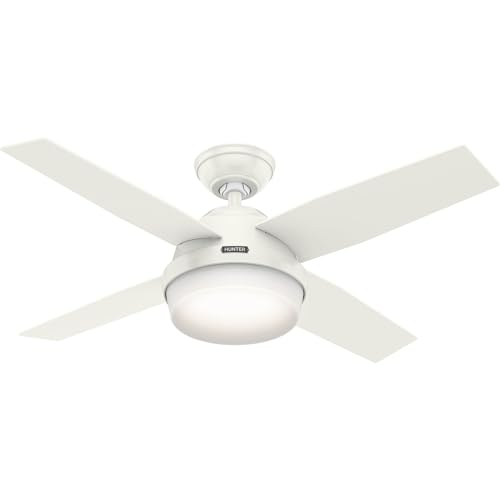


Replacing a Ceiling Fan Capacitor
The capacitor is a small electrical component, usually the size of a matchbox, that regulates the fan motor's speed settings. When it degrades, the classic symptoms are a fan that only runs on one speed (often just low or just high), a humming motor that won't start turning, or speeds that used to work no longer responding at the pull chain or remote.
Safety first
This is electrical work inside a live wiring compartment, not a purely mechanical swap like blades or a downrod. Before doing anything else:
- Turn off the fan at the wall switch, then turn off the circuit at the breaker box. Confirm the fan has no power with a non-contact voltage tester before opening anything.
- If you are not confident identifying wire colors, matching a capacitor's microfarad (µF) and voltage rating, or working inside a switch housing, stop and call a licensed electrician. A wrong-rated capacitor or a miswired connection is a fire and shock risk, not just a fan that stays broken.
Where the capacitor lives
On most residential ceiling fans, the capacitor sits inside the switch housing near the pull chains, underneath the motor housing cover — not inside the main motor body itself. You'll typically need to remove a cover plate held by a few small screws to access it.
Steps
If replacing the capacitor doesn't fix it
If all speeds still fail to work correctly after a properly matched capacitor swap, the issue may be in the pull-chain switch itself, the motor windings, or the wall switch — at that point, further diagnosis is best handled by a licensed electrician, especially if you notice burning smells, discoloration around the housing, or breaker trips when the fan is switched on.
A note on permits and code
Simple like-for-like capacitor replacement inside an existing fixture typically doesn't require a permit in most areas, but rules vary by jurisdiction. If the repair uncovers damaged wiring, an unrated ceiling box, or anything beyond swapping the capacitor itself, treat it as a signal to bring in a licensed electrician who can also confirm the work meets local code.