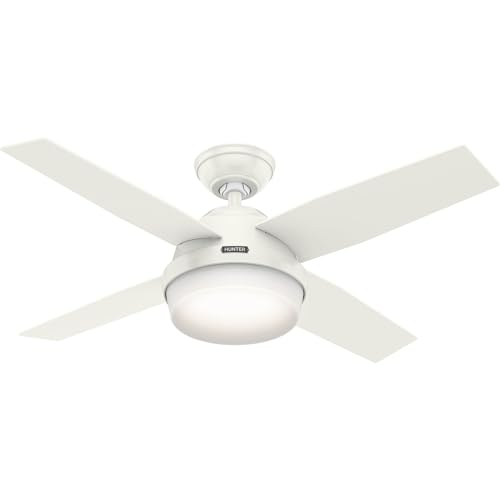


What Size Ceiling Fan Is Best for a Small Room?
The right ceiling fan size for a small room depends on the room's actual square footage, not how small it looks or feels. Getting this right matters more in a small room than a large one: an undersized fan in a tight space has to spin faster to move any air at all, which tends to make it both noisier and less comfortable.
Measure First
Multiply the room's length by its width in feet to get square footage. A 7 x 7 ft bathroom is 49 square feet; a 10 x 12 ft bedroom is 120 square feet. These two rooms call for meaningfully different fans, even though both would commonly get labeled "small."
Blade Span by Small-Room Size
| Room Size (sq ft) | Recommended Blade Span | Typical Rooms |
|---|---|---|
| Up to 50 sq ft | 29-36 inches | Bathroom, walk-in closet, small laundry room |
| 50-75 sq ft | 36 inches | Powder room, small nook, compact home office |
| 75-144 sq ft | 36-42 inches | Small to medium bedroom, breakfast nook |
If your room falls between two rows, it's generally better to size up and run the fan on a lower speed than to size down and run it at full speed constantly.
Don't Ignore CFM
Blade span tells you the fan's diameter, not how much air it actually moves. CFM (cubic feet per minute) is the real measure of airflow, and ENERGY STAR-certified fans publish this figure so you can compare models beyond size alone. For a small room, a combined CFM across all speeds in roughly the 1,000-2,000 range is generally enough to keep air circulating without feeling like a wind tunnel in a tight space.
Mounting Height Changes the Answer Too
Small rooms often have standard 8-foot ceilings, where a flush-mount (hugger) fan is usually the better fit since it keeps blades higher off the floor than a downrod-mounted fan would. Most codes and manufacturers require at least 7 feet of clearance between the floor and the blades, so on a low ceiling, mounting style matters as much as blade span for both safety and comfort. On ceilings 9 feet and up, a short downrod-mounted fan of the same blade span will typically move slightly more air than a hugger.
Room Function Can Nudge the Size
- A bathroom or laundry room under 50 square feet: stick to a compact 29-36 inch fan, but prioritize a UL damp rating over squeezing in a larger blade span.
- A small bedroom or home office: a 36-42 inch fan usually gives noticeably better airflow than the smallest available size, without looking oversized in the room.
- A closet or very small nook: the smallest 29-inch options are appropriate here, since airflow needs are minimal and a larger fan would be disproportionate.
A Safety Note
Whatever size you choose, a ceiling fan is a hardwired fixture that needs a fan-rated electrical box, not a standard light-fixture box. Turn off power at the breaker before removing an old fixture, and hire a licensed electrician if you're installing a new circuit or aren't confident about the existing wiring or box.
Bottom Line
Measure the room, use the chart to land on a blade span between 29 and 42 inches depending on exact square footage, check the fan's CFM rating rather than relying on size alone, and choose a hugger mount if your ceiling is 8 feet or under.