

Why Your Ceiling Fan Is Wobbling
A wobble is almost never a sign the fan itself is broken — it's a mechanical balance issue, and it's one of the easiest ceiling fan problems to diagnose yourself with the power off at the breaker.
Check the blades first
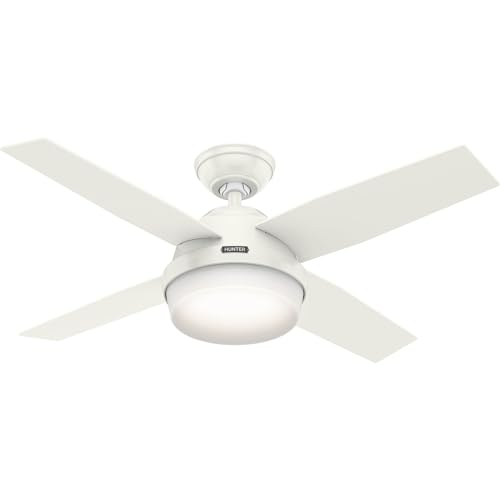
Blades absorb humidity and dust unevenly over time, and even a warp of a fraction of an inch at the blade tip is enough to produce a visible wobble at medium-to-high speed. Use a yardstick or tape measure held against the ceiling to check that every blade tip sits at exactly the same height as it rotates. If one blade is noticeably higher or lower than the others, that's your source.
While you're up there, tighten every screw you can reach: where each blade attaches to its blade iron (the metal bracket), and where each blade iron bolts to the motor housing. These loosen gradually from normal vibration and are the single most common fix.
Balance the blades
If all blades measure level but the wobble persists, the blades may be unevenly weighted rather than unevenly shaped. A small adhesive blade-balancing kit — sold for a few dollars anywhere ceiling fans are sold — lets you clip a weight onto each blade one at a time, run the fan, and see which blade reduces the wobble most. Once you've found it, replace the clip with the adhesive weight in that spot. This resolves the large majority of residual wobbles after the screws are tightened.
Check the mounting point
If the blades are balanced and the wobble is still there, the problem is likely at the ceiling itself. The downrod (the pole connecting the motor to the ceiling mount) needs to seat fully into the ball-and-socket joint at the mounting bracket; a downrod that's slightly cocked will transmit a wobble no amount of blade balancing will fix. Also confirm the mounting screws holding the bracket to the electrical box are tight.
Rule out the electrical box
One cause that isn't fixable with a balancing kit: an electrical box that isn't rated for ceiling fans. Fans apply dynamic, rotating loads that a standard light-fixture or remodel box isn't built to handle, and the box itself will flex slightly under vibration no matter how well the fan is balanced. Fan-rated boxes are required by the National Electrical Code and listed by UL specifically for this load. If you suspect this is the issue — especially in an older home where the box predates the fan — have a licensed electrician inspect and, if needed, replace the box before reinstalling the fan.