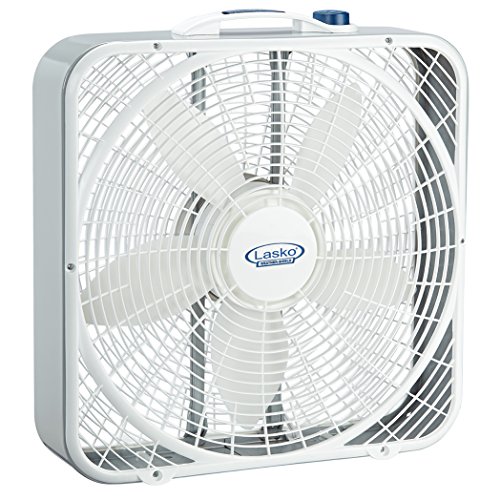
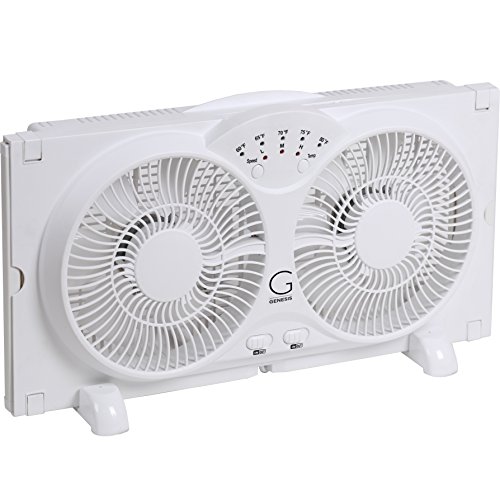


A window fan is usually better for actively cooling a room because it is built to exhaust hot air and pull cooler outdoor air in, often with reversible twin blades and a thermostat. A box fan is more versatile and cheaper, working both in a window and as a portable floor fan for a direct breeze.
What Each Fan Is Built For
Though they look similar, box fans and window fans are designed around different priorities.
- Box fan: A square fan in a simple frame meant to sit on the floor, on a table, or wedged into a window. It is a generalist - portable, inexpensive, and usable almost anywhere there is an outlet.
- Window fan: Designed specifically to fit a window opening, usually with expandable side panels that fill the gap. Many have two or three smaller blades that reverse direction independently, so one side can exhaust while the other draws air in.
Head-to-Head Comparison
Cooling a Room (Air Exchange)
The window fan wins here. Its whole purpose is ventilation - swapping stale, hot indoor air for cooler outdoor air. Reversible twin blades let it intake and exhaust at the same time, creating flow through a single window. A box fan can exhaust from a window too, but it moves in one direction only, so you need a second open window elsewhere for it to work well.
Direct Breeze on a Person
The box fan wins. Because it sits anywhere, you can aim a broad wall of air right where you sit or sleep. A window fan is fixed in the frame, so its breeze reaches only whatever is in its line of fire.
Versatility
Box fan, clearly. It doubles as a floor fan, a doorway booster for an AC unit, or a garage fan, then moves to a window when needed. A window fan mostly does one job in one place.
Fit and Sealing
Window fan. Its side panels close the gaps around it, so you are not leaving an open slot for hot air to leak back in. A box fan usually leaves gaps you have to stuff with towels or cardboard.
Noise
This varies by model. Window fans with smaller twin blades can sometimes run quieter on low, while large single-blade box fans can produce a deeper drone. Neither type is reliably silent, so check owner impressions before assuming.
Weather and Security
Window fans sit more securely in the frame and some tolerate light moisture better, though most fans of either type should not run in the rain. A box fan wedged in a window is easier to knock loose and can be a weak point for security overnight.
Price
Box fans are typically the cheaper option and the more common budget pick.
Which Should You Choose?
Think about the job you most need done.
Choose a window fan if:
- Your main goal is flushing hot air out and drawing cool night air in.
- You want a set-and-forget unit, ideally with a thermostat or auto-reverse.
- The window is your primary cooling strategy and the fan can stay put.
Choose a box fan if:
- You want one fan that works in many places.
- You need a strong, direct breeze aimed at people.
- Budget matters, or you want to build a cross-flow with two units.
- You may want to move it from room to room.
Get both if you are serious about fan-based cooling: a window fan exhausting at night plus a box fan directing the breeze indoors covers both jobs at once.
Getting the Best from Either One
Whichever you pick, the same physics applies:
- Only pull outdoor air in when it is actually cooler outside than inside - usually evening through early morning.
- Create a path for air to flow: an intake opening and an exhaust opening on opposite sides works best.
- Seal gaps so you are not just recirculating hot air.
- During the hot part of the day, close up the house and use the fan for a personal breeze instead.
A Note on Expectations
Neither fan lowers the thermostat reading the way an air conditioner does. They move air - cooling people through evaporation and cooling rooms only through air exchange with cooler outdoor air. On a night that stays hot and humid, both will underperform, and in dangerous heat neither is a substitute for air conditioning or a cooling center.
Safety and Setup
Both are plug-in appliances, so normal use involves no wiring. Keep either fan stable in the window so it cannot fall, keep cords out of walkways and away from water, and never run a non-weatherproof fan in the rain. Clean grilles and blades regularly so airflow stays strong.
If you are thinking about a permanently installed ventilation fan rather than a portable unit, that is a different project. Turn off power at the breaker and hire a licensed electrician for hardwiring, new circuits, or anything you are unsure about. This site is general information, not a substitute for a licensed electrician.
Bottom Line
For pure room cooling through ventilation, a window fan is the better specialist. For flexibility and a direct breeze at a lower price, the box fan is the better generalist. Most homes are best served by matching the tool to the moment - or simply owning one of each.