



The short answer
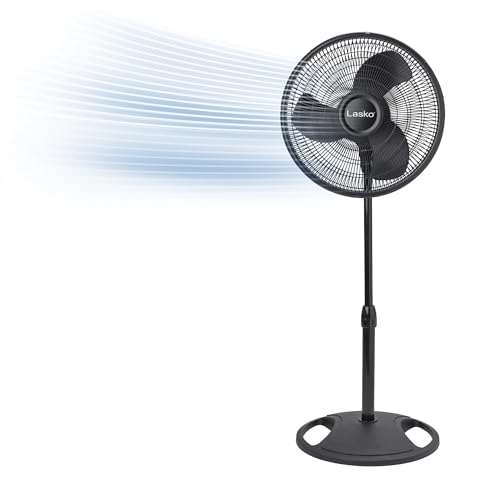
Most pedestal fans draw between about 25 and 75 watts, so one hour of running costs roughly half a cent to a cent at typical US electricity prices. Even left on continuously, a pedestal fan usually adds only a few dollars a month to a power bill, a tiny fraction of what running air conditioning costs.
How to calculate the cost yourself
The math is simple once you have two numbers: the fan's wattage and your electricity rate.
Cost per hour = (watts / 1000) x price per kWh
Electricity is billed in kilowatt-hours (kWh). One kWh is 1,000 watts running for one hour. So:
Example: a 50-watt fan at an example rate of 16 cents per kWh:
- 50 / 1000 = 0.05 kW
- 0.05 x 16 cents = 0.8 cents per hour
Typical pedestal fan wattage
Wattage varies with size and speed setting. As a general guide:
- Low speed: often 15 to 35 watts
- Medium speed: around 30 to 55 watts
- High speed: roughly 45 to 75 watts
What it costs over a day, week, and month
Using a 50-watt fan and an example 16 cents per kWh rate:
- Per hour: about 0.8 cents
- 8 hours (overnight): about 6 cents
- 24 hours: about 19 cents
- Per week (24/7): about 1 dollar 35
- Per month (24/7): about 5 dollars 75
DC motor fans use even less
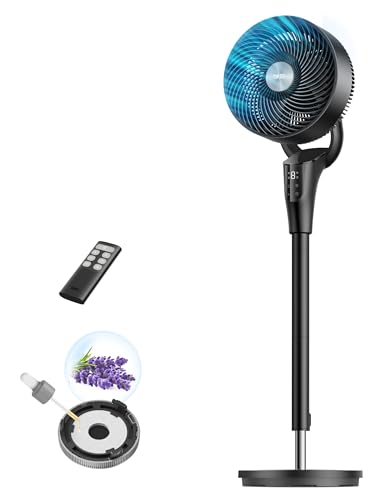
Fans with a DC (brushless) motor are markedly more efficient than traditional AC-motor fans, often using half the power or less for the same airflow. If you run a fan for long hours every day, a DC model can pay back its higher purchase price over time through lower running costs, and it usually runs quieter too.
How pedestal fans compare to other cooling
The reason fans are worth running is the contrast with air conditioning:
- A pedestal fan uses tens of watts.
- A window air conditioner uses hundreds to over a thousand watts.
- A central AC system can draw several thousand watts.
Ways to keep running costs low
- Use a lower speed. Low draws noticeably less than high, and is often enough.
- Point it at people, not the room. The cooling effect only works on skin.
- Turn it off when you leave. A fan in an empty room does nothing useful.
- Use the timer if your fan has one, so it shuts off after you fall asleep.
- Consider a DC-motor fan for heavy daily use.
- Pair it with your AC. A fan lets you set the thermostat higher while feeling just as cool, cutting the bigger bill.
Reading the label
The fan's rating plate usually lists watts directly. If it only lists amps, convert to watts:
Watts = volts x amps
US household voltage is about 120 volts, so a fan rated at 0.5 amps uses roughly 60 watts (120 x 0.5). Use that wattage in the cost formula above.
Safety note
Pedestal fans simply plug into a standard outlet, so there is no wiring to worry about, but a few basics keep them safe. Avoid running one through a lightweight extension cord for long periods, do not cover the motor housing, and unplug the fan before cleaning. If the plug, cord, or motor ever feels hot to the touch or smells like burning, stop using it and have it checked or replaced. This article is general information only.
Bottom line
A pedestal fan is one of the cheapest appliances to run, typically well under a cent per hour and only a few dollars a month even with heavy use. Find your fan's wattage, divide by 1,000, and multiply by your electricity rate to see your exact cost. For long daily use, a low speed setting or a DC-motor fan trims that small bill even further.