
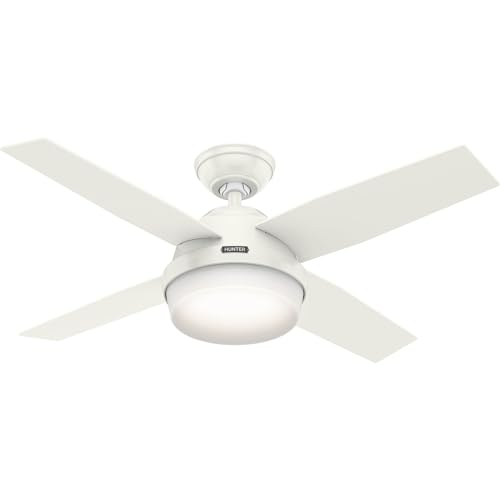


For a kitchen that deals with grease and heat, the best ceiling fan type is a damp-rated fan with a sealed, enclosed motor housing and smooth, wipe-clean blades - typically metal or sealed composite rather than porous wood. A compact or low-profile design that moves good airflow without hanging into cooking space works best.
Why kitchens are hard on ceiling fans
Kitchens combine three things that punish a standard fan. Cooking throws a fine film of airborne grease that settles on blades and motor housings. Stovetops and ovens add heat and humidity that plain fans are not built to shrug off. And blades running near cooking areas collect grime faster than anywhere else in the house. The right fan type resists that grease-and-heat combination and, just as importantly, is easy to clean when it does build up.
Look for a damp rating
Ceiling fans carry a moisture rating: dry, damp, or wet. A damp-rated fan is built to handle humidity and moisture in the air without its motor or finish degrading - exactly the environment above a busy stove. A dry-rated fan is meant for climate-controlled rooms only.
- Damp-rated: a good baseline for most kitchens, especially near cooking heat and steam.
- Wet-rated: built for direct exposure to water, more than a typical indoor kitchen needs, but its sealed construction resists grease well.
- Dry-rated: best avoided directly over a cooking zone.
Prioritize wipe-clean blade materials
Blade material decides how bad the grease problem gets. Porous, unsealed wood blades absorb grease and are hard to clean, and they can warp with heat and humidity over time. Instead, favor:
- Metal blades with a smooth, sealed finish - grease wipes off easily.
- Sealed composite or ABS blades designed for damp environments - durable and simple to clean.
- Smooth, flat blade surfaces without deep grooves or decorative texture that trap grime.
Sealed motor and finish
Airborne grease does not just coat blades; it works into motor housings and vents. A fan with a sealed, enclosed motor keeps that film out of the moving parts, which protects performance and lifespan. Look for finishes rated for damp use, since a cheap finish over a cooking zone can discolor or corrode. Sealed construction is what lets a kitchen fan keep running smoothly after months of cooking exposure.
Size and mounting height
Kitchens vary, so match the fan to the space:
- In a compact kitchen or one with a lower ceiling, a low-profile (hugger) or flush-mount fan keeps blades safely above head height and out of the way of cabinet doors and cooking.
- In a large open kitchen with high ceilings, a standard downrod-mounted fan with a wider blade span moves more air.
- Always keep blades well clear of the required clearance from the floor, cabinets, and any raised cooking area.
Airflow that actually helps
A kitchen fan should keep air moving to push heat and cooking odors around and out, especially when paired with an open window or exhaust. A fan that moves a healthy volume of air on a mid setting is more useful than a purely decorative one. On hot cooking days, good circulation makes the room noticeably more bearable to work in.
A fan is not a range hood
This matters: a ceiling fan circulates and mixes air, but it does not capture grease and vent it outside the way a range hood does. Rely on your range hood or exhaust fan to pull cooking grease and smoke out of the kitchen, and use the ceiling fan to keep the room's air moving and comfortable. The two work together; the fan does not replace proper exhaust ventilation.
Build a simple cleaning routine
Even the best kitchen fan needs regular cleaning, because grease will still land on it:
- Wipe blades with a degreasing cleaner every couple of weeks, more often if you cook heavily.
- Clean the motor housing and any light kit at the same time.
- Address sticky buildup early - once grease bakes on, it is far harder to remove.
Electrical safety note
Installing or replacing a kitchen ceiling fan means working with household wiring and a fan-rated support box. Turn off power at the breaker - not just the wall switch - and confirm the wires are dead before starting. For hardwiring, a new fan-rated box, a new circuit, or anything you are unsure about, hire a licensed electrician. This article is general information and not a substitute for a licensed electrician.
The bottom line
For a grease-and-heat kitchen, choose a damp-rated fan with a sealed, enclosed motor, smooth metal or sealed composite blades, and a size and mounting height suited to the room. Pair it with a working range hood for actual grease capture, keep up a quick wipe-down routine, and the fan will stay clean, keep the kitchen comfortable, and last through years of cooking.


