Installing a Ceiling Fan the Safe Way
Installing a ceiling fan is one of the most common electrical DIY projects in a US home, and one of the least forgiving of shortcuts. A fan spins continuously, adds real weight and vibration to whatever it hangs from, and sits on a live circuit — so the two things that matter most are a support structure rated for the load and a clean, correct wiring job. Get either wrong and you risk a fan crashing down or a fire hazard hidden above the ceiling.
Safety first, every time
Before you touch a wire, switch off the circuit at the breaker panel — not just the wall switch — and confirm it's dead with a non-contact voltage tester at the box. Wall switches control the load side only; the line side of the box can still be hot even with the switch off. If your panel isn't clearly labeled, flip breakers one at a time and test at the box until the circuit is confirmed dead.
If you are not fully confident reading your panel, working with wire nuts, or diagnosing what's already in the box — stop and hire a licensed electrician. This is genuinely one of the projects where a $150–$300 service call is cheap insurance against a $30,000 mistake.
The box is the part people get wrong
The single most common ceiling fan installation failure isn't wiring — it's the electrical box. A standard light fixture box, even a metal one, is typically only rated to support 50 pounds of static weight. It is not rated for the dynamic load and vibration of a spinning fan. The National Electrical Code (NEC 314.27) requires listed, fan-rated boxes for any location where a ceiling fan may be installed, and boxes must be marked for fan support (look for the fan-rated stamp, usually specifying a maximum fan weight like 35 or 70 pounds).
If you're replacing a light fixture with a fan and the existing box isn't fan-rated, you need to swap it for one before you hang anything. Two common approaches:
- A fan-rated retrofit box (bar-hanger style) that expands between joists and clamps to the drywall from below — no attic access needed.
- A brace-and-box kit that mounts directly to a joist, ideal when you have attic or crawlspace access.
Never hang a fan from a box screwed only into drywall, and never assume a box is rated just because a light fixture was there before.
Basic wiring steps
Once the fan-rated box is in place and power is confirmed off:
If your wall switch is a single-pole switch controlling both fan and light, and you want independent control, you'll either need a dual switch (two separate switch legs run to the box) or a fan with a remote/wall-control kit that lets one switched circuit run both. Adding a new switch leg where none exists is exactly the kind of work — running new cable through walls — that benefits from a licensed electrician, especially in finished walls or older homes.
When a downrod or flush mount matters
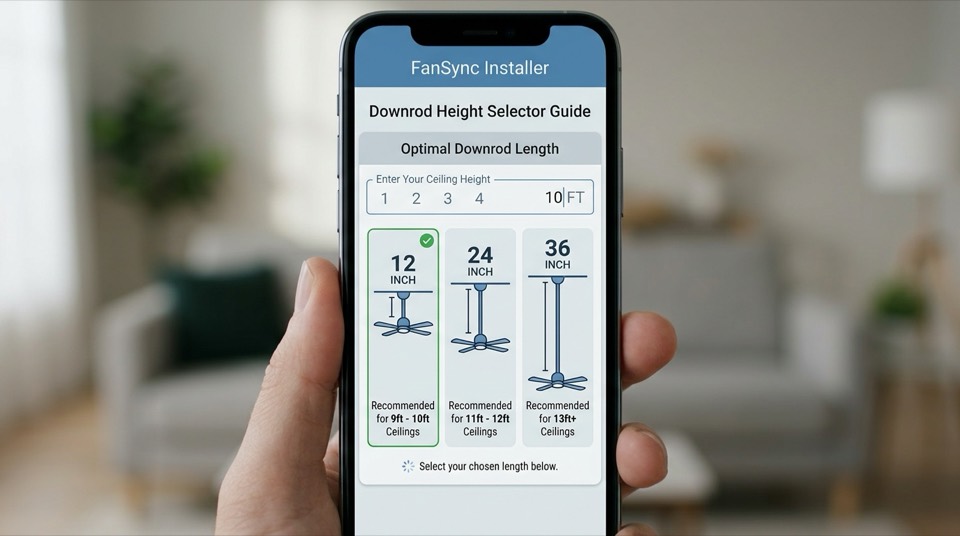
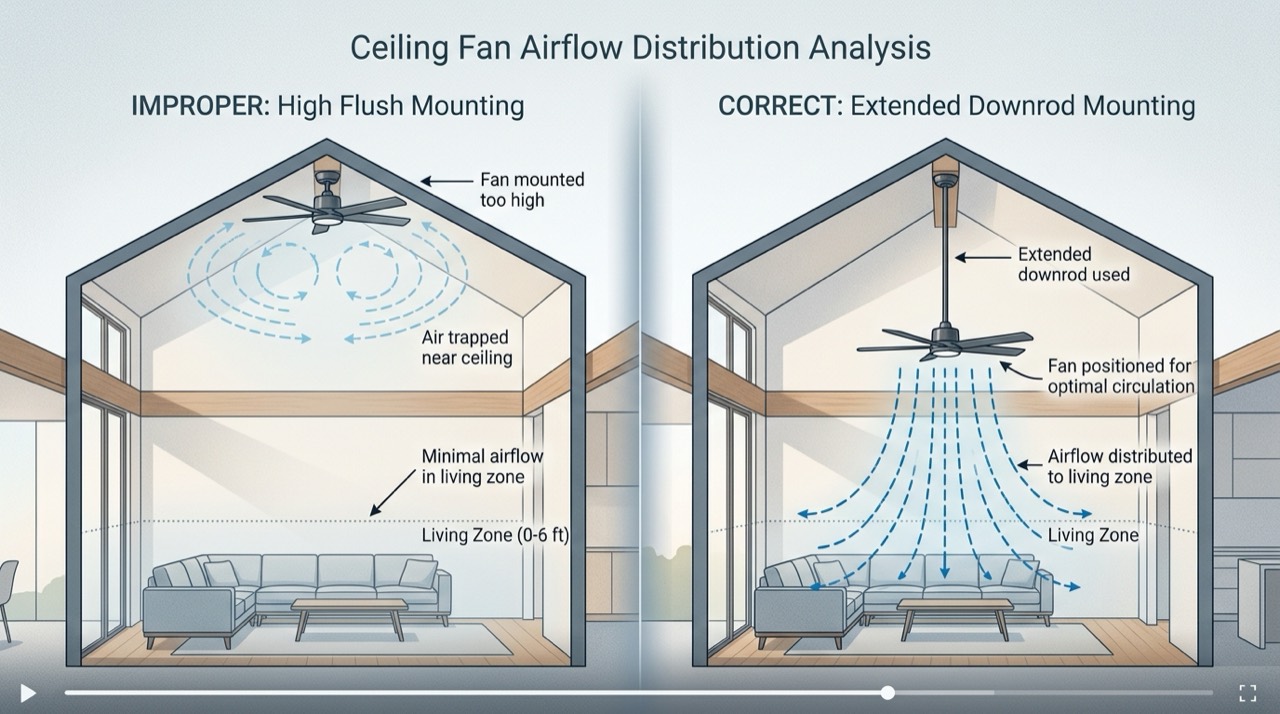
Ceiling height affects both the hardware and the wiring approach only slightly, but it does affect safety clearance. Standard downrods put the blades roughly 8–9 feet above the floor; flush-mount ("hugger") fans are used when ceilings are 8 feet or lower. Either way, the fan-rated box and wiring method are identical — only the mounting bracket and downrod length change.
Permits and code
Simple like-for-like fan swaps (existing fan-rated box, same circuit, no new switch legs) typically don't require a permit in most US jurisdictions, but replacing a non-fan-rated box, adding a new circuit, or running new switch wiring often does. Requirements vary significantly by city and state, so check with your local building department before starting anything beyond a straightforward swap. An inspector or electrician can also confirm whether older wiring (aluminum branch circuits, knob-and-tube) in your specific home needs special handling — these are not situations for guesswork.
When to call a licensed electrician
Hire a licensed electrician if any of the following apply: there's no existing ceiling box and one needs to be added, you need a new circuit or new switch leg run through finished walls, your home has aluminum wiring or knob-and-tube wiring, the existing box shows scorch marks or damaged insulation, or you're simply not confident identifying and connecting the wires safely. A professional install also typically preserves any manufacturer warranty that requires licensed installation for coverage.
Done correctly — fan-rated box, power confirmed off at the breaker, wires matched and secured — a ceiling fan installation is a manageable weekend project. Done carelessly, it's one of the more dangerous ones in the house.