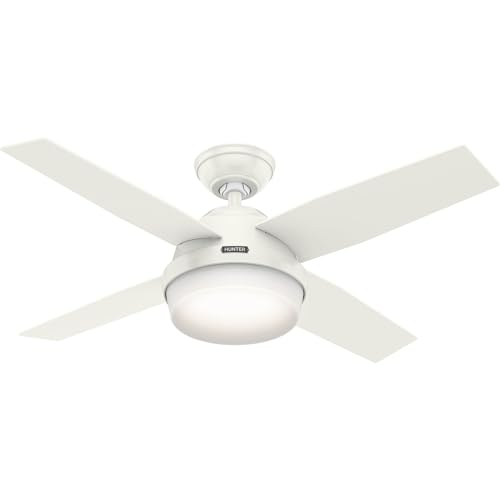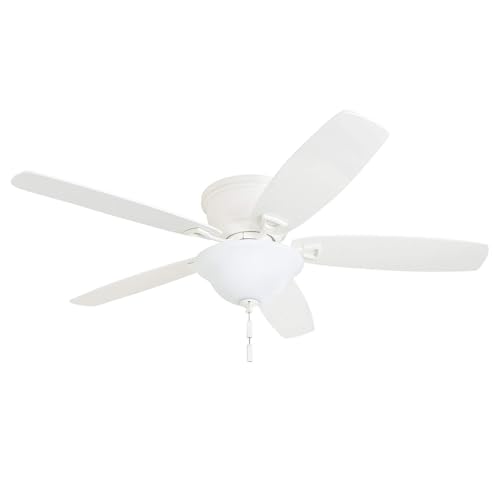

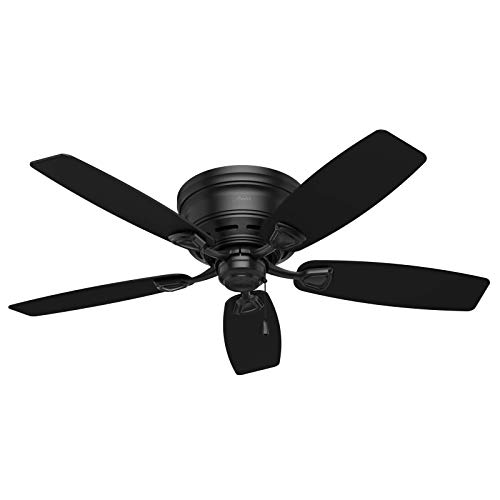

For safe operation, ceiling fan blades should be at least 7 feet above the floor, with 8 to 9 feet being the sweet spot for airflow. Keep blade tips at least 18 inches from walls, and leave enough space below the ceiling for air to circulate. On ceilings under 8 feet, choose a low-profile or flush-mount fan.
The key clearance numbers
Ceiling fan placement comes down to a few clearances that keep the fan safe and effective:
- 7 feet minimum from the floor to the bottom of the blades (the widely cited safety floor).
- 8 to 9 feet from floor to blades for the best air movement.
- 10 to 12 inches from ceiling to blades so air can feed into the top of the fan.
- 18 inches minimum from blade tips to the nearest wall, ideally 24 inches or more.
Blade height above the floor
The 7-foot rule exists so that people, doors, and raised arms clear the spinning blades. On a standard 8-foot ceiling, a flush-mount fan puts the blades around 7 to 7.5 feet up, which is compliant and comfortable for most adults. Do not install a fan lower than 7 feet in any space people walk through, and give extra room over spots where someone might stand on a bed, a stool, or a raised platform.
Distance from the ceiling
A fan needs breathing room above the blades. If the blades sit too close to the ceiling, the fan starves for air and moves noticeably less of it. Around 10 to 12 inches between the ceiling and the blades is the target for efficient airflow. Flush-mount (hugger) fans sit closer than this by design, which is a deliberate trade of some airflow for headroom on low ceilings.
Clearance from walls and obstructions
Blade tips need space to pull air from all sides. Keep at least 18 inches from the nearest wall, and more is better. Also account for anything that intrudes into the blade path: tall furniture, open cabinet or closet doors, sloped ceiling planes, and light fixtures. On a sloped ceiling, the high side of the blade sweep is what you measure against, and you may need a sloped-ceiling adapter to hang the fan plumb.
Low ceilings: what to install
If your ceiling is 8 feet or lower, a standard downrod fan will hang too low. Use a low-profile or flush-mount fan, sometimes called a hugger, which mounts the motor tight to the ceiling and skips the downrod. This keeps the blades at a safe 7-plus feet while preserving headroom. The trade-off is slightly reduced airflow because the blades sit closer to the ceiling, so look for a low-profile model with a strong published CFM figure.
High ceilings: use a downrod
On ceilings above 9 feet, add a downrod to drop the fan into the effective zone, aiming for roughly 8 to 9 feet from the floor to the blades. Downrods come in many lengths; a rough guide is about 1 foot of downrod for every foot of ceiling height above 8 feet, then adjust to land the blades in the 8-to-9-foot window. Dropping the fan into that zone dramatically improves how much air you actually feel.
Where these rules come from
The 7-foot minimum and related clearances trace to electrical safety standards and manufacturer instructions rather than a single universal number, and blade-height guidance appears in the National Electrical Code context for fixtures over certain areas. Always follow the specific fan's installation manual and any local code, since requirements can vary by jurisdiction and by location, for example over a bathtub or shower, where extra height and a proper damp or wet rating apply.
Safety notes
Mounting a fan is electrical and structural work. The fan must hang from a fan-rated outlet box that is secured to framing or a listed brace, never an ordinary lighting box, because a spinning fan puts continuous load on the mount. Before you work, turn off power at the breaker and verify the wires are dead with a tester. If the box is not fan-rated, the wiring is old, or you are unsure about the framing or a new circuit, hire a licensed electrician. This is general information, not a substitute for one.
Quick recap
Give the blades 7 feet minimum overhead (8 to 9 is ideal), keep them about a foot below the ceiling, and hold 18 inches or more from the walls. Match the mount to the ceiling height, flush-mount for low and downrod for high, and you will get safe, effective airflow in almost any room.